A Finnish tunnel built for nuclear waste will be closed forever; its radioactive cargo must remain contained for 100,000 years
Rest of World News: Finland is building ONKALO, the world's first permanent geological repository for nuclear waste, designed to contain radioactive material for 100,000 years beneath Olkiluoto island.
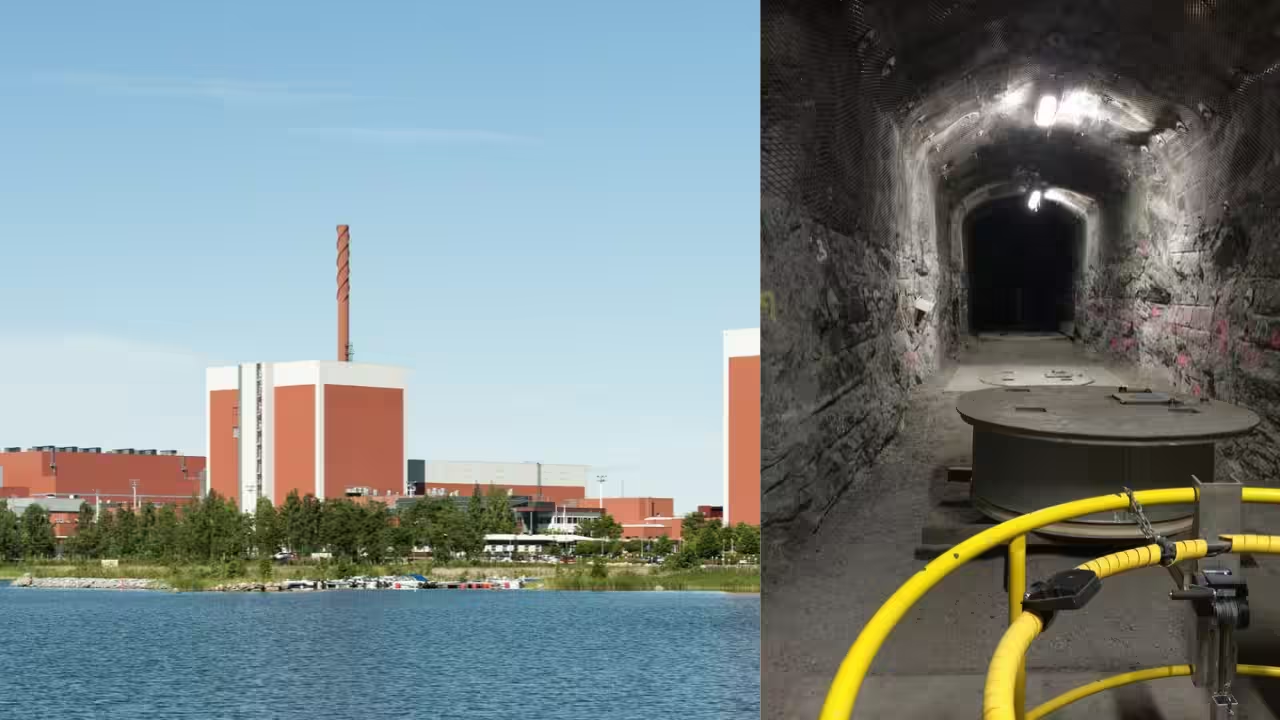
A repository is being prepared to permanently dispose of spent nuclear fuel more than 400 metres below the bedrock of Finland's Olkiluoto island. The facility is called ONKALO and is designed around multiple barriers that will isolate the radioactive material underground rather than keep it in an accessible storage building. Posiva, the Finnish company responsible for the project, says final disposal will take place at a depth of about 430 metres.The repository is being developed for spent nuclear fuel generated by Finland's nuclear power plants, and the fuel is first kept in interim storage while it cools. For final disposal, it will be encapsulated in metal canisters and placed inside deposition holes drilled into the bedrock. Bentonite clay will surround the canisters, while the tunnels will eventually be backfilled and sealed. Posiva lists the spent fuel, disposal canister, bentonite buffer, tunnel backfill and surrounding bedrock as parts of the system. The aim is to prevent radioactive material from reaching the surrounding environment over the long period in which the waste remains hazardous.The first real disposal hole is now being drilledPosiva began drilling the first deposition hole that is intended for actual final disposal more than 400 metres below the surface on August 26. The hole is being drilled vertically into the floor of a previously excavated final disposal tunnel, and when finished, it will be 8.4 metres deep and 1.75 metres in diameter. The drilling machine must maintain the hole within a maximum deviation of 25 millimetres from its vertical centre line along the full length. The machine itself weighs 78 tonnes, and Posiva says that drilling an eight-metre hole takes about 10 hours of effective drilling time under the site's conditions. The first holes are being checked particularly closely, and the first three will be measured again after completion before the project moves toward normal production.The first tunnel that is being worked on is about 330 metres long and is planned to contain roughly 30 deposition holes. Posiva does not plan to excavate the entire repository in advance; instead, new tunnels and deposition holes will be constructed as the disposal operation progresses. ONKALO began as a research and characterization facility that allowed engineers and geologists to study the Olkiluoto bedrock before the underground site became part of the final repository.The problem is measured in geological timeSpent nuclear fuel contains radioactive materials with very different decay times, and Posiva states that the penetrating gamma radiation from spent fuel disappears over a period of a few hundred years, but the fuel does not become comparable to natural uranium deposits until hundreds of thousands of years have passed. That is why ONKALO's safety concept extends far beyond the operating lifetime of an ordinary industrial facility. The repository is intended to remain sealed after the disposal operation is complete, and the surrounding rock and engineered barriers continue to isolate the material.The Science report supplied for this story describes the project as an attempt to create a permanent geological repository that is capable of containing nuclear waste over a period of around 100,000 years. The facility is being built inside ancient Finnish bedrock rather than relying on continued human maintenance at the surface.The project has also faced questions about how a repository can be assessed over periods far longer than recorded human history, since groundwater movement, corrosion, changes in the bedrock and future climate conditions all form part of the long-term safety problem.For now, ONKALO is still in the construction and commissioning stage rather than being a fully loaded permanent repository. The first deposition hole has only recently been drilled, and Posiva says the initial holes must pass detailed inspections before they can be approved for actual disposal. The current work therefore represents the transition from testing the underground system to preparing the holes that will eventually hold spent-fuel canisters. Once disposal is completed decades from now, the tunnels are intended to be backfilled and the repository closed.Catch the latest World News and Live updates. Download the TOI app.
Topics in this story
Gathered from external sources. Rights to this text belong to whoever originally published it.