In 2019, a University of Waterloo team gave a small vertical-axis turbine blades that changed pitch; outdoor tests raised its power output by 22%
A groundbreaking small vertical-axis wind turbine developed by University of Waterloo researchers demonstrates a remarkable 22% increase in power output by enabling blades to change pitch during operation, improving efficiency and performance in fluctuating wind conditions.
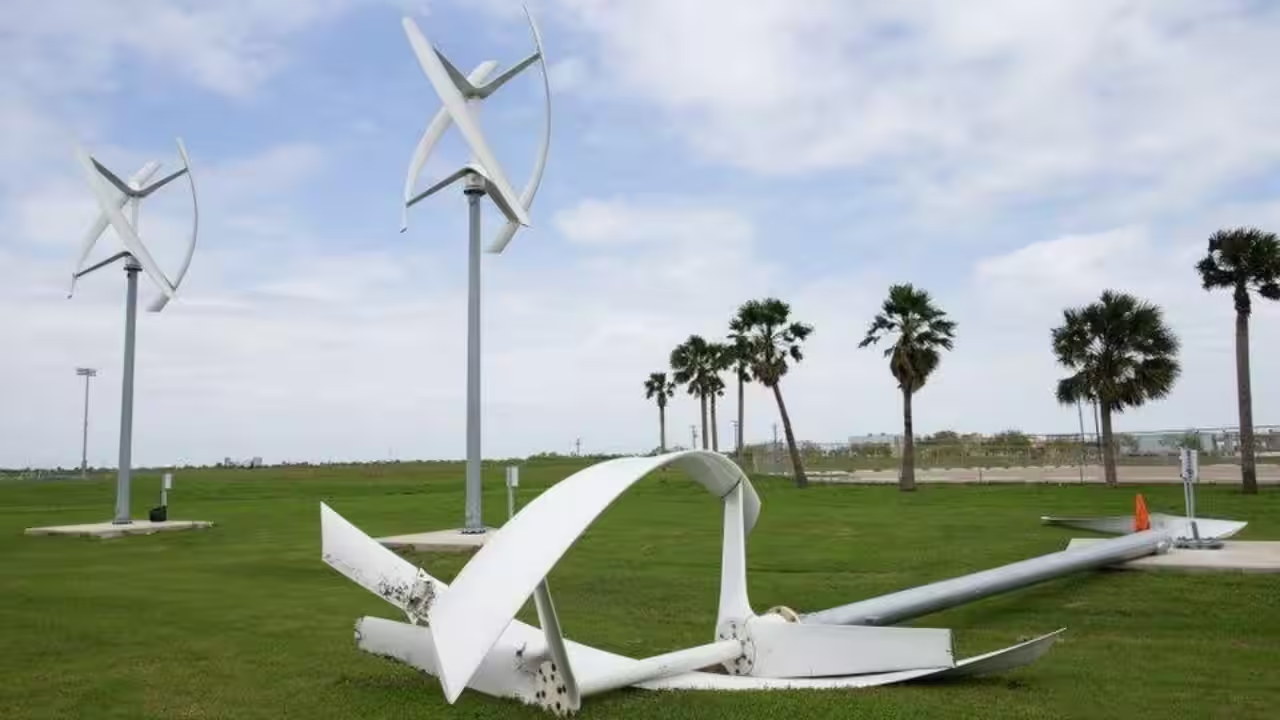
Researchers at the University of Waterloo built a small vertical-axis wind turbine that produced around 22% more power when its blades could change their angle during operation, as compared to a configuration in which the blades stayed fixed. The result came from outdoor tests that were described in a 2019 engineering thesis by Abdalrahman Gebreel, with the prototype making use of an automated control system to adjust blade pitch in response to wind conditions that were constantly changing. The research combined computer modelling with physical testing, but it is important to understand that the reported gain applies to the experimental turbine, not wind turbines generally.The blades changed angle as the wind shiftedVertical-axis wind turbines are different from the familiar three-bladed machines that rotate around a horizontal axis, since their rotor spins around a vertical shaft, and their blades move through the wind from different directions during each rotation. The arrangement can suit some small-scale applications, but extracting energy from changing airflow in an efficient manner is still a design challenge. Gebreel’s research examined an H-type Darrieus turbine, which is a design with straight vertical blades, which he used to investigate whether he could improve aerodynamic performance by controlling the angle of those blades and help the turbine start rotating.The research began with computational fluid dynamics simulations, with the models examining airflow around the blades at different pitch angles and operating conditions, and the results helped researchers identify suitable angles and develop a control system for the physical prototype. The University of Waterloo’s Computational Fluid Dynamics and Turbulence Modeling Laboratory describes the system as an intelligent vertical-axis wind turbine design, and its research page explains that the team used a combination of a conventional proportional-integral-derivative controller and a machine-learning method called a multilayer perceptron artificial neural network. The system used wind-speed measurements to determine how the blades should move.A controller adjusted each bladeThe prototype used a small electric motor and a four-bar linkage mechanism to adjust the pitch of each blade individually while an anemometer measured wind speed, and the controller used that information to command the blade adjustments. Pitch control is important because a blade’s angle has an effect on how air flows around its surface and how much useful force it generates. A fixed blade must operate through changing aerodynamic conditions as the rotor turns, while an adjustable blade can change its orientation to improve performance under different conditions.The researchers tested the prototype outdoors under different wind conditions and compared fixed-pitch and variable-pitch configurations. The thesis reports that the variable-pitch approach improved power output by approximately 22%, and also examined the turbine’s ability to start rotating, which is another challenge for some vertical-axis designs. The result was an experimental performance gain and not evidence that every small wind turbine would generate 22% more electricity with the same mechanism. The performance of a commercial installation would depend on factors such as turbine size, wind conditions, control-system reliability, and the energy that was consumed by the adjustment mechanism.What the design still needs to establishThe US Department of Energy explains that vertical-axis turbines are a separate category from the horizontal-axis machines that are more common. Darrieus designs use aerodynamic lift to turn their blades, while Savonius turbines rely primarily on drag, with the department also stating that vertical-axis turbines have not reached the same level of use in utility-scale wind generation as compared to horizontal-axis systems. Automated pitch control is one way by which researchers are trying to improve the performance of smaller vertical-axis machines, with the Waterloo prototype showing that blade movement could be controlled during outdoor operation and that the variable-pitch configuration could produce more power in the reported tests. The next question is how reliably the system performs over longer periods and across a wider range of wind speeds, and while the 22% figure offers a benchmark for the prototype, additional testing would be needed to establish how the design performs in practical installations.You use AI every day. Now get your AI Quotient. Take the AIQ test.
Topics in this story
Gathered from external sources. Rights to this text belong to whoever originally published it.