In 2014, the 5.5-carat Ocean Dream sold for about $8.5 million; in May 2026 the same blue-green diamond, the largest of its kind known, sold at Christie’s Geneva for $17.3 million, roughly double
Diamonds, formed deep within the Earth, have become the ultimate symbols of luxury, wealth and timeless beauty.
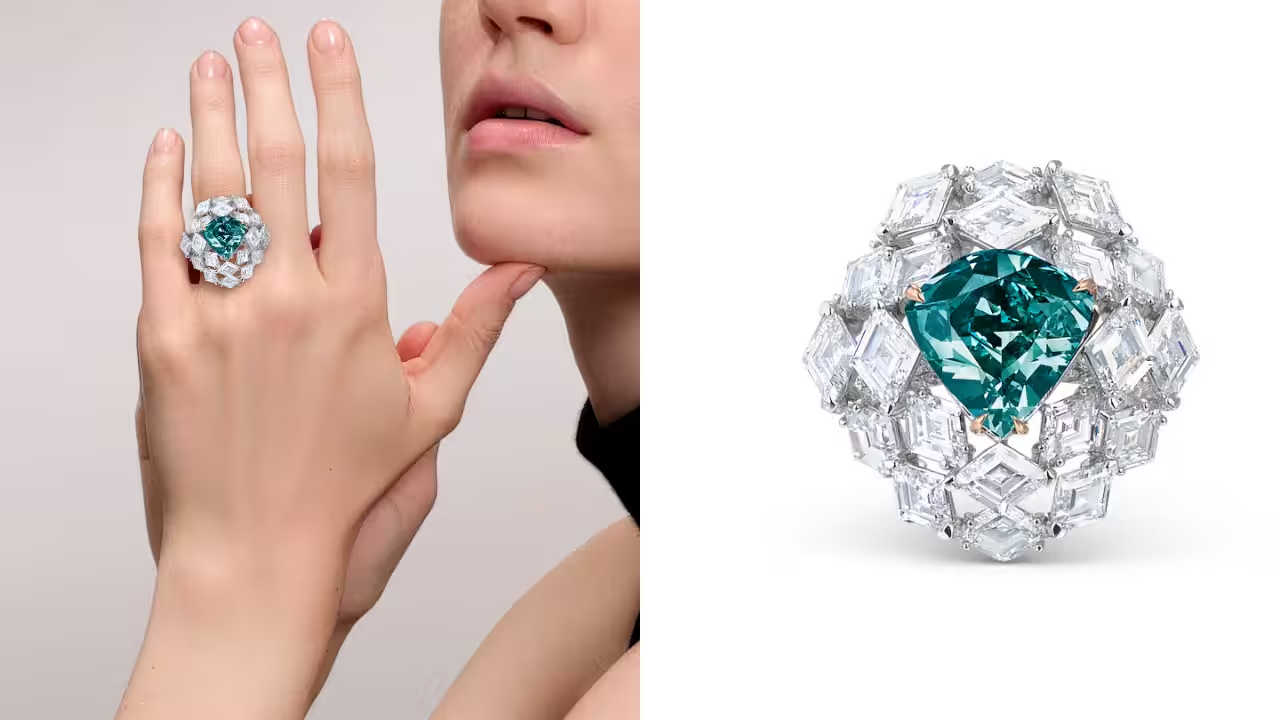
Diamonds, formed deep within the Earth, have become the ultimate symbols of luxury, wealth and timeless beauty. But some are so rare that their value goes far beyond their size and sparkle. Diamonds are not just another gemstone; historically and socially, they have become a greater part of human civilisation. From India's Kohinoor and France's Regent Diamond to literally every engagement ring, the preciousness of these stones has overlapped with the preciousness of our moments.One such gemstone is the Ocean Dream, a 5.50-carat natural blue-green diamond that recently sold for $17.3 million at Christie's Geneva auction in May 2026. What makes the sale particularly interesting is that the same diamond had also appeared at an auction 12 years earlier, when it fetched approximately $8.5 million. In other words, its dollar-denominated auction price has nearly doubled in just over a decade, making it one of the most remarkable sales in the coloured diamond market.What makes the Ocean Dream diamond so rare?The Ocean Dream is not an ordinary blue diamond. According to Christie's, the international auction house that auctioned the diamond in Geneva, it is classified as a Fancy Vivid Blue-Green diamond. It is considered the largest known diamond in its particular colour category. The gemstone weighs 5.50 carats and has a triangular cut, with a clarity grade of SI1. Its distinctive colour and relatively large size make it especially unusual in the world of natural coloured diamonds.The finished diamond weighs less than half of its original rough form. The stone also has an interesting history. Its original rough form weighed 11.70 carats and was discovered in Central Africa during the 1990s. It was subsequently cut and polished into the triangular gemstone that collectors recognise today, reducing it to less than half of its original weight.How did the diamond get its unusual blue-green colour?While most people associate diamonds with being glassy and colourless, they can naturally occur in several shades, including pink, yellow, blue, green and red. These colours develop because of differences in the diamond's internal structure and the presence of certain impurities or structural changes that affect how it absorbs and reflects light.In the case of the Ocean Dream, its unusual blue-green colour is due to exposure to natural radiation. As radiation interacts with a diamond's crystal structure over geological periods, it can displace carbon atoms and create defects known as colour centres. These defects change the way light passes through the gemstone, producing vibrant colours.Green diamonds are particularly interesting because natural radiation often affects only the outer layers of a stone. A strongly coloured diamond that retains its unusual appearance after cutting and polishing is therefore exceptionally rare. The Ocean Dream's vivid blue-green appearance is what makes it so distinctive among known natural-coloured diamonds.From a museum exhibition to a multimillion-dollar auctionThe Ocean Dream's history is not limited to auction rooms. In 2003, it was displayed at the Smithsonian National Museum of Natural History in Washington, DC, as part of an exhibition titled The Splendour of Diamonds. The exhibition was extraordinary in itself, as it brought together seven diamonds from different parts of the world, showcasing the remarkable range of colours and brilliance that natural diamonds can possess.The collection included the De Beers Millennium Star, the Steinmetz Pink, the Heart of Eternity and the Pumpkin Diamond, among other famous gemstones. The Ocean Dream stood out for its unusual blue-green colour, which remains exceptionally uncommon even among fancy coloured diamonds.Its previous auction appearance was in May 2014, when it sold at Christie's Geneva for CHF 7.7 million, equivalent to approximately $8.5 million at the time. When it returned to the same auction house in May 2026, it fetched CHF 13.56 million, or approximately $17.3 million. The final price also exceeded its presale estimate of CHF 7 million to CHF 10 million.Why are rare coloured diamonds so expensive?You might think the value of diamonds is determined by their carat weight alone. But that is not entirely true. Though weight plays a major role in determining their value, colour, cut and natural origin all play an important role, particularly in the case of fancy coloured diamonds. Unlike colourless diamonds, where the absence of colour is generally desirable, coloured diamonds are valued for the strength and rarity of their natural hues.The Ocean Dream brings together a naturally occurring royal hue, vivid saturation, a documented history and, most importantly, a remarkable size for a blue-green diamond.Perhaps that is what makes diamonds so fascinating. They are formed in the depths of the Earth, far removed from human civilisation, and yet we have spent centuries giving them meaning, turning them into symbols of love, power, wealth and permanence. The Ocean Dream is another reminder of how nature can create something extraordinary without ever intending it to be precious. It is only when we discover these wonders that we begin to understand just how much beauty exists beyond our making.You use AI every day. Now get your AI Quotient. Take the AIQ test.
Topics in this story
Gathered from external sources. Rights to this text belong to whoever originally published it.