A UK shopkeeper who spent 42 years in Britain was told he had no right to live there after applying for a passport; at 76, Nelson Shardey has finally become a British citizen
For Nelson Shardey, Britain had been home for most of his adult life.
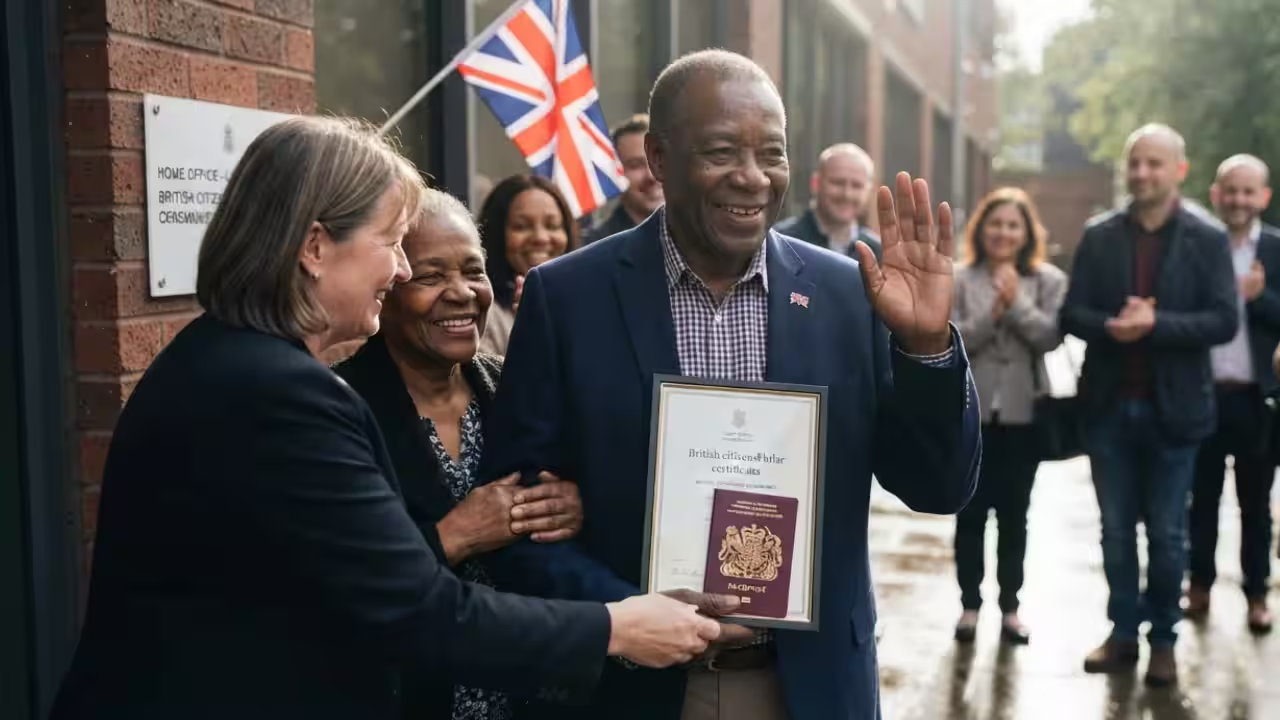
For Nelson Shardey, Britain had been home for most of his adult life. He had arrived from Ghana as a student, worked in factories, built a business, raised two sons and became part of the community in Wallasey, Merseyside. Yet a passport application in 2019 brought an unexpected problem. Despite having spent more than four decades in the country, he was informed that he was not a British citizen and had no recognised right to remain. What followed was a lengthy immigration battle, a family-led campaign and renewed scrutiny of his circumstances by the Home Office. Now, at 76, the retired shopkeeper has finally received British citizenship.How Shardey went from a student from Ghana to a British shopkeeperShardey moved to the UK in 1977, travelling from Ghana to continue his education. Like many people who arrive in a new country, his early years involved taking whatever work was available. He found employment in the food industry, including at a Mother's Pride bread factory and businesses producing Kipling's Cakes and Bendicks chocolates.His working life eventually took him to Wallasey, where he settled and established a newsagent called Nelson's News. The shop became part of his life in the area, while his family ties grew through two marriages to British women. His second marriage resulted in two sons, Jacob and Aaron, who would later become closely involved in the campaign to resolve his immigration status.For decades, there had been little reason for him to question his position. He had worked, paid his way and lived openly in Britain. His right to remain had not been challenged by employers or authorities during his years of employment, according to his account.The 2019 passport request that turned his life upside downThe situation changed in 2019, when Shardey applied for a British passport so he could travel to Ghana following his mother's death. The application exposed a problem he had not anticipated: the authorities did not recognise him as a British citizen.He was informed that he would need to pursue a 10-year immigration route to settlement. The proposed process carried substantial costs, with an estimated £7,000 for the application route and a further £10,500 over the period to access NHS services. For a retired shopkeeper, finding that amount of money was far from straightforward.The decision also left him facing questions about his future in the country where he had spent much of his life. His circumstances had not changed, but the paperwork surrounding his status had become an obstacle to remaining there with certainty.How a family fundraising campaign helped change his immigration caseShardey's family refused to let the matter end with the initial response. His sons, Jacob and Aaron, helped organise a fundraising effort to support their father's legal case and bring attention to his circumstances. The campaign attracted backing from people across Wirral, with residents contributing to the effort to have the decision reconsidered.The renewed attention eventually led to the Home Office reviewing his case. Rather than requiring him to follow the standard immigration route, officials considered whether his circumstances justified an exception under the Immigration Act.The department ultimately accepted that discretion could be exercised outside the usual immigration rules. In 2024, Shardey was granted indefinite leave to remain, giving him permission to live in Britain without the restrictions attached to a temporary immigration status.That decision was a significant development, although it did not yet make him a British citizen. The family continued to hope that the recognition of his exceptional circumstances would lead to a more permanent resolution.At 76, he finally receives British citizenshipThe final step came in February 2026, when Shardey was granted full British citizenship. He attended a ceremony at Wallasey Town Hall, where the 76-year-old received his naturalisation certificate.Speaking afterwards, he described himself as extremely pleased with the outcome and expressed gratitude to the people who had supported the family throughout the process. He also spoke about his attachment to Britain, saying the experience had tested him and his relatives but had ultimately ended with a sense of belonging.For his sons, the response from the local community had been particularly striking. They described the support their father received as phenomenal, reflecting how widely the campaign had resonated with people in the area.A life in Wallasey recognised after years of uncertaintyShardey's connection with the community had extended beyond running his newsagent. In 2007, he received a police bravery award after intervening when a robber attacked a delivery worker with a baseball bat. He tackled the attacker, an incident that brought him recognition for his actions.After arriving in Britain in 1977, he had spent 42 years in the country by the time his passport application was rejected. Seven years after that setback, his citizenship has finally been confirmed. At an age when many people are long settled into retirement, Shardey has received formal recognition of the country he has called home for nearly five decades.You use AI every day. Now get your AI Quotient. Take the AIQ test.
Topics in this story
Gathered from external sources. Rights to this text belong to whoever originally published it.