An FBI arrest revives fears that U.S. tech companies are hiring spies
On paper, Abdulrahman Alfozan seemed like an ideal candidate for one of Silicon Valley's most coveted artificial intelligence jobs. The Saudi national attend...
On paper, Abdulrahman Alfozan seemed like an ideal candidate for one of Silicon Valley's most coveted artificial intelligence jobs.
The Saudi national attended the Massachusetts Institute of Technology and landed an engineering job at Meta, according to his LinkedIn page and online records. Alfozan later secured a green card, spoke enthusiastically on a podcast about his Silicon Valley career and was invited to speak at Stanford University, all while working as a part-time partner at a venture capital fund dedicated to expanding the tech ecosystem in the Middle East. He had lived in the United States for more than a decade when he scored a mid-level role at OpenAI last year.
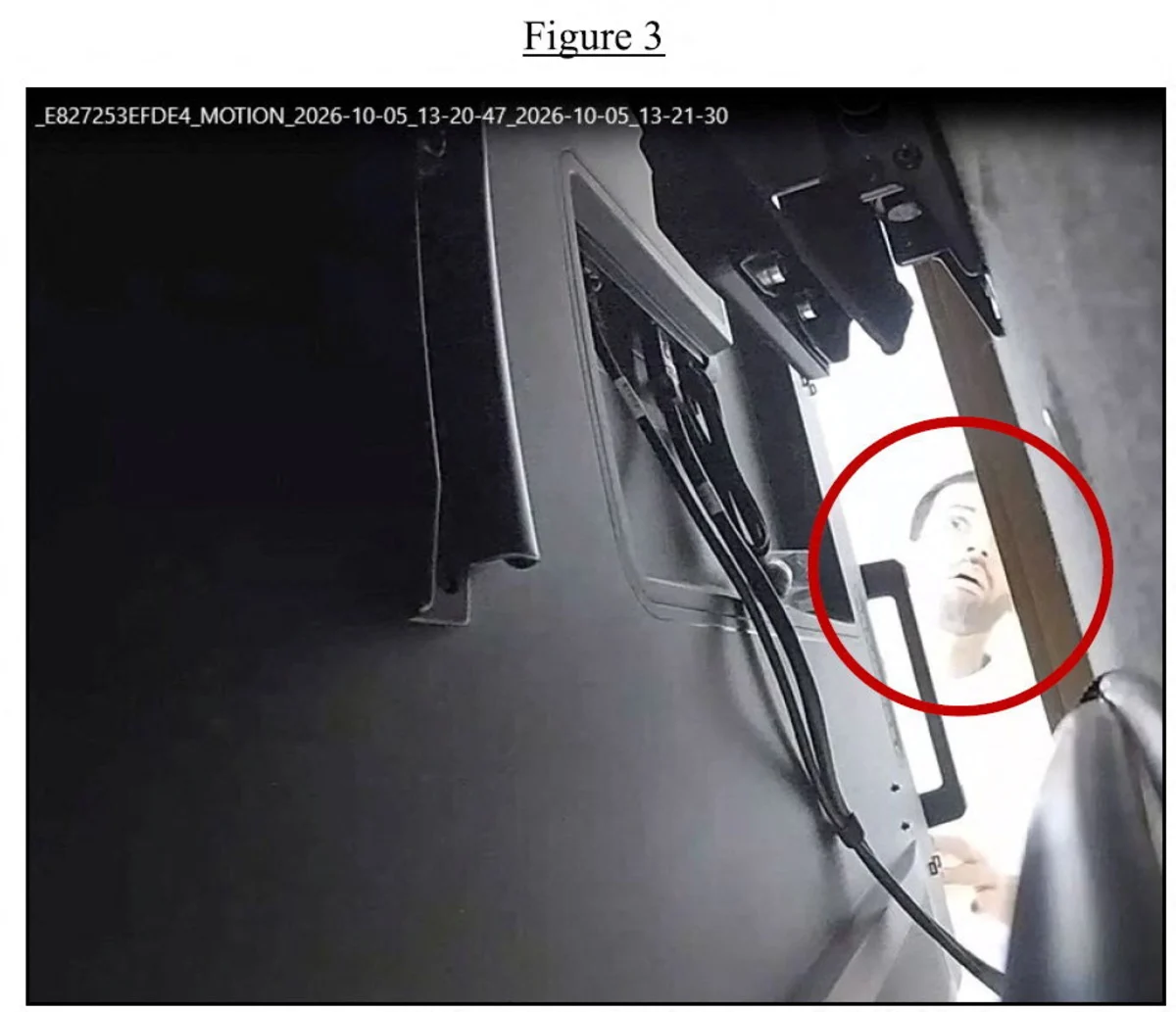
But Alfozan's arrest on Tuesday for allegedly planting a recording device in OpenAI's headquarters has ignited a fierce debate about the potential risks of Silicon Valley's international workforce - employees who often hail from nations seeking to rival the AI superpower status of the U.S.
Foreign nationals have long formed the backbone of the American tech industry, helping U.S. companies surpass their would-be international rivals. Last week, President Donald Trump awarded national medals to six tech titans for their contributions to American innovation. Five of them, including Google co-founder Sergey Brin and SpaceX founder Elon Musk, were immigrants.
As countries battle to dominate AI, some top executives in Silicon Valley have argued that winning what they see as an existential arms race requires aggressively recruiting even more top talent from around the world.
As recently as April, Katrina Mulligan, a senior member of OpenAI's national security team, called for an "accelerated pathway to citizenship" for such workers, referring to foreign hires as a "national strategic asset" at an event on Capitol Hill. She estimated that a significant number of OpenAI's employees were not U.S. citizens, including Chinese nationals. Just half of the 300 top AI researchers in the world, she said, were American.
Other industry leaders - as well as some lawmakers - have long accused top-tier tech companies with many foreign workers of disadvantaging Americans and being breeding grounds for Chinese espionage. Palmer Luckey, CEO of weapons maker Anduril, and venture capitalist Shaun Maguire of Sequoia Capital took to X on Wednesday to revisit arguments that the industry should focus on hiring U.S. citizens. "Silicon Valley has operated with maximum openness and maximum naivete toward foreign tradecraft," Maguire wrote.
Alfozan's arrest and the debates it has re-ignited show how the AI boom has sharpened a fundamental tension in Silicon Valley: American firms must recruit from a global pool of talent while also protecting innovations that governments around the world are racing to develop or obtain for themselves.
The situation is getting even more complicated as competition intensifies, said Chris McGuire, senior fellow for China and emerging technologies at the Council on Foreign Relations, and a member of the National Security Council during the Biden administration.
"This technology is too powerful for [countries beyond the U.S. and China] to ignore, and the quickest and cheapest way to advance capabilities is to steal it," he added.
Arrests and convictions are relatively rare compared to the large numbers of foreign workers at U.S. tech firms. Much discussion focuses on workers from China, whose government has pledged to overtake the U.S. in AI. American intelligence agencies have long warned U.S. tech firms that they are targets of Chinese intelligence services.
"There are any number of countries that would want to know about the internal workings and future plans of OpenAI and its competitors," said Ryan Fedasiuk, a fellow at the American Enterprise Institute, a Washington think tank.
A spokesperson for OpenAI declined to comment. The company said in a statement late Tuesday that Alfozan's employment had been terminated. (The Washington Post has a content partnership with OpenAI.)
In recent years, the Middle East has sought to become a major force in American technology. Funding from the United Arab Emirates and Saudi Arabia have helped to fuel the costly AI boom, and billion-dollar investments often come with reciprocal obligations for U.S. AI companies to build advanced tech in the region.
Last year the Trump administration gave both countries access to some of the most advanced AI chips in the U.S. - reversing the Biden administration's more cautious stance.
Alfozan has not been charged with foreign espionage and the U.S. government has not said whether he was acting alone or as an agent of a foreign government.
But there are signs that the U.S. government is exploring the latter possibility, McGuire said.
The Department of Justice's press release about the incident says that the National Security Division's Counterintelligence and Export Control section, whose responsibility includes prosecuting spies, is assisting with the case. National Intelligence Director Jay Clayton, in his statements on the case, said U.S. intelligence was committed to protecting America from "foreign threats."
A Washington-based Middle East expert, who spoke on the condition of anonymity to avoid incurring wrath from Saudi Arabia, said he believed the Saudi government was almost certainly involved in some way.
"No one does this, not even for patriotism, without getting paid," said the person. And money would not be distributed without agreement by the Saudi royal court, he said. The Saudis lag behind their regional rival, the United Arab Emirates, in artificial intelligence development, he added.
A former CIA officer with extensive experience in the Middle East, who spoke on the condition of anonymity to discuss sensitive internal Saudi dynamics, said that Saudi nationals working in Silicon Valley are celebrated back home. It's a "huge thing" for the Saudi government, said the former agency official, because Riyadh wants to build its own native technology talent base.
By working at a prominent Silicon Valley firm, you become a "big dog," said the former officer.
Alfozan, his wife and a third family member had booked one-way tickets to travel on Oct. 12 from San Francisco to Saudi Arabia via Istanbul, according to a motion filed by the government Oct. 8 in federal court and unsealed Wednesday.
The former OpenAI employee's public biography shows links to the Saudi government. Prince Khalid bin Bader al Saud, a member of the Saudi royal family, is a partner at RAED Ventures, which also lists Alfozan as a partner. The firm's X account has posted photos of partners hosting several high-ranking Saudi officials at events.
RAED did not respond to a request for comment.
In a podcast interview posted last month, Alfozan said he met Saudi Arabia's crown prince, Mohammed bin Salman, before he became the country's top leader during one of the prince's trips to Silicon Valley. Bin Salman inspired Alfozan to stay in Silicon Valley and grow his skills so that he could use them when he eventually returned to Saudi Arabia, he said in the interview.
At OpenAI on Wednesday, employees continued tense conversations about the political implications of the arrest for immigrant workers, two OpenAI employees said, speaking on the condition of anonymity to describe internal discussions. The Justice Department said Tuesday that OpenAI determined the device was likely planted on Sept. 28. A company spokesman said it was found in a security sweep two days later.
The arrest triggered a discussion on OpenAI's internal Slack messaging platform among employees about whether the incident might increase pressure from the Trump administration on OpenAI to not hire foreign nationals, said one of the people.
In March, Emil Michael, the Pentagon's chief technology officer, wrote in court papers that AI developer Anthropic's reliance on staff with ties to China was among the concerns that fueled the Defense Department's conflict with the AI company.
Anthropic did not respond to a request for comment.
Lawmakers have been seeking to tighten the government's oversight of the security risks faced by AI companies. In September, Sens. Jim Banks (R-Indiana) and Kirsten Gillibrand (D-New York) introduced a bill that would require AI companies that do business with the Pentagon to tell officials how they vet personnel and manage threats posed by insiders, and to report incidents of suspected espionage.
"While we await more details, this incident underscores the need for a commonsense notification framework for AI contractors to alert the Pentagon to a range of security threats," Gillibrand said in a statement Wednesday.
Tensions inside the tech industry over hiring and security practices spilled out openly Wednesday on X.
Silicon Valley insiders recounted stories of stiff security within tech firms due to concerns about espionage from both commercial companies and foreign governments, in recent years.
Many companies have stepped up their security practices during the recent AI boom, often using the technology itself to speed up their understanding of strange behavior and patterns, according to Ryan Schonfeld, cofounder and CEO of HiveWatch, a startup that helps tech companies secure their facilities against insider threats.
"What used to be considered very sophisticated ... now is par for the course," he said.
Topics in this story
Gathered from external sources. Rights to this text belong to whoever originally published it.