Despite the oil deal, Venezuela’s dictatorship is still blocking progress
In Venezuela, the repressive apparatus and its key figures continue to usurp power and enjoy its benefits.
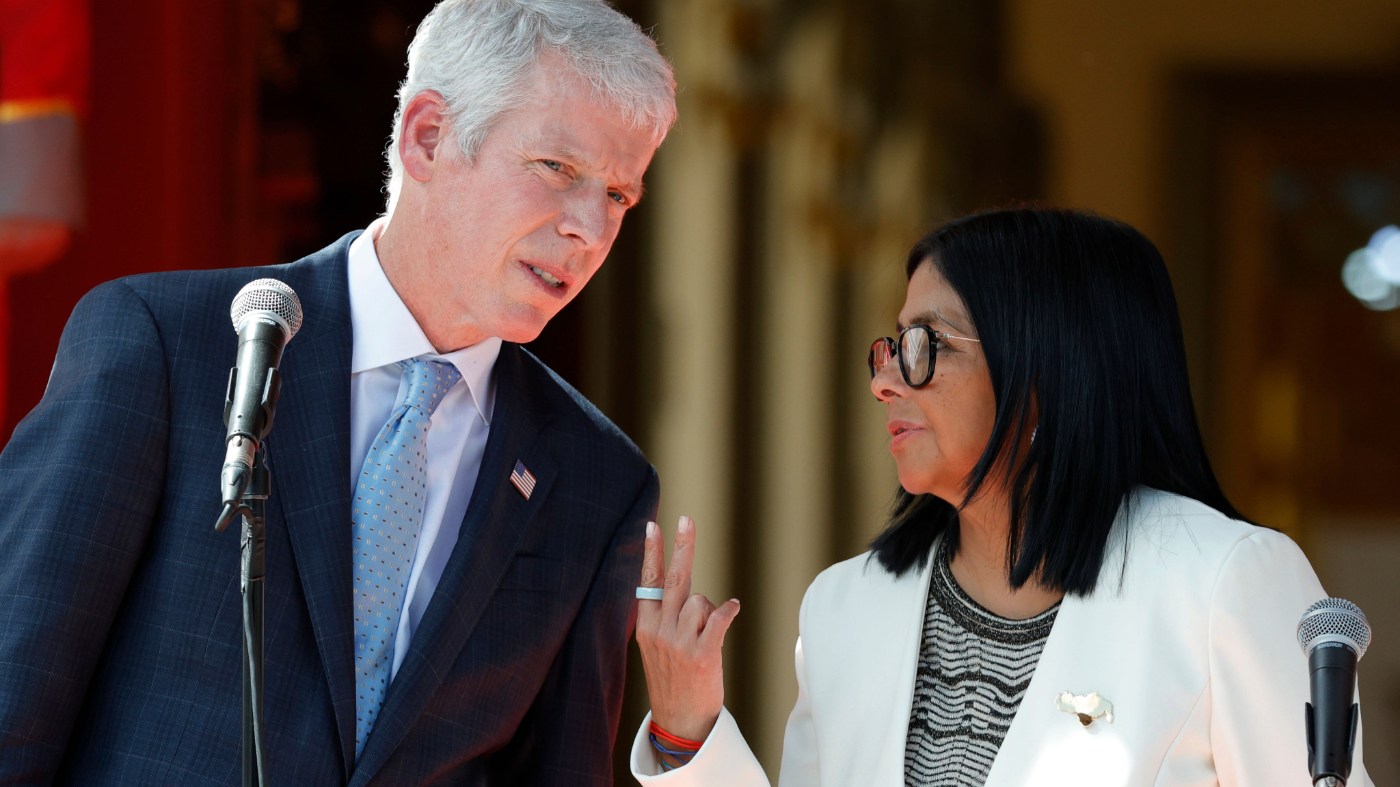
The oil deal with Venezuela is a key move for America’s energy dominance. It takes China and Russia out of the equation, lowers gas prices in the U.S. and brings prosperity to the South American nation. This historic agreement faces one obstacle: a resilient tyranny clinging to power.
Over the last quarter-century, Presidents George W. Bush, Barack Obama and Joe Biden tried to make a change in Venezuela, but only the Trump administration opened a real opportunity for a liberation day. Operation Absolute Resolve , which captured Nicolas Maduro and arrested him on federal drug charges, was the beginning of a new chapter for the region.
Now, after eight months, things need to move forward. Expedite the transition and finish the job.
Secretary of State Marco Rubio said the transition to democracy has a timeline. “Everyone here understands that it has to happen. Because at the end of the day, Venezuela cannot get to where it needs to be without having a legitimate government.”
Rubio called elections a fundamental priority. He said that when they happen — “which, God willing, will be as soon as possible” — they will install “not simply a democratically elected government, but a government that is not inheriting a total and complete disaster. Because then it is going to make the task of creating that lasting republic even more difficult.” He added that “efforts are already underway to make that happen.”
Opposition leader and Nobel Peace Prize laureate Maria Corina Machado said the U.S. is a key partner to promote a greater use of oil resources and insisted that Venezuela needs a democratic government.
“Of course the United States is the principal partner Venezuela needs to fully develop its strategic potential. This is what the majority of Venezuelans believe… and it is something I’ve spent my whole life defending.”
Machado also noted that interim President Delcy Rodriguez and her cronies are not reliable partners for the U.S. in a long-term agreement. “No development is possible without solid institutions and a government elected by popular vote.”
“President Trump’s mission in Venezuela is straightforward,” said Energy Secretary Chris Wright . The mission is to bring peace, freedom, opportunity and prosperity to the people of Venezuela.” Wright traveled to Venezuela to oversee the signing of energy agreements with Chevron, Italian energy firm Eni and GE Vernova, which aimed at expanding oil production, unlocking private-sector investment and modernizing Venezuela’s electrical grid.
Chevron announced plans to double its oil production in Venezuela. The U.S. oil company said that investments in the Orinoco Bel region will boost production to 600,000 barrels per day.
“Chevrons history in Venezuela spans more than a century, and our expanded position reflects our confidence in the country’s deep resource potential,” CEO Mike Wirth said last week.
The government of Caracas has granted North American Blue Energy Partners, a privately held oil company, 100-year concessions for 17 oil fields with proven reserves of approximately 65 billion barrels. The U.S. needs the oil, and Venezuela needs investments and jobs. It’s a win-win deal that urgently requires credible institutions and new government officials.
In Venezuela , the repressive apparatus and its key figures continue to usurp power and enjoy its benefits. More than 300 political prisoners remain behind bars, while many others live in a state of only partial freedom. A strong oil deal requires a strong democracy.
The Venezuelan regime knows that, despite the oil agreement, the handover of enriched uranium , the release of a few prisoners and cooperation on certain security issues , the sustainability of Chavismo is temporary and its end is imminent.
The U.S., with its updated Monroe Doctrine, possesses the extraordinary capabilities and conditions to finish the job and seize this golden opportunity for energy dominance in the Americas and to lay the foundations for a new Venezuela — prosperous, secure, democratic and free.
Arturo McFields is an exiled journalist, former Nicaraguan ambassador to the Organization of American States, and a former member of the Norwegian Peace Corps. He is an alumnus of the National Defense University’s Security and Defense Seminar and the Harvard Leadership course.
Topics in this story
Gathered from external sources. Rights to this text belong to whoever originally published it.