In 2012, Nashville replaced a failing 52,000-square-foot porous asphalt lot with concrete pavers; a nearby two-year test recorded no stormwater discharge
In 2012, Nashville transformed a failing porous asphalt lot into a sustainable permeable concrete paver surface, achieving significant stormwater management success without rebuilding the entire system. Discover how this project set a precedent for effective low-impact development strategies.
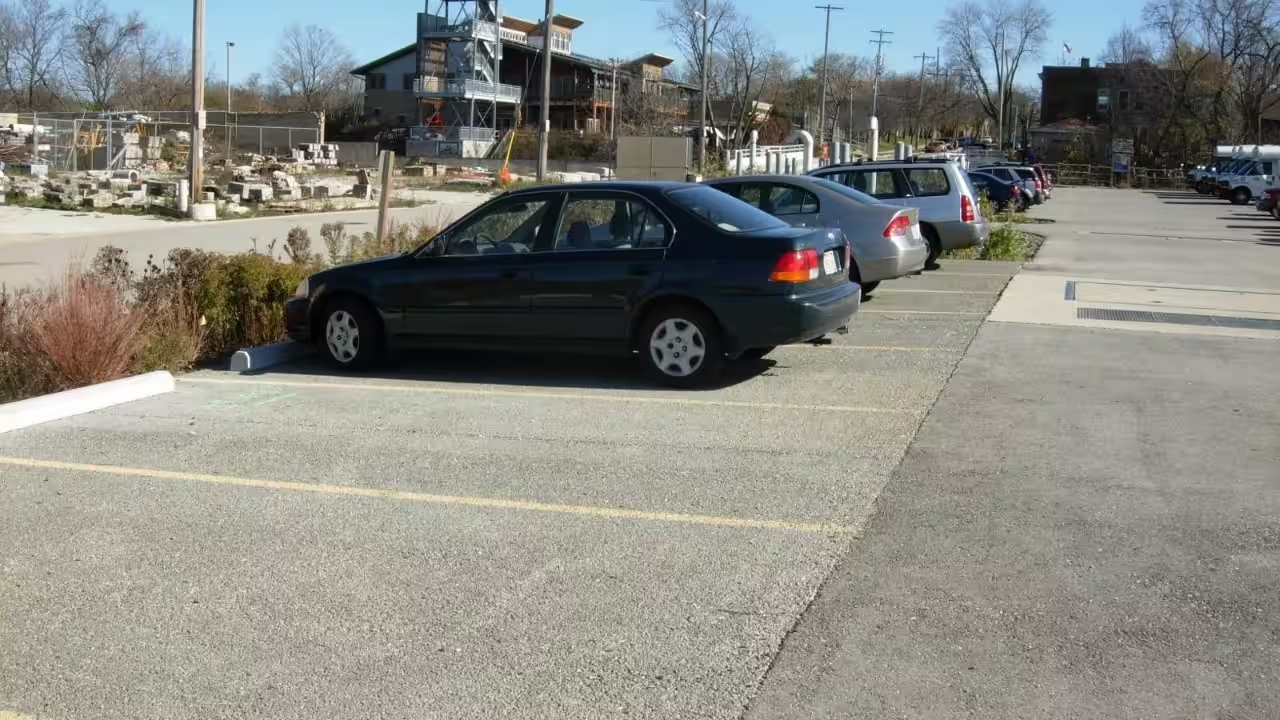
Nashville removed the failing porous asphalt from a 52,000-square-foot parking lot at the Richard H. Fulton Complex in 2012, and replaced it with permeable interlocking concrete pavers. The city had originally installed porous asphalt to handle rainwater, but the surface deteriorated under daily traffic and repeated maintenance.The replacement used Belgard Aqua-Bric Type 4 permeable pavers, and unlike conventional pavement, the joints between the pavers allow rainwater to pass into the aggregate base below rather than sending all of it directly toward storm drains. The Fulton project was completed in roughly four weeks, which was two weeks faster than the original six-week schedule.The first pavement did not hold upNashville installed the original 52,000-square-foot porous asphalt parking lot in 2005 as part of a low-impact stormwater design, and the pavement was supposed to let rainfall move through the surface and into bioretention areas and swales. The system included an underdrain network to move water toward those areas, and the asphalt itself became the problem.The surface had deteriorated under traffic after several years, and keeping its pores open also required repeated sweeping and maintenance. According to the project's documentation, the sweeping gradually removed aggregate from the surface, which left parts of the parking area difficult and unsafe to walk across. The city needed another permeable surface but did not want to rebuild the entire stormwater system underneath the lot. The existing No. 57 aggregate base and the site's bioswales were still usable, which became important when engineers evaluated concrete permeable pavers. The project team could remove the asphalt surface, regrade the existing base and install the new pavers above it instead of removing the entire underlying system.The city began the replacement work on August 13, 2012, with the pavers being installed mechanically in sections, and completed portions of the parking lot could be reopened almost immediately because concrete pavers do not require the curing period that was associated with poured concrete. A 2013 report in Interlock Design put the project cost at roughly $200,000, and also reported that the work was completed in four weeks rather than the planned six.The pavers were installed over the existing baseWorkers first removed about four to five inches of the porous asphalt, and the existing open-graded aggregate base required little re-leveling. Crews then placed washed stone as a setting bed for the 80-millimetre, or roughly 3-inch, permeable concrete pavers. The pavers were mechanically installed in sections and compacted with a 5,000-pound plate compactor, and washed aggregate was swept into the joints between the units.Half of the parking lot had to remain available during construction because the complex housed government offices that continued operating. The installation method made that easier to manage, since once a section was finished, it could be used for parking without waiting for a concrete slab to cure. The approach also retained the existing bioswales and stormwater storage capacity, because of which the city did not have to rebuild those components as part of the pavement replacement.A nearby project supplied the rainfall dataThe 2.3 million gallons of rainfall that was cited in the Fulton case study came from a separate project that Nashville officials were watching. At Gateway Village, a 92,000-square-foot mixed-use parking lot in Murfreesboro, Tennessee, permeable interlocking concrete pavement had been installed before the Fulton replacement. Middle Tennessee State University's Concrete Industry Management program studied the site for two years with an ISCO sampler to measure water quantity and quality.The site received 41 inches of rain during that period, which is equivalent to about 2.3 million gallons of water. The study recorded no water discharge at the outlet at the rear of the site, and says that water from the roofs and parking surface infiltrated into the soil and contributed to groundwater recharge. That result was part of the evidence Nashville considered when selecting permeable concrete pavers for Fulton, and was not a two-year rainfall test of the Fulton parking lot itself. Nashville had already identified permeable paving as part of its broader stormwater strategy, with the city's Green Infrastructure Design manual listing the Richard H. Fulton Complex as one of its local low-impact-development parking projects and describing permeable paving as a way to reduce runoff and increase infiltration.The finished surface was tested with thousands of gallonsNashville used a more direct demonstration at the Fulton parking lot after construction, with the local fire department releasing thousands of gallons of water onto an isolated section of the new pavement to demonstrate how quickly water could pass through the paver joints. The 2013 Interlock Design report described a larger demonstration in which a Nashville Fire Department truck sprayed about 10,000 gallons of water onto the surface in three minutes, and the report said that no runoff was observed during the demonstration.The test was separate from the longer Gateway Village monitoring programme, since one showed how quickly the Fulton pavers could accept a large volume of water in a controlled demonstration, while the other produced two years of rainfall and water-monitoring data at a different permeable-pavement site. The Fulton parking lot therefore became a replacement project rather than a complete reconstruction of the stormwater system, and Nashville kept the existing aggregate base and bioswales, removed the porous asphalt that had deteriorated, and installed a permeable concrete-paver surface. The 52,000-square-foot lot was back in service in about four weeks, and the nearby two-year monitoring project had recorded 2.3 million gallons of rainfall with no discharge at its outlet, while the Fulton demonstration showed thousands of gallons passing through the new surface during a controlled test.You use AI every day. Now get your AI Quotient. Take the AIQ test.
Topics in this story
Gathered from external sources. Rights to this text belong to whoever originally published it.