A rare Sierra Nevada fox sparks a legal battle as conservationists challenge US wildlife authorities over denied habitat protection, a judge uncovers three legal errors and orders a fresh review of the decision
A rare fox found in parts of California's Sierra Nevada mountains has become the focus of a legal dispute after conservationists challenged the federal
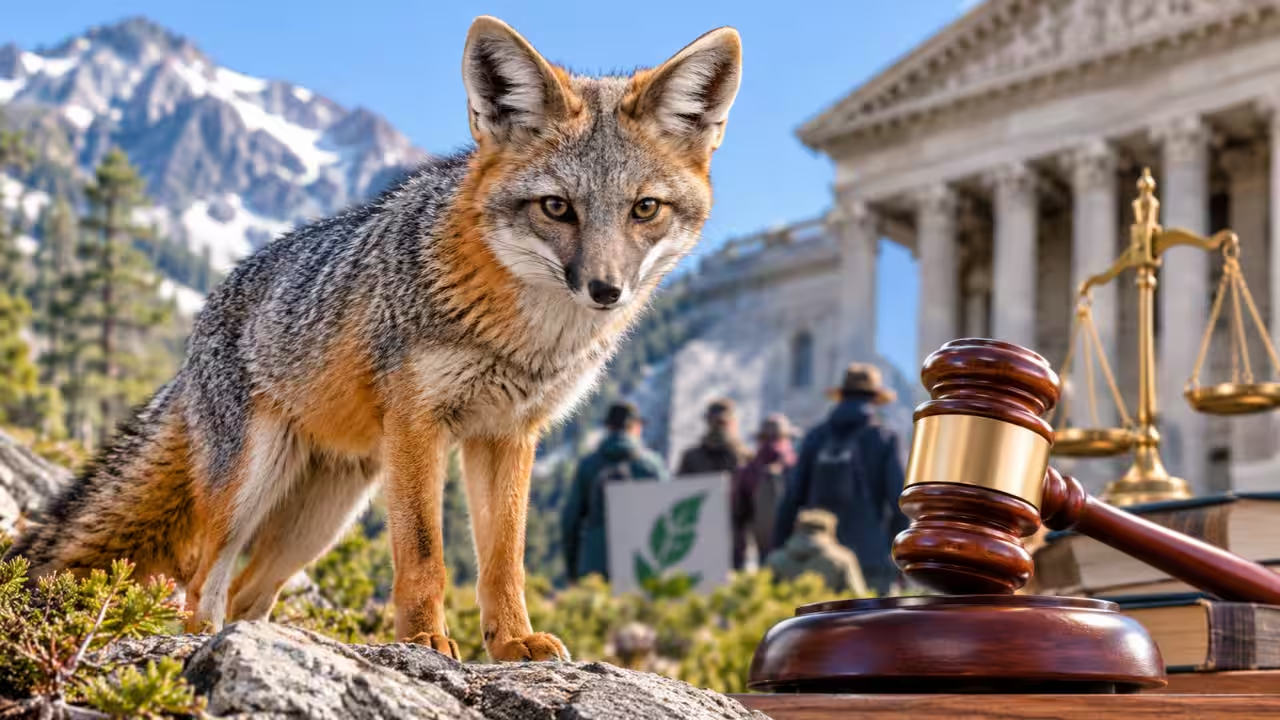
A rare fox found in parts of California's Sierra Nevada mountains has become the focus of a legal dispute after conservationists challenged the federal government's decision not to protect the animal's habitat. A US district judge has now ruled that wildlife officials made three legal errors when they concluded that designating critical habitat for the endangered Sierra Nevada red fox was unnecessary. The decision follows a lawsuit brought by the Center for Biological Diversity, which argued that the agency had failed to account for the threats facing the animal and the need to restore its dwindling population. The ruling requires federal authorities to reconsider their position.How the dispute over the fox's habitat reached courtThe legal battle dates back more than a decade. In 2011, the Center for Biological Diversity formally asked the US Fish and Wildlife Service to place the Sierra Nevada red fox under the protection of the Endangered Species Act. Its petition also called for the identification of critical habitat where the animal could survive and recover.The agency eventually granted the fox endangered status in 2021, recognising a distinct population segment in the Sierra Nevada region. The population is centred around the Sonora Pass area of California. However, the decision did not include a designation of critical habitat, leaving the question of additional habitat protection unresolved.Conservationists challenged that part of the agency's decision in December 2024, as reported by Center for Biological Diversity. Their lawsuit argued that officials had overlooked the dangers affecting the fox's remaining habitat and had not properly examined what would be needed to support the population's recovery over the longer term.Judge identifies three legal errors in the agency's decisionUS District Judge Dale Drozd sided with the conservation group, finding that the Fish and Wildlife Service had not followed the requirements of the Endangered Species Act when it decided that designating critical habitat was not prudent.One of the problems concerned the legal test used by the agency. Officials had treated significant habitat destruction as a necessary threshold for deciding whether protected habitat should be designated. The judge found that this requirement did not appear in the Endangered Species Act and effectively expanded an exception that Congress had intended to narrow.The court also questioned the agency's failure to properly weigh the advantages of designating critical habitat before reaching its conclusion. The law requires officials to consider the benefits associated with such protection rather than dismissing the possibility without carrying out that assessment.A further concern was the broader failure to account for what the fox needs to recover. The court's reasoning placed emphasis on the distinction between preventing an endangered species from disappearing altogether and helping it regain a healthy population across its former range.Snowmobiles, livestock grazing and climate change among the threatsThe Sierra Nevada red fox is considered one of North America's rarest mammals. Its distribution has contracted considerably, with the animal disappearing from much of its historical range in the Sierra Nevada mountains. The remaining population faces several pressures linked to its habitat. Snowmobile activity, livestock grazing and climate change are among the threats identified by conservationists. These pressures raise concerns about the availability and suitability of places where the fox can live and reproduce.For the Center for Biological Diversity, protecting the animal requires looking beyond the survival of the individuals that remain. The organisation has argued that habitat protection must also account for the conditions needed to rebuild the population over time.Brian Segee, senior attorney and legal director of the organisation's endangered species programme, said the decision reinforced the government's responsibility to properly consider habitat safeguards for endangered wildlife. He also argued that the agency could not avoid that responsibility by applying requirements that were not part of the legislation.Wildlife agency faces fresh review of habitat protections for rare foxThe ruling does not automatically designate new protected areas for the Sierra Nevada red fox. Instead, the court granted the Center for Biological Diversity's motion for summary judgment, finding that the Fish and Wildlife Service had made three legal errors in refusing critical habitat protection. Judge Dale Drozd directed both sides to discuss the appropriate remedy and, if possible, submit a proposed briefing schedule within 14 days. The conservation group said the decision would require the agency to reconsider its position on critical habitat.This means the agency will have to revisit its earlier decision while taking the court's findings into account. The question of which areas should receive protection, and whether the designation will cover additional parts of the fox's range, remains to be resolved.Disclaimer: This article is based on publicly available court records and statements from the organisations involved in the case. The Times of India has not independently verified the conservation group's claims regarding the threats facing the Sierra Nevada red fox.You use AI every day. Now get your AI Quotient. Take the AIQ test.
Topics in this story
Gathered from external sources. Rights to this text belong to whoever originally published it.