Psychology says children who carry the same toy from room to room may be seeking more than entertainment
A toddler carrying a soft toy from the bedroom to the living room, insisting on taking it along during family outings or becoming upset when it is nowhere
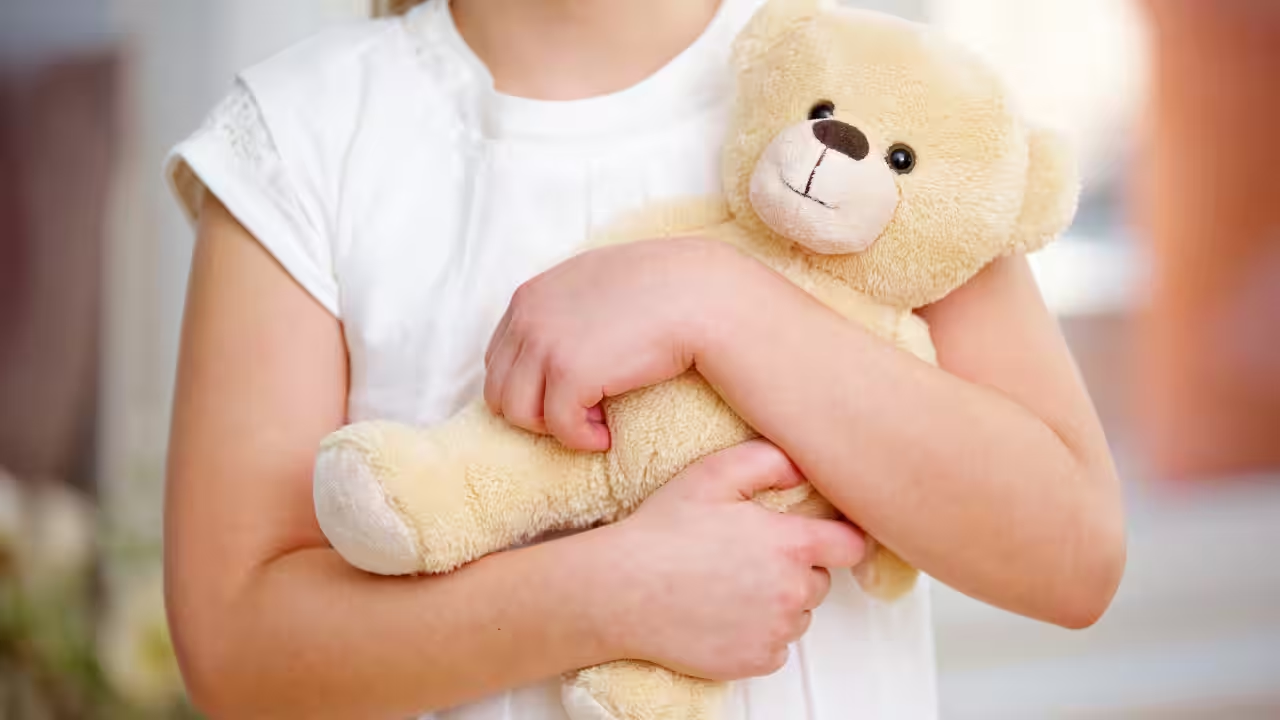
A toddler carrying a soft toy from the bedroom to the living room, insisting on taking it along during family outings or becoming upset when it is nowhere to be found may appear to be attached to a favourite plaything. But for some children, the object serves a purpose beyond entertainment: it offers familiarity, comfort and a sense of security as they navigate an unfamiliar or overwhelming world.Child-development researchers have studied this behaviour under the concept of transitional objects or attachment objects. These are familiar items, often soft toys, blankets or pieces of cloth, that children turn to for reassurance. Their significance lies not necessarily in what the object does, but in how the child feels when it is nearby.The American Academy of Pediatrics explains that such objects can help children cope with separation from caregivers, tiredness, distress and unfamiliar surroundings. Rather than being a sign of weakness or excessive dependence, attachment to a favourite object can be part of the normal process of growing towards independence.The comfort of something familiarYoung children experience many changes in a short period. They move between rooms, encounter unfamiliar people, begin attending preschool and gradually spend more time away from their primary caregivers. They are also learning to understand and communicate feelings they may not yet have the words to describe.A familiar toy can provide a sense of continuity through these transitions. Its texture, smell and appearance remain recognisable even when the surroundings change.In its guidance on transitional objects and security blankets, the American Academy of Pediatrics notes that children may develop a preference for such objects during infancy, often around eight to 12 months. The object can become particularly reassuring when a child is tired, upset or separated from a caregiver.This helps explain why a child might carry the same teddy bear through the house even when there are plenty of other toys available. The child may not be looking for a new activity at every stop. Simply having a familiar object close by may make the environment feel more manageable.Psychologist Donald Winnicott introduced the term transitional object in 1953 to describe the special relationship some young children develop with particular possessions. In this framework, the object helps bridge the child's experience of depending on a caregiver and gradually becoming more comfortable with independence.The concept does not mean that a toy replaces a parent or that every child needs one. Instead, it offers a way to understand why a seemingly ordinary possession can carry considerable emotional importance.What research says about carrying a favourite toyResearch suggests that attachment objects can play a role in how children cope with everyday stress, although the behaviour varies between children and families.A 2014 study published in Frontiers in Psychology examined attachment to inanimate objects and its relationship with early childcare. The researchers noted that children often turn to soft toys or blankets in vulnerable situations, such as when they are upset, ill, tired or in unfamiliar surroundings.The study also reviewed earlier experimental research in which children who had access to their preferred attachment objects in an unfamiliar play setting explored without showing distress for longer than children who lacked an attachment to the object. Their behaviour was comparable, in this respect, to that of children whose mothers were present.These findings offer a possible explanation for why some children want their favourite toy nearby even when a parent is in the next room. Familiarity with the object may help them feel secure enough to continue playing or exploring.However, the evidence should not be overstated. Carrying a toy from room to room has not, by itself, been established as a reliable measure of a child's emotional state. The research concerns attachment objects and responses to particular situations, not every instance of a child taking a toy along.A separate 1993 study published in Perceptual and Motor Skills observed 105 toddlers during daily separations from significant caregivers at childcare. The researchers found that attachment objects appeared to facilitate separation and reduce anxiety in mildly stressful situations.Taken together, these studies suggest that a familiar object may be one of the ways some young children manage transitions and cope with temporary separation.Why the same toy matters more than a new oneParents sometimes offer a replacement toy when a child's favourite becomes worn, dirty or damaged. Yet a new version may not provide the same reassurance, even if it looks almost identical.That preference may have something to do with the history the child associates with the original object.A 2016 study published in Cognitive Science examined young children's preference for unique, personally owned objects. In experiments involving 36 three-year-olds, researchers presented children with familiar objects they owned and comparable new alternatives.The children preferred their own objects in the relevant comparisons, suggesting that they placed special value on possessions connected to their personal history. Their preferences were not simply about which object looked newer or more attractive.The study was not specifically about toddlers carrying comfort toys between rooms, so it cannot explain every such behaviour. Nevertheless, it offers a useful insight: a possession can become meaningful because it is the child's own familiar object, not merely because of its appearance or function.Over time, a toy may become associated with bedtime routines, cuddles, family trips or moments when a child was comforted. A replacement cannot automatically reproduce those associations.For parents, this is a reason to avoid dismissing a favourite toy as interchangeable or assuming that buying a more attractive one will solve the problem.It may also be a way to manage big feelingsToddlers are still developing the ability to regulate emotions. They may become overwhelmed by frustration, fatigue, unfamiliar settings or changes in routine, and they cannot always explain what is bothering them.A favourite object can become part of the child's personal strategy for dealing with these feelings. Holding it, rubbing its fabric or simply keeping it within sight may be reassuring.A 2021 review in Current Opinion in Psychology examined the origins and development of attachment to objects. It describes sentimental attachment as a phenomenon that begins early in childhood and discusses how particular objects can acquire special significance.Similarly, a 2022 study in Early Child Development and Care, based on an online survey of 700 parents of children aged zero to nine, found that the ways children interacted with attachment objects changed with age. Younger children tended to use cloths and soft toys through physical contact, while older children were more likely to prefer soft toys and treat them as if they had personalities.The researchers suggested that attachment objects may help reduce stress responses, although the survey design does not establish that the objects alone caused this effect.The findings also point to an important distinction: the meaning of a favourite toy can change as a child grows. For one child, it may primarily offer tactile comfort; for another, it may become part of imaginative play, storytelling or pretend conversations.When should parents be concerned?In most cases, a child who wants to carry the same toy around the house does not need to be discouraged. Nor should parents assume that the habit signals anxiety, insecurity or a problem with attachment.The more useful question is whether the object supports the child's everyday life or consistently prevents the child from participating in it.If a toddler carries a soft toy while moving between rooms, plays happily with it nearby and occasionally leaves it behind without distress, there is generally little reason to intervene. The object can be allowed to remain part of the child's routine.Parents can also use the toy to help make transitions easier. For instance, a child starting preschool may be allowed to take an appropriate comfort object if the school permits it. During a change in routine, caregivers can acknowledge the child's feelings rather than insisting that the child should be too old to need the toy.At the same time, parents can gently encourage other ways of coping. They might offer a cuddle, explain what will happen next, maintain predictable routines or help the child name feelings such as fear, sadness and frustration. The aim is not to remove a source of comfort abruptly, but to gradually broaden the child's range of coping strategies.If separation from the object repeatedly triggers extreme distress, or the child's distress substantially interferes with sleep, preschool attendance, play or everyday activities, parents can discuss the pattern with a paediatrician or child-development professional. Such concerns need to be considered in context rather than inferred from the attachment alone.Practical safety matters, too. Small parts, loose buttons, damaged stuffing and long cords can pose risks, while toys taken outdoors may need regular cleaning. Parents should also follow age-appropriate safe-sleep guidance and avoid placing soft objects in an infant's sleep space.The takeaway for parentsA child who carries the same toy from room to room may simply enjoy playing with it. But when the object is consistently sought during transitions, tiredness or distress, it may also be serving as a source of emotional reassurance.The research on attachment objects suggests that familiar possessions can help some children cope with separation and unfamiliar experiences. It does not mean that every child who carries a toy is anxious, or that children who do not have a favourite object are missing an important developmental experience.For parents, the best response is to observe the pattern without rushing to interpret it. Sometimes, the worn teddy bear or much-loved soft toy is not getting in the way of independence. It is helping a child feel secure enough to explore the world beyond it.You use AI every day. Now get your AI Quotient. Take the AIQ testGet the latest Lifestyle News and more. Download the TOI app.
Topics in this story
Gathered from external sources. Rights to this text belong to whoever originally published it.