In 1883, Harriet Strong was left with four daughters and a debt-ridden ranch after her husband’s death; she later developed water-storage systems that anticipated major US projects
In 1883, Harriet Williams Russell Strong found herself responsible for a struggling California ranch, four young daughters and debts left behind by her
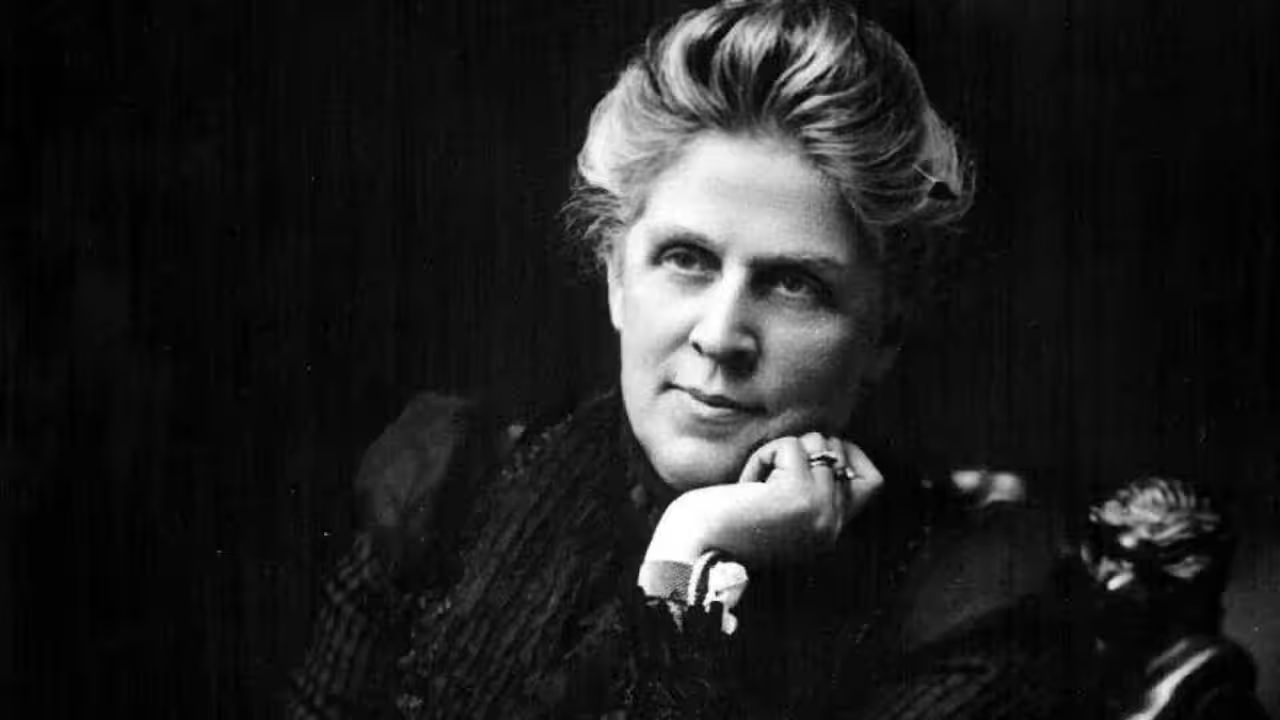
In 1883, Harriet Williams Russell Strong found herself responsible for a struggling California ranch, four young daughters and debts left behind by her late husband. She had little experience managing agricultural land and was still dealing with persistent health problems. The ranch, however, depended on something she soon began to understand better than most experienced farmers: water. As she worked to keep the property financially viable, Strong developed ways to store and control water for irrigation, eventually securing several US patents. Her work took her beyond farming and into public policy, where she argued for large-scale water management projects that would influence the development of the American West.How Harriet Strong inherited a debt-ridden ranch in 1883Harriet Strong's circumstances changed dramatically in 1883 when her husband, Charles Strong, died by suicide following the collapse of another business venture. He had lost money in a mining investment that turned out to be worthless, leaving Harriet to deal with the financial consequences. At the time, she was in Philadelphia receiving treatment for a longstanding spinal condition. Her four daughters, aged between 10 and 14, were living in Whittier, California.According to the United States Patent and Trademark Office (USPTO), after completing her treatment, Harriet returned to California and took responsibility for the family's 220-acre Rancho del Fuerte. The property was facing financial difficulties, and creditors were seeking to recover the money owed by her late husband. She had no formal agricultural training and was not in particularly good health, but losing the ranch was not an option she was prepared to accept.She began studying farming through books, scientific publications and conversations with neighbouring landowners. Her research covered everything from soil conditions and crop selection to irrigation and agricultural markets.How walnut farming and pampas grass helped her rebuild the businessStrong identified walnuts as a potentially profitable crop and devoted around 150 acres of the property to growing walnut trees. There was a practical difficulty, though. The trees needed substantial quantities of water and took years to produce a commercial harvest. She needed another source of income while waiting for the orchard to mature.As reported by USPTO), her solution was Argentine pampas grass, a fast-growing plant that could be cultivated between the rows of walnut trees. Its decorative plumes were increasingly popular during the Victorian period, particularly as alternatives to feathers used in fashionable hats. Strong recognised that the crop could provide an additional income stream without requiring her to abandon the long-term walnut plan.Pampas plumes sold wholesale for around four cents each, a considerable sum for the period, and Strong found ways to keep the business going as consumer tastes changed. She supplied coloured red, white and blue plumes for the 1892 and 1896 Democratic and Republican national conventions, turning the decorative grass into a product with a market beyond ordinary household and fashion use.How a walnut orchard inspired Harriet Strong's water inventionsThe success of the walnut orchard depended heavily on reliable irrigation. Southern California's climate presented a difficult combination of limited rainfall and sudden, destructive floods. Heavy storms could send large volumes of water through the Los Angeles basin, damaging farmland and carrying away resources that might otherwise have been stored for dry periods.Strong began working on ways to address both problems. Instead of allowing stormwater to run off the land, she developed a system of reservoirs and interconnected dams designed to retain water for agricultural use. Her approach involved a series of ascending dams, with each structure helping to support the one above it.Beginning in 1887, Strong secured patents covering dam and reservoir construction and irrigation systems. She eventually became the named inventor on five US patents.The 1893 Chicago World's Fair brought wider recognitionStrong's business success gave her an opportunity to present her agricultural and inventive work to a national audience. At the 1893 World's Columbian Exposition in Chicago, she received two medals for her inventions and promoted the products grown on her ranch.One of the most unusual displays associated with her visit was the Pampas Plume Palace, an elaborate structure made largely from the grass she cultivated. Her daughters helped with its construction. The display attracted attention at a time when decorative pampas plumes were a fashionable commercial product.The fair also gave Strong a platform to discuss women's participation in business. She spoke at a congress devoted to business training for women, arguing that practical knowledge of commercial affairs could help women take a greater role in public administration.How Harriet Strong expanded her work beyond agricultureBy the early 20th century, Strong's interests had expanded well beyond her ranch. Her knowledge of water management brought her into discussions about flood prevention and the infrastructure needed to support agriculture across Southern California.She played a part in the campaign that led to the Los Angeles Flood Control Act of 1915 and served on a flood control board. Her public involvement came at a time when women in the United States were still fighting for basic political representation. California had granted women the right to vote in 1911, but Strong's participation in public affairs had begun before that change.In 1918, she became the first woman delegate to attend a convention of the US Chamber of Commerce, another indication of how far her career had moved from the management of a single agricultural property.Her Colorado River proposal reached Congress during World War IDuring the First World War, Strong travelled to Washington, DC, to present Congress with a proposal for a major dam on the Colorado River, near the lower end of the Grand Canyon. Her plan was intended to achieve several objectives at once: regulate flooding, conserve water, generate hydroelectric power and provide irrigation to farmland.The agricultural argument was particularly relevant during wartime. Strong believed that a dependable water supply could increase food production in the American West, helping the United States support Allied forces and civilians affected by the conflict.She viewed the Colorado River as a resource that needed to be managed on a regional scale rather than through isolated agricultural projects. Her proposal anticipated the role that large dams and canal networks would later play in supplying water to farms and settlements across the region.Congress did not approve her plan as the war came to an end. Strong believed the proposal had been dismissed partly because it had come from a woman rather than because of its practical merits.Hoover Dam and the All-American Canal followed years laterHarriet Strong died in a car accident in 1926, before the large Colorado River projects she had advocated for became reality. Her ideas, however, remained relevant as the federal government moved towards developing major water infrastructure in the region.Congress approved the Boulder Canyon Project in 1928, providing the legislative foundation for the construction of Hoover Dam. Work on the structure was completed in 1935. The dam became a major source of hydroelectric power while helping regulate the Colorado River and store water for use across the Southwest.The legislation also provided for the All-American Canal, a major irrigation project intended to carry Colorado River water into California's Imperial Valley. Construction began in 1942, and the canal became a central part of the region's agricultural water supply.You use AI every day. Now get your AI Quotient. Take the AIQ test.
Topics in this story
Gathered from external sources. Rights to this text belong to whoever originally published it.