Influencers are everywhere at the U.S. Open. Even tennis stars say it's gone too far.
Tennis players know that the presence of influencers at their matches is good for the popularity of the sport — but at what cost?
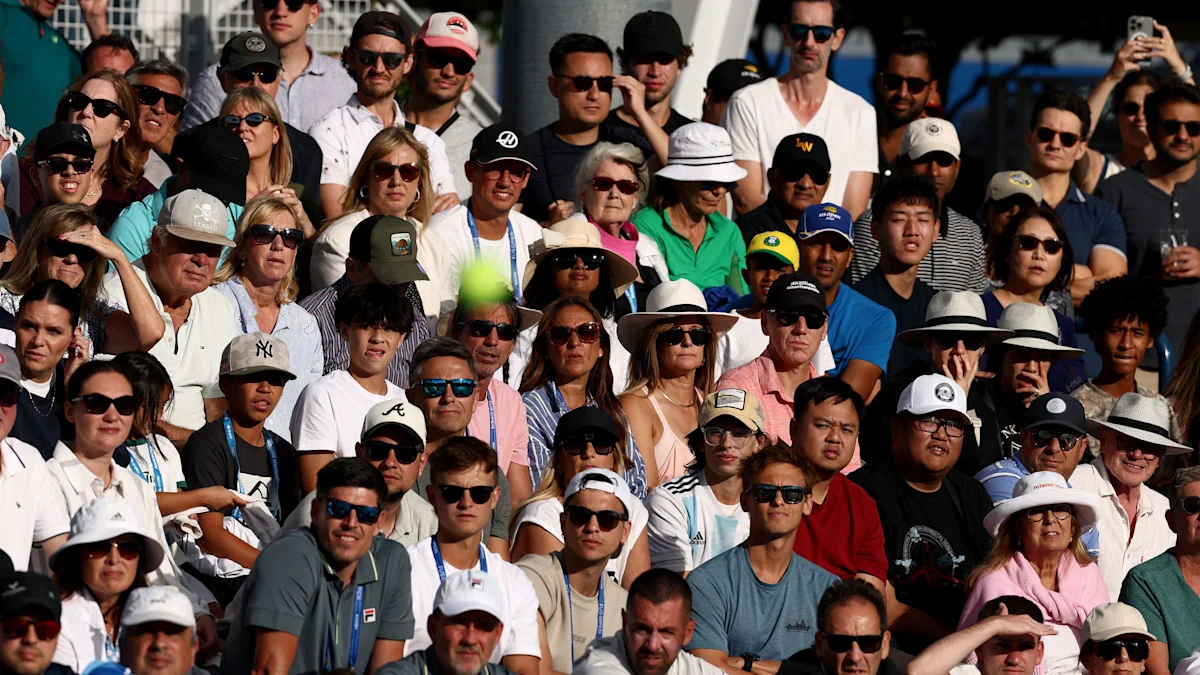
It's struck Coachella , fashion week and even summers in Nantucket . Now, influencer fatigue has come for the U.S. Open.
For two weeks every year, the notoriously ritzy tennis tournament attracts fans, celebrities and bougie vibe enthusiasts, who navigate long lines to the USTA Billie Jean King National Tennis Center in Queens, N.Y., to watch matches and be seen doing so.
It's got all the trappings of content creator heaven : Viral food and drinks to taste test, limited-edition merchandise to purchase, stars to rub elbows with, fashion trends to spot and iconic imagery that instantly makes social media posts recognizable. As some have pointed out, it's inherently a bit performative .
"Tennis has always married sport with spectacle, and fashion, celebrity and luxury are genuinely part of the Open's DNA," Soneca Guadara, a longtime U.S. Open attendee and style consultant, told Yahoo. " From a marketing standpoint, it makes perfect sense that creators want to be there."
So why is the presence of influencers a problem at all? It's more than just disdain for the privileged and wealthy, which influencers often face at other luxury events. This year, it's what some view as bad behavior during matches that's drawing ire.
Traditionally, it's proper etiquette at tennis matches to be quiet and respectful during play — more so than at other sporting events, like basketball or football games — and that decorum is typically enforced by the chair umpire.
But an Instagram post that went viral this week shows a woman posing for photos with a selfie light on during Naomi Osaka's first-round match against Anastasia Zakharova. Later in the video, a gaggle of attendees is seen filming content in a suite. Another video from a different angle caught the same group, with a fan seated below them appearing disgruntled .
At one point, the chair umpire had to pause the match , saying, "Guys, please, in the suite behind me … please take your seat." It's unclear whether it was directed at the same group.
Commenters in those social media posts weren't pleased to see content creators disrespecting the game. "Between influencers, corporate wining and dining, and bots, ticket prices are sky high and yet empty seats abound," one wrote.
"This is extremely sad and disappointing because there are soooo many true tennis fans that would kill to have this experience to go to the US open & tix are getting so [expensive]," another said.
After the match, Osaka said that while influencers can help "make the sport of tennis popular," the distractions "have to be managed a lot better."
"If you come to a sporting event, you have to respect the sport," she added.
American tennis stars Jessica Pegula and Coco Gauff also chimed in on the controversy, with Pegula saying that influencer behavior has " gotten a little maybe too much " this year and Gauff noting that camera flashes can be distracting.
That group of influencers wasn't the only one drawing attention away from tennis, either. Another video shows a group of men showing off their outfits, appearing to prioritize caviar chicken nuggets and fashion over the sport. And let's not forget how many people have complained that the stadium is just loud in general now , abandoning the quiet spectatorship traditionally associated with tennis. As one TikToker suggested , some creators seem more focused on getting content than enjoying the experience.
Bad etiquette should be an easy fix. The brands that bring influencers along could just fill them in on the nuances of tennis culture. "If you're being invited to [a] red carpet, you wouldn't show up in jeans," Gauff said. It would also help prevent bad publicity for the brands, which are likely being tagged in posts by the influencers they invited to their suites.
I can't help but notice that, even if influencers behaved with perfect politeness at the U.S. Open, some people would still openly resent them. I saw the same comment echoed on multiple posts : "Influencers ruin everything."
They're marketers, so content creation is their job. But psychologist Sal Raichbach told Yahoo that audiences "disconnect" when they're obviously being sold something. On top of that, the access given to influencers is not something many fans can afford these days .
"Humans typically react very differently to things we believe were offered freely, versus things we assume were designed to influence us or demonstrate status," he said.
It doesn't help that influencers tend to post the same content at the U.S. Open — outfit photos in front of the courts, and tours of spaces that most people may never be able to access. They're all grabbing a Honey Deuce , the event's signature drink, or a $38 French Dip sandwich from Salt Hank's .
Jennifer Neeley, a strategic marketing adviser and instructor in digital marketing and influencer marketing at UC San Diego, told Yahoo that influencer fatigue really kicks in "when creator access starts to feel more visible than the event itself."
It shines a spotlight on just how many of them are not actually there for tennis, she said.
The problem, Neeley explained, is not the influencers; it's the "promotional sameness." The same pageantry and tradition that make the tennis tournament charming is the downfall of the influencers who promote it, and the solution might be to offer a new point of view instead of repeating the same old content.
And maybe studying up on tennis before attending one of the sport's biggest events will help too.
Topics in this story
Gathered from external sources. Rights to this text belong to whoever originally published it.