A 500-year-old Suffolk pub was partly destroyed by fire in 2013; 450 community shareholders helped raise over £400,000 to bring it back
Few things matter more to a village than its pub.
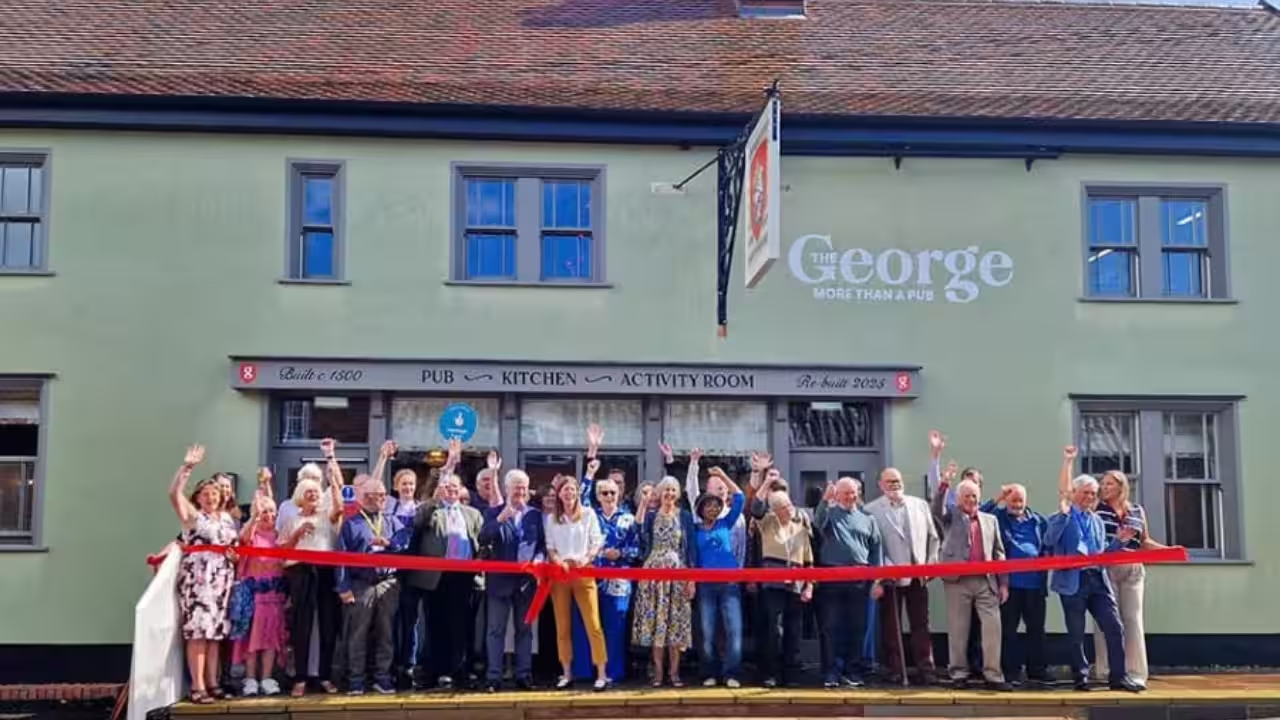
Few things matter more to a village than its pub. In Wickham Market, East Suffolk, that truth was tested when fire partially destroyed The George, a building thought to be 500 years old, in 2013. Instead of watching it disappear, local people stepped forward. Hundreds became shareholders, volunteers gave thousands of hours, and a decade of determined fundraising followed. Today the Grade II listed pub is open again, serving as a meeting place and a home for community activities. Read on to discover how one village turned a devastating fire into a lasting example of community ownership and heritage conservation.The George in Wickham Market, a Grade II listed pub, thought to be 500 years old, was hit by fire in 2013The George is a Grade II listed pub in Wickham Market, a historic market village in East Suffolk. According to the National Lottery Heritage Fund, which published the story on its website, the building is thought to be 500 years old and sits within the village's conservation area, a designation that recognises the special architectural and historic character of a place. In 2013, fire partially destroyed the pub. For many villages, a loss like that would have meant the end of a beloved local gathering place. Instead, local people formed a community benefit society, an organisation run for the good of the wider community, with a clear goal, buy the building, restore it, and run it as a community pub and social enterprise.How 450 community shareholders contributed more than £400,000 over ten years to save their village pubWhat happened next is a lesson in patience. The National Lottery Heritage Fund reports that the local group spent ten years fundraising to bring The George back. During that decade, 450 community shareholders contributed, and together they put in more than £400,000. A community shareholding model like this gives ordinary residents a direct stake in a local asset, turning customers and neighbours into part-owners with a say in its future. It also demonstrates how many people were prepared to back a pub that many might have considered lost. Colin Owens, project lead of the venue's management committee, told the National Lottery Heritage Fund that the volunteer group raised in excess of £2 million overall to complete the project, a total well above the shareholders' contribution alone.National Lottery Heritage Fund grants worth £1.8 million helped rescue Wickham Market's last pubCommunity money was only part of the picture. The National Lottery Heritage Fund, the organisation behind the project page this article draws on, awarded £1.8 million in Heritage Enterprise grants to help rescue Wickham Market's last pub. Its project data lists the applicant as The George Community Pub (Wickham Market) Limited and records an award of £1,815,424, made on 3 September 2019. That support arrived years after the fire and during the decade of fundraising. Combined with the shareholders' investment, it gave the group the financial footing to proceed with restoration. For anyone studying how to save a threatened local landmark, the lesson is clear: community commitment and National Lottery heritage funding can work together to achieve what neither could manage alone.Restoring The George: ten thousand volunteer hours, hidden historic features, and a modern extensionThe restoration was a major undertaking. The National Lottery Heritage Fund says the project's volunteers estimate they spent 10,000 hours seeing the work through to completion. Spread across a standard full-time working year of about 2,000 hours, that equals roughly five years of work. Along the way, they uncovered and restored the building's historic features, including wooden beams and bricked-up staircases. A new extension adapted the pub for modern commercial use and added a kitchen and an accessible toilet, while a new lift now serves the first-floor community space. The volunteers also researched the pub's past, tracing landlords back to 1746, and used their findings in displays inside the building. The result blends old and new, a centuries-old structure with its character revealed, and the practical facilities a busy twenty-first-century venue requires.A reopened village hub since 2025, new jobs, a community choir, a wellbeing café, and award recognitionThe George reopened in September 2025, with a ribbon-cutting on 4 September. According to the National Lottery Heritage Fund, the reopening created several new jobs in a rural village. The first-floor community space now hosts weekly activities, including a wellbeing café, exercise classes, and a community choir. Recognition followed quickly, in 2025, the team won a Rural Community Business Award and was joint runner-up in the Campaign for Real Ale's Pub Saving Awards. Colin Owens told the National Lottery Heritage Fund that the volunteers wanted to restore the pub "to be more than a pub." Judging by the weekly activities, jobs, and awards, that ambition appears to be coming true, and The George now stands as an encouraging example for other communities facing the loss of a local landmark.You use AI every day. Now get your AI Quotient. Take the AIQ test.
Topics in this story
- National Lottery Heritage Fund
- Suffolk pub fire restoration
- community pub ownership
- The George reopening
- community fundraising success
- Wickham Market community activities
- heritage conservation
- volunteer efforts in pub restoration
- rural community business awards
- The George Community Pub (Wickham Market) Limited
Gathered from external sources. Rights to this text belong to whoever originally published it.