Building owned by Saudi oil giant damaged in missile attack on Riyadh’s financial district
A building belonging to Saudi oil giant Aramco in the financial district in the capital Riyadh has been damaged in a missile attack.
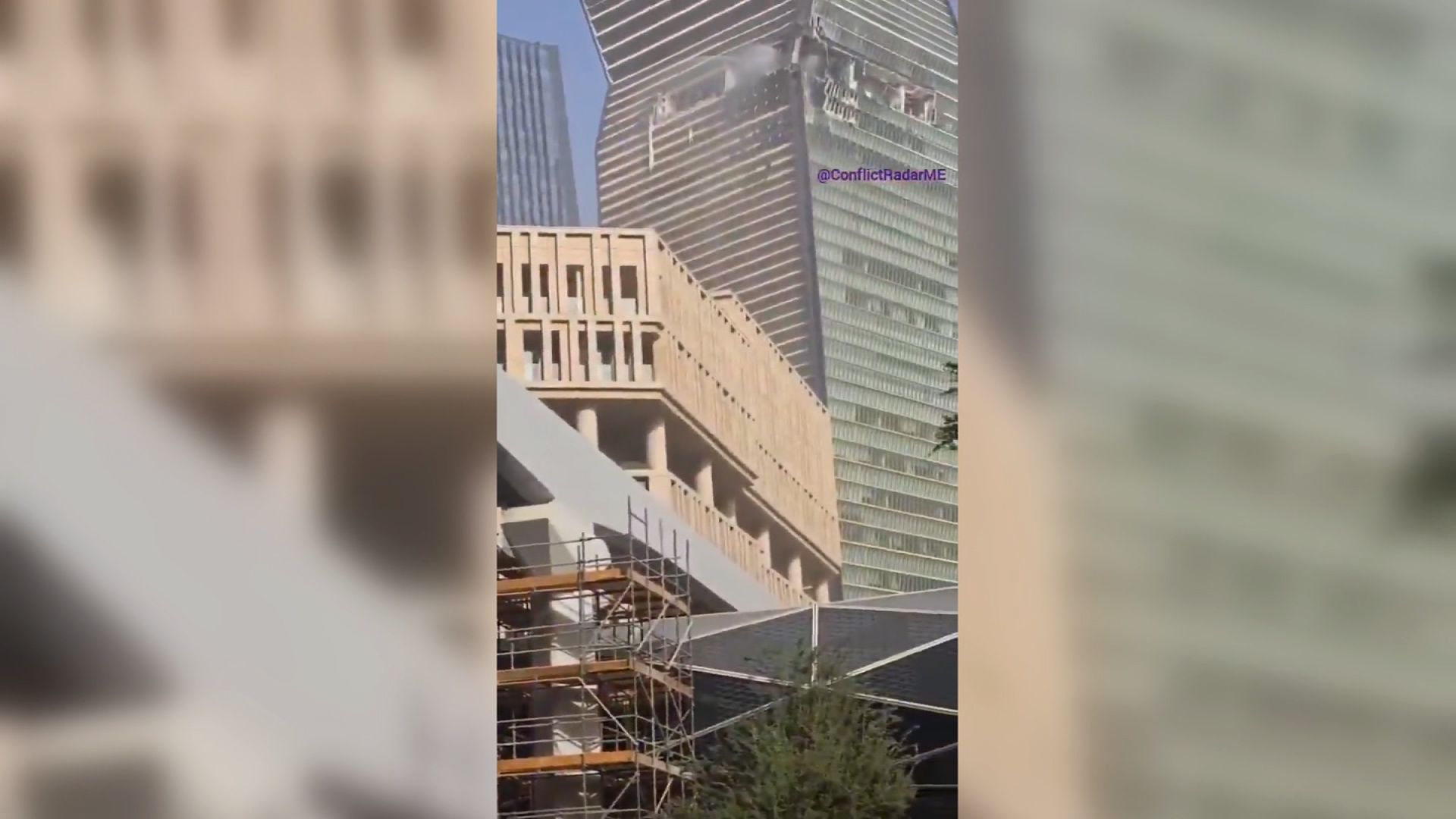
A building belonging to Saudi oil giant Aramco in the financial district of the capital Riyadh has been damaged in a missile attack. The strike in King Abdullah Financial District has been claimed by the Iran-allied Houthis and came after Saudi Civil Defense issued an early-warning alert of a potential threat to the city. Video circulating on social media and verified by CNN shows damage to several floors of the Aramco building, with windows seen blown out. But Saudi authorities said the impact was minimal. “An administrative building belonging to Saudi Aramco in Riyadh was subjected to an attempted attack,” on Sunday, according to the official Saudi news agency, citing a source at the Saudi Energy Ministry. “The incident resulted in falling shrapnel that caused minor damage to the building, with no injuries or fatalities reported,” the agency reported. However, one witness said they saw ambulances heading to the area. CNN has reached out to the Information Ministry by email for further details. The Houthis, who have fired missiles and drones towards multiple targets across Saudi Arabia over the last three months, said in the attack on Riyadh’s financial district was one of several it carried out on Aramco targets. There was no initial comment from Saudi authorities on the additional claims. The Houthis said they had also targeted Saudi-led ground forces in several parts of Yemen. The Saudi led coalition said it had intercepted and destroyed two cruise missiles in Riyadh and the southern region. Coalition spokesman Turki al-Maliki wrote in a post on X that air defenses also “intercepted and destroyed two ballistic missiles launched by the terrorist Houthi militia towards Riyadh.” Saudi defense challenges The missile attacks on Riyadh came a day after Yemen’s Houthi-run health ministry said Saudi airstrikes had killed at least 33 people near the capital Sanaa, including women and children. “We will punish the Saudi regime for its crimes against the Yemeni people,” said Mahdi al-Mashat, a senior Houthi official, on Saturday. Last month, 13 people were killed in one missile strike on Riyadh’s international airport, and several more died in other strikes on the airport. The Houthis have said they will continue firing missiles and drones against Saudi Arabia so long as the Kingdom carries out airstrikes against the parts of Yemen they control and enforces a blockade against its territory. Saudi Arabia spent $83 billion on defense last year, according to the Stockholm International Peace Research Institute, putting it firmly among the top ten military spenders worldwide. It has acquired US fighter jets as well as Patriot and THAAD air defense systems, and a range of advanced weaponry from France and the United Kingdom. But the Saudis have a lot to defend: a country roughly one-fifth the size of the US, with threats on three sides - from Iran, Iranian-backed militias in Iraq, and the Houthis. The Saudis are intercepting many of the missiles and drones fired by the Houthis. But some get through. The defense ministry faces difficult choices in distributing the existing systems with so many installations vulnerable to attack. The Houthis have learned to combine ballistic and cruise missiles with long-range drones to overwhelm Saudi defenses, according to analysts. In Yemen, the Saudi-backed coalition is trying to prevent the Houthis from advancing further south towards the port of Aden, which is held by the internationally-recognized government. The Houthis have frequently targeted Aden’s airport with missiles in recent weeks, after taking a stretch of Yemen’s Red Sea coast in September. Hostilities between the Houthis, who are backed by Iran, and Saudi Arabia reignited in July, shattering a 2022 UN-brokered ceasefire that had largely halted fighting between the two sides. Ibrahim Dahman, Teele Rebane and Farida Elsebai contributed reporting.
Topics in this story
Gathered from external sources. Rights to this text belong to whoever originally published it.