In 2011, University of Maryland students rescued dining-hall food headed for landfills; Food Recovery Network grew to 230 chapters in 44 states within five years
Since its inception in 2011, the Food Recovery Network has transformed the way colleges manage food waste by rescuing millions of pounds of edible food and delivering it to those in need, proving the power of student activism in combating hunger and waste.
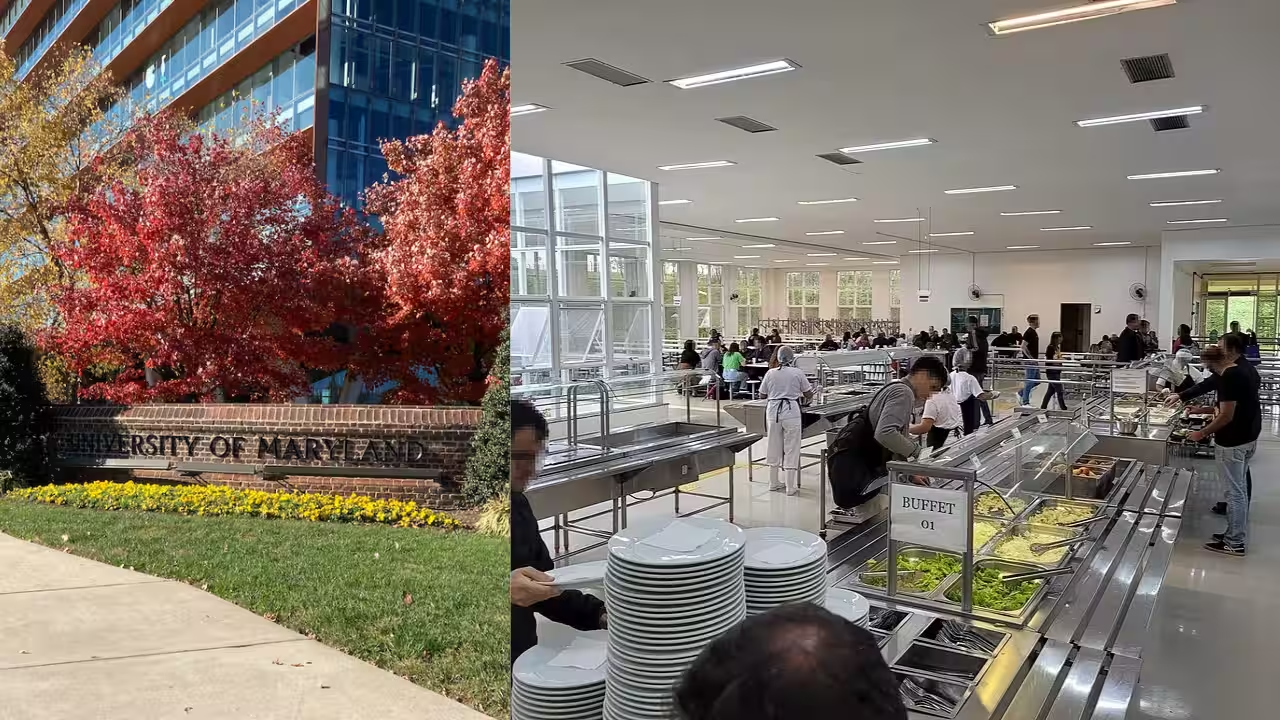
Food Recovery Network began in 2011 after University of Maryland students noticed that edible food was being discarded in campus dining halls while people in the surrounding community were going hungry. The students started collecting surplus prepared food and delivering it to local nonprofit organizations rather than allowing it to become waste. The first operation was small, but the idea could be repeated on other campuses without the need for a completely new system.Food Recovery Network’s own account traces the beginning to a group of University of Maryland students who saw usable dining-hall food being thrown away. The students organized recoveries around the end of dining periods, collected food that could still be served and transported it to hunger-fighting agencies. The University of Maryland chapter had recovered 30,000 meals for agencies in the Washington, DC, area by the end of the first school year.A second chapter was established at Brown University in spring 2012, while food-recovery programs at the University of California, Berkeley and Pomona College also joined the developing network. Students at different campuses could work with their dining services and nearby nonprofit partners while using the same basic recovery approach.Students built the network campus by campusFood Recovery Network said that students at more than 160 colleges and universities had participated in collecting surplus prepared food from campus dining services and local restaurants by 2015. That year, the organization announced that its network had recovered its one-millionth pound of food since its founding in 2011.Student volunteers worked with dining-hall staff to identify food that could still be donated, packed it for transport and delivered it to partner agencies. Students used scheduled pickups and university transportation to move recovered food to community organizations at the University of Maryland, while other chapters developed similar arrangements with campus dining providers and local hunger-relief groups. Some dining facilities used recovery data to understand how much food was routinely left over. At the University of Maryland’s South Campus Dining Hall, the data helped the dining operation adjust production, eventually reducing the need for regular recovery pickups there.Five years later, the idea had spread nationwideFood Recovery Network reported that it had recovered more than 2 million pounds of surplus food by 2017, and its network had grown to more than 220 college campus chapters in 44 states and the District of Columbia, according to an announcement that marked the two-million-pound milestone. The organization described its chapters as groups of college students who collected usable surplus food from campus dining halls and nearby businesses before delivering it to people in need. The recovered food included prepared meals and other edible items that might otherwise have been discarded after dining services finished serving the students.The five-year expansion was significant because it worked through infrastructure that was already present on college campuses, with dining halls producing food, students being available to organize collections and nonprofit agencies already having relationships with communities that were experiencing hunger. Chapters could establish local partnerships rather than creating separate distribution systems, which allowed recovered food to move directly from campuses to community organizations. Students also gained a practical role in coordinating pickups, sorting food and arranging deliveries.Food Recovery Network has since expanded its work beyond the original campus model, but the basic idea remains connected to what those University of Maryland students began in 2011; which is, to take food that is still usable, keep it out of the waste stream, and move it through an existing local network to organizations serving people who need it.You use AI every day. Now get your AI Quotient. Take the AIQ test.
Topics in this story
Gathered from external sources. Rights to this text belong to whoever originally published it.