At 22, Theodore Roosevelt bought 155 acres in Oyster Bay; today, Sagamore Hill is a National Historic Site open to visitors
US News: Discover the fascinating history of Sagamore Hill, Theodore Roosevelt's family home and working farm, now a preserved National Historic Site open to visitors. Explore its rich legacy and the life of the 26th U.S. President.
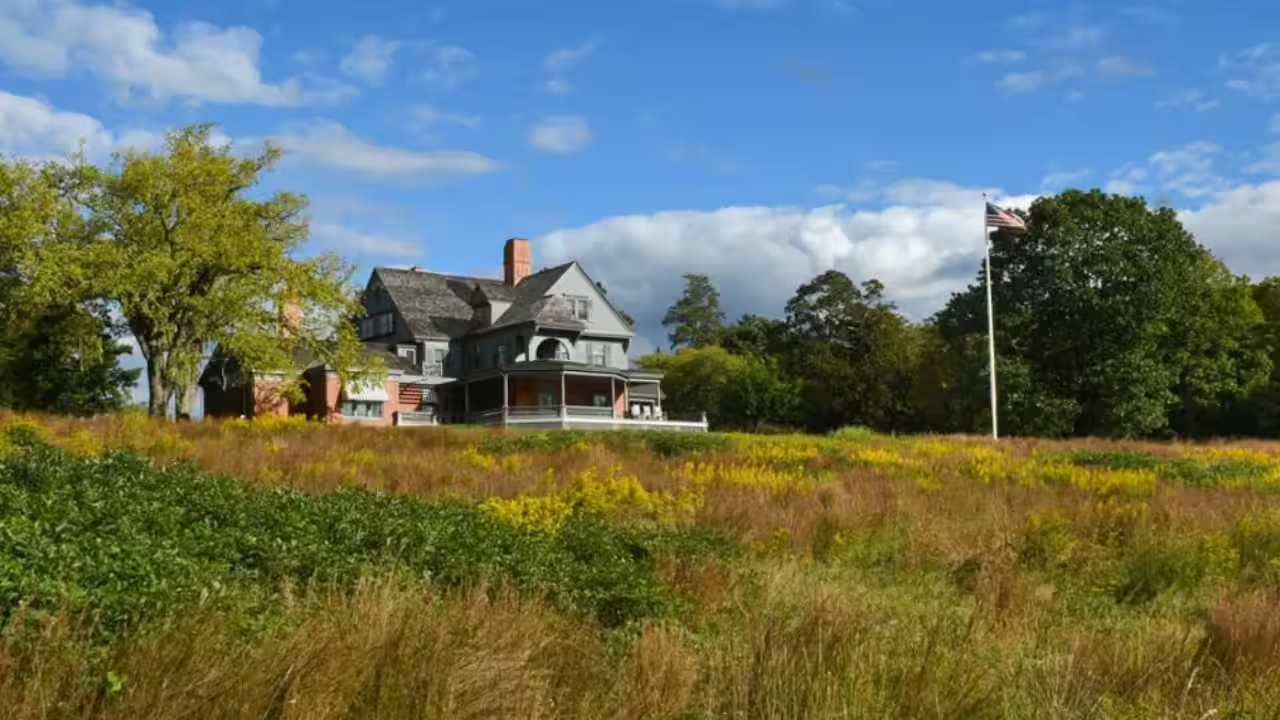
At 22, Theodore Roosevelt, who was the 26th President of the United States, purchased 155 acres in the Oyster Bay Cove area of Long Island. He bought the land for $30,000 and set in motion the creation of a home that would become Sagamore Hill. Eventually, the property was a reflection of several chapters of Roosevelt’s life: it was his family home, a working farm and, during his presidency, a summer base for conducting national affairs. Today, the estate is preserved as Sagamore Hill National Historic Site. The site does not still operate as a commercial farm, though. Instead, it is now preserved and interpreted for visitors.The journey from a 155-acre purchase to Sagamore HillReports suggest that Roosevelt had known Oyster Bay since he was a child, as he used to visit the Long Island area with his family during summer vacations in the 1870s. According to the National Park Service, he became attached to its natural setting and enjoyed activities such as hiking, rowing, swimming and riding. After finishing college, Roosevelt decided to purchase land in Oyster Bay, as he believed it to be the right place to settle and raise a family. He therefore bought farmland in Cove Neck and envisioned a substantial home on the property.In 1884, Roosevelt reportedly hired New York City architects Lamb and Rich to design a large Queen Anne-style residence, and the construction of the same began later that year. The plan, however, faced a major interruption when Roosevelt’s wife, Alice Hathaway Lee Roosevelt, died in February 1884, just two days after giving birth to their daughter, who was also named Alice. The house was eventually completed in 1885 by John A. Wood and Son at the cost of $16,975 after Roosevelt decided to proceed with the construction. He named the house Sagamore Hill.In 1886, Roosevelt became acquainted with Edith Kermit Carow, and the two got married later that year. Historical records show that Theodore and Edith took up full-time residence at Sagamore Hill in 1887, and would raise a total of six children, including his eldest daughter Alice, making the estate the centre of the Roosevelt family’s life for the following decades.Roosevelt had also dedicated 47 acres of the land to farmland, and the first buildings erected on the property were a stable and lodge that were constructed before the main house was built. The farmland included pasture and cultivated land that used to support the household. As per the federal organisation’s records, cows, chickens, turkeys and pigs were among the animals kept on the farm, while workers cultivated hay and straw alongside maintaining fruit and vegetable groves.A farm woven into the family lifeInstead of being an ornamental feature on the estate, the agricultural work was part of the household’s daily routine. Edith Roosevelt managed most of the property alongside the household responsibilities. NPS noted in their account that she would often send Roosevelt to help the farmhands bring in hay when she thought he was working too hard. Meanwhile, Roosevelt allegedly enjoyed the physical labour and reportedly even insisted the farm manager put his name on the time sheets so he could receive the daily wage after spending a day working alongside the employees.The farm’s size and production varied as Roosevelt bought and sold portions of the surrounding property to relatives between 1884 and 1906. The NPS currently describes the Sagamore Hill National Historic Site as protecting approximately 83 acres of the historic estate and its natural surroundings.The farm also accommodated Roosevelt’s growing political career. After becoming president in 1901, Roosevelt wanted to escape Washington’s summer heat and moved his office to Sagamore Hill during the warmer months. Therefore, from 1902 through 1908, the estate was considered his Summer White House for seven summers during his presidency, which eventually ended in 1909.Despite the presidential role, the property’s domestic character was left intact, as it continued to function as the Roosevelt family home while also hosting political meetings and esteemed guests. NPS noted that visitors staying with the Roosevelts could enjoy meals supplied in part by produce from the farm.Transformation from Roosevelt home to National Historic SiteRoosevelt remained at Sagamore Hill until his death on 6 January 1919, while Edith continued living there until her death in 1948. Theodore Roosevelt Jr., their eldest son, later acquired four acres from Edith in 1938 and built a house known as Old Orchard in an area that had once been the property’s apple orchard. This indicates that the property’s later history was not simply the preservation of one unchanged presidential residence, but the continuation of a family landscape that had evolved over generations.The federal organisation says that Sagamore Hill National Historic Site was officially authorised by Congress on July 25, 1962, with the land formally transferring to the government the following year. The preserved property now includes Roosevelt’s home and the surrounding landscape, allowing visitors to experience the setting in which the former president lived from the late 19th century until his death in the early 20th century.Catch the latest World News and Live updates. Download the TOI app.
Topics in this story
Gathered from external sources. Rights to this text belong to whoever originally published it.