EPA chief Zeldin reveals why Iowa explosives detonation couldn't wait until after Thanksgiving
EPA Administrator Lee Zeldin says lead azide stored in liquid was crystalizing in Iowa's cold weather, forcing a controlled detonation before Thanksgiving.
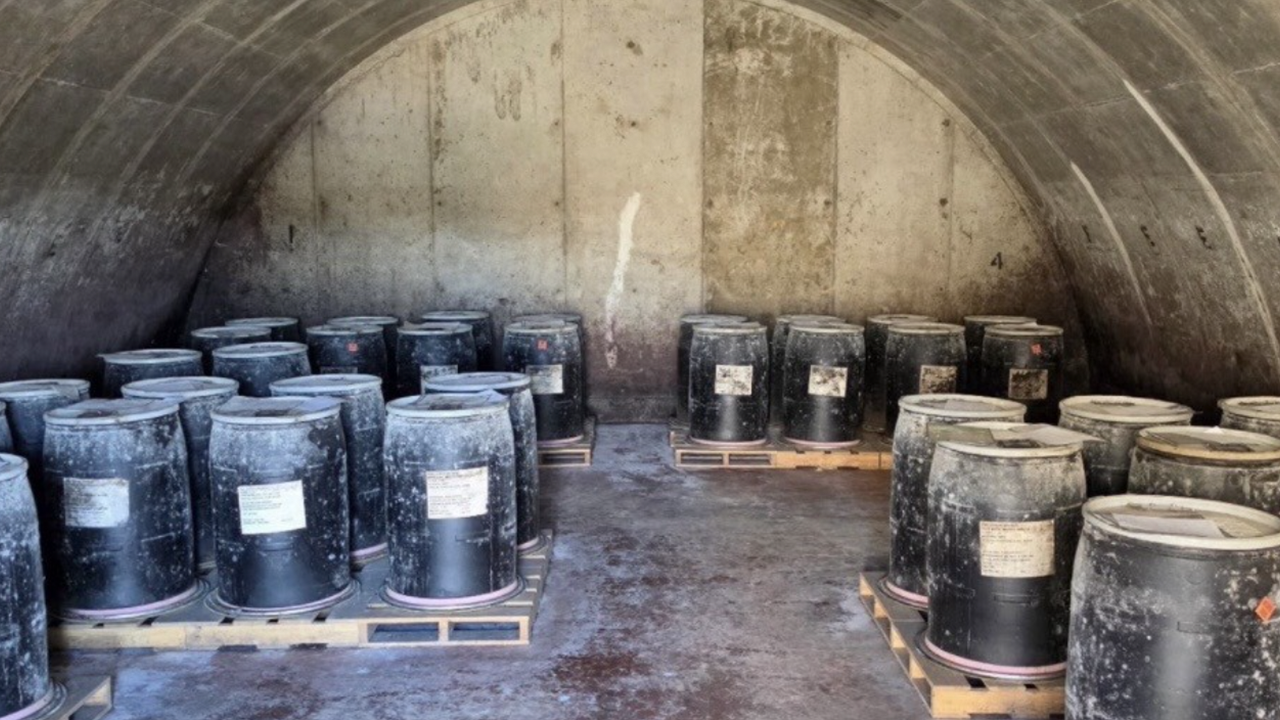
Environmental Protection Agency (EPA) Administrator Lee Zeldin explained on "The Sunday Briefing" why the Army carried out a controlled detonation of unstable explosives in Iowa the day before Thanksgiving, saying further delays would have increased the risk of an unmanaged explosion. Zeldin explained that the lead azide, an explosive compound, was stored in liquid, which was crystallizing faster as the weather grew colder, leading to increased risk of spontaneous detonation. The eve of Thanksgiving was chosen because of optimal weather, including wind blowing at low speeds away from the most populated areas, Zeldin continued. CONTROLLED IOWA MUNITIONS DETONATION BETTER THAN ‘WORST-CASE SCENARIO,’ ACTING ARMY SECRETARY SAYS "There are questions to ask, like why was this lead azide put there in the first place in 2009, the entire stockpile sent there to just degrade?" Zeldin said, contending that the volatile compound should have been disposed of at that time rather than being stored until controlled detonation became the best option. "Those questions are certainly fair game. And you could go back and Monday-morning quarterback a decision made in 2009, and a whole lot of people are looking back at that and saying it was not handled well by the Obama administration," he added. Despite misgivings surrounding the handling of the lead azide, initial lab tests found no rise in lead contamination in southeastern Iowa’s drinking water and lakes following the detonation, according to Zeldin. Results from 38 public drinking water samples and 26 recreational water samples collected after Wednesday's blast at the Iowa Army Ammunition Plant in Middletown showed no lead tied to the detonation. EPA REPORTS 'ZERO DETECTION OF AIRBORNE LEAD' DAY AFTER IOWA LEAD AZIDE DETONATION Still, the agency has yet to release results for the vast majority of the 1,616 post-detonation samples collected across air, tap water, soil and dust, fueling skepticism from environmentalists who warn the testing is far from complete. Zeldin clarified those results would be posted online after validation. Pressed as to why the public should trust the EPA's assertion that lead contamination is not an issue, Zeldin replied, "You have to rely on the data," insisting that "If you see any elevation anywhere, then you transparently report it with the public." The detonation was a "whole of government effort," involving consultation from the Department of Energy (DOE), the Bureau of Alcohol, Tobacco, Firearms and Explosives (ATF), the Federal Bureau of Investigation (FBI) and other agencies, Zeldin added. CLICK HERE TO DOWNLOAD THE FOX NEWS APP The Department of War (DOW) told him the detonation went off perfectly, and the EPA's response was informed by the environmental disaster in East Palestine, Ohio, in 2023, when a train was derailed, spilling hazardous chemicals into the environment. "The American public and especially Iowans and those who live in Illinois and Missouri, they just want the facts. They're smart enough to make sense of it for themselves," Zeldin said. Fox News Digital's Stephen Sorace contributed to this report.
Topics in this story
Gathered from external sources. Rights to this text belong to whoever originally published it.