10 Lakes With the Clearest Water Around the World, From the U.S. to Japan and New Zealand
Forget crystal-clear seas—these lakes have some of the most beautiful waters around.
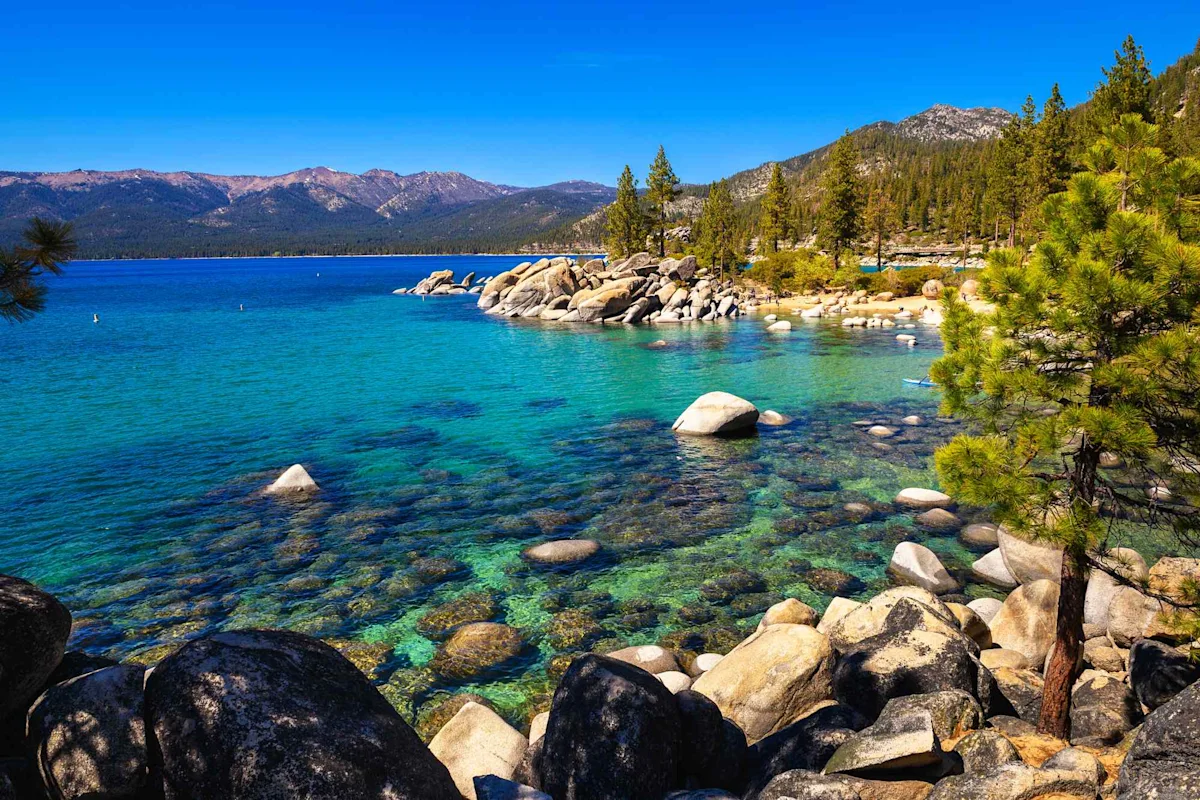
The ocean doesn't have a monopoly on luminous blue water. Across the world, lakes formed by volcanoes, glaciers, and tectonic forces hold water clear enough to reveal submerged rocks, steep drop-offs, and schools of fish beneath the surface. Some are remote wilderness destinations reached only on foot, while others are ringed by beaches, scenic drives, and lakeside towns. Depending on the lake, travelers may be able to swim, snorkel, paddle, or simply take in the view from shore.
There is no single worldwide ranking of lake clarity, and measurements can change with the season, weather, and location. Still, each of these lakes has documented visibility data or a long record of scientific monitoring to support its place among the clearest in the world.
Located in Nelson Lakes National Park on New Zealand's South Island, Rotomairewhenua (Blue Lake) is widely regarded as the clearest natural freshwater lake yet measured. Researchers have recorded horizontal underwater visibility of approximately 230 to 260 feet—close to the theoretical clarity of pure water. The lake's extraordinary transparency results in part from water filtering through surrounding debris before entering the basin.
Reaching it requires a multiday backcountry hike, and travelers should understand its cultural significance before setting out. Rotomairewhenua is sacred to the Ngāti Apa ki te Rā Tō, the local iwi , or Māori group, and swimming, bathing, and touching the water are prohibited. Visitors can admire the lake from shore while helping protect the qualities that make it exceptional.
High in Oregon's Cascade Mountains, Waldo Lake is one of the clearest large lakes in the United States. On a clear day, visibility can reach 120 feet. Its purity comes largely from its setting: The lake receives little nutrient-rich runoff, and no permanent river flows into it to deposit sediment.
The clear, blue water is surrounded by forests and a network of hiking and mountain-biking trails. Canoes, kayaks, and boats with electric motors are permitted, but gasoline-powered motors are banned, a restriction intended to help preserve the lake's water quality and quiet atmosphere.
Oregon has more than its fair share of stunning lakes. fills the caldera left by the collapse of Mount Mazama nearly 8,000 years ago. Because it has no incoming rivers, nearly all its water comes from rain and snow, limiting the amount of sediment carried into the lake.
The National Park Service reports an average Secchi depth of approximately 102 feet and a record measurement of about 143 feet. Long-term monitoring has also found a slight increase in clarity over more than four decades. Visitors can circle the caldera along Rim Drive, hike to elevated overlooks, or descend the steep Cleetwood Cove Trail to reach a swimmable shoreline.
Editor's Note: The Cleetwood Cove Trail will be closed until 2029 for construction. During this period, you can view the lake from points along Rim Drive and other park trails. Visit the Crater Lake National Park website for updated information.
Steep volcanic walls surround the misty Lake Mashū in eastern Hokkaido's Akan-Mashu National Park. In 1931, researchers recorded a Secchi depth of 136 feet , a result that placed the caldera lake among the clearest ever measured.
Its transparency has varied since then, but Lake Mashū remains notably clear because its enclosed basin has no significant surface streams carrying sediment into it. Travelers usually view the lake from overlooks along the caldera rim; public access to the shoreline is heavily restricted, helping protect both the water and the surrounding ecosystem.
Lake Baikal is best known for its extremes: It is the world's deepest lake and contains roughly one-fifth of the Earth's unfrozen surface freshwater. Its water can also be exceptionally transparent, particularly during colder months, when visibility may extend to approximately 130 feet.
Microscopic organisms help filter the water, while the lake's enormous depth and relatively low nutrient levels contribute to its clarity. In winter, its surface freezes into vast expanses of ice, sometimes clear enough to reveal cracks, bubbles, and the dark water beneath. Environmental impacts, however, vary around the lake, so clarity is not uniform across its nearly 400-mile length.
Lake Tahoe has been celebrated for its clarity since the 19th century, when observers reported visibility extending more than 100 feet into the water. Today, scientists have one of the world's most detailed long-term records of lake transparency: Secchi disk readings have been collected regularly since 1968.
Modern annual averages are lower than historic measurements, yet Tahoe remains strikingly clear, particularly during winter and in areas away from developed shorelines. Travelers can experience it from beaches and hiking trails or by kayak, paddleboard, boat rental, or tour.
Surrounded by forested hills on the Indonesian island of Sulawesi , Lake Matano is one of Southeast Asia's deepest lakes, reaching approximately 1,940 feet. Scientific surveys have recorded Secchi depths exceeding 75 feet in its clearest areas, although measurements vary considerably by season and location.
The ancient tectonic lake has unusually low nutrient levels, helping suppress the growth of algae that can cloud the water. It is also home to numerous species of fish, shrimp, and snails found nowhere else. Matano receives far fewer international visitors than more mainstream clear-water lakes, but mining and development in the surrounding region have raised concerns about its delicate ecosystem.
Near Mongolia's northern border with Russia, Lake Khövsgöl stretches between forested mountains and open steppe. Sometimes called the Blue Pearl of Mongolia, the lake is exceptionally low in nutrients, with reported Secchi depths reaching roughly 60 feet or more under favorable conditions.
Most travelers base themselves near the southern settlement of Khatgal, where they can explore by boat, horse, or foot. Development remains limited along much of the shoreline, and the surrounding national park protects taiga forest and wetlands. The lake freezes for much of the winter, reopening to boat travel during the brief northern summer.
Lake Malawi, also known as Lake Nyasa or Lago Niassa, spans parts of Malawi, Mozambique, and Tanzania. In its clearest offshore areas, Secchi measurements can approach approximately 65 feet, though visibility is lower near river mouths and populated shores.
The lake is particularly famous for its biodiversity. Hundreds of species of colorful cichlid fish live in its waters, many of them found nowhere else on Earth. Snorkelers and divers can see rocky underwater landscapes filled with these fish, particularly around protected areas in Lake Malawi National Park. The combination of clear water, sandy coves, and colorful fish makes it one of the most unusual freshwater destinations on this list.
The largest of North America's by surface area, Lake Superior holds enough water to submerge both North and South America beneath approximately one foot of water. It's also the clearest of the Great Lakes, with visibility in some offshore areas extending to roughly 50 feet.
Clarity varies widely across such a vast body of water. Sediment and biological activity can cloud shallow bays, while deep areas far from shore are generally much clearer. Travelers can see Superior's blue-green water along the cliffs of Pictured Rocks National Lakeshore in Michigan, the rocky shoreline of Minnesota's North Shore, and the islands and coves of Ontario's Lake Superior coast.
Read the original article on Travel & Leisure
Topics in this story
Gathered from external sources. Rights to this text belong to whoever originally published it.