In 2020, Atlanta began filling Bellwood Quarry with 9.1 billion litres of water, creating an emergency reserve that extended the city’s backup supply from 3–5 days to a month or more
Explore how Atlanta's Bellwood Quarry has evolved from a historical granite pit into a vital emergency water reserve, ensuring the city can sustain its water supply for up to 90 days in times of crisis.
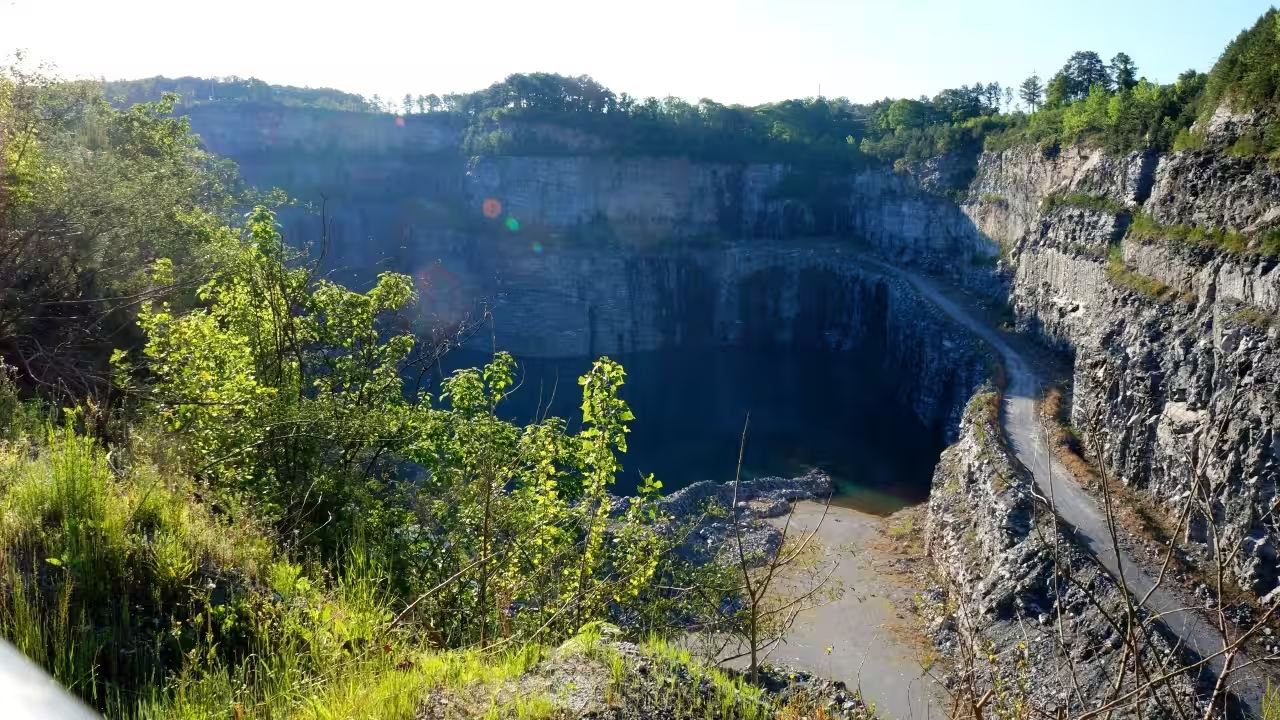
The majority of people only consider city water when something goes wrong. Water emerges from the tap when you turn it on, while the storage tanks, pipes and pumps remain out of sight. But Atlanta has always had a subtle weakness. Before the Water Supply Program, Atlanta had about three days of emergency raw-water reserves. The completed system expanded that reserve to more than 30 days, according to PC Construction project. The reservoir can hold 2.4 billion U.S. gallons, or about 9.1 billion litres, the Department of Watershed Management said.The fix was a hole in the earth. In 2020, Atlanta began filling Bellwood Quarry, a century-old granite pit just west of downtown, with river water. The reservoir holds some 2.4 billion US gallons or nearly 9.1 billion litres, the Department of Watershed Management said. The reserve was designed to provide more than 30 days of emergency raw water and potentially up to 90 days with conservation measures. It gives Atlanta a substantial buffer if its normal water supply is disrupted.Granitic pit to reservoirBellwood is no new hole. The site was quarried for well over a century and part of the granite used in paving construction across the city. When the mining was completed, the quarry was a pit about 400 feet deep, or 120 metres. Atlanta bought the site in 2006 to convert it for raw water storage.Construction of the Water Supply Program began in September 2016. Water began flowing into Bellwood Quarry on April 17, 2020, and the program was completed in December 2020. The converted quarry provides approximately 2.4 billion gallons of raw-water storage. Quarries can offer potential sites for water storage because excavation has already created a large basin. In August 2025, Winder and Auburn announced plans to convert a former quarry in Auburn into a one-billion-gallon reservoir, according to the City of Winder.Beneath the city, tunnelsThe river and the quarry are connected via tunnels of solid rock. The construction, according to contractor Clark Construction, is to connect the quarry to the Hemphill pump station and to a site adjacent to the Chattahoochee. One segment is a tunnel through solid rock 10.5 feet wide and eventually extended to about 15,000 feet. At the river end, a 30-foot-square, 350-foot-deep shaft functioned as the point of egress for the boring machine. The project increased Atlanta’s water storage capacity approximately tenfold and received Engineering News-Record Best Project recognition in 2020. The system is bi-directional. Raw water is piped from the river down the tunnel into the quarry and is used untreated. In an emergency, it flows via the tunnel to the Hemphill Water Treatment Plant, is cleansed and sent out to taps like any other supply.What it means for AtlantaAtlanta’s approximately $320 million Water Supply Program was completed in December 2020. The quarry is the centrepiece of Westside Park, a 280-acre green space that the city identifies as Atlanta’s largest park. Visitors should not expect a swimming lake. The place is a restricted drinking water reservoir, and the government restricts any recreational use due to the potential for pollution. Atlanta’s Department of Watershed Management warns that active pumps can pull a person underwater and into the pumping system. Visitors must stay out of the restricted reservoir area and away from the pumps; swimming, boating and other recreational activities are prohibited.And it is worth being explicit, too, about what the reserve is for. The quarry is just buying time. If the river were filthy, or a drought decreased flows to unsafe levels, or the intake collapsed, Atlanta would no longer be counting its safety margin in days. It would have weeks, and that is typically enough to set in motion emergency choices and repair and rationing measures. The conversion gives Atlanta an additional buffer against interruptions to its normal water supply. The former granite quarry now serves as an emergency raw-water reservoir that can provide time for the city to respond when its usual supply is disrupted.You use AI every day. Now get your AI Quotient. Take the AIQ test.
Topics in this story
Gathered from external sources. Rights to this text belong to whoever originally published it.