In 2013, a South Carolina marine professor collected over 100 tonnes of restaurant oyster shells for reefs; within one year, about 100 metres had functioning habitat
US News: Discover how Dr. Loren Coen's initiative to recycle restaurant oyster shells is revitalizing South Carolina's marine ecosystems and creating functional habitats within just one year.
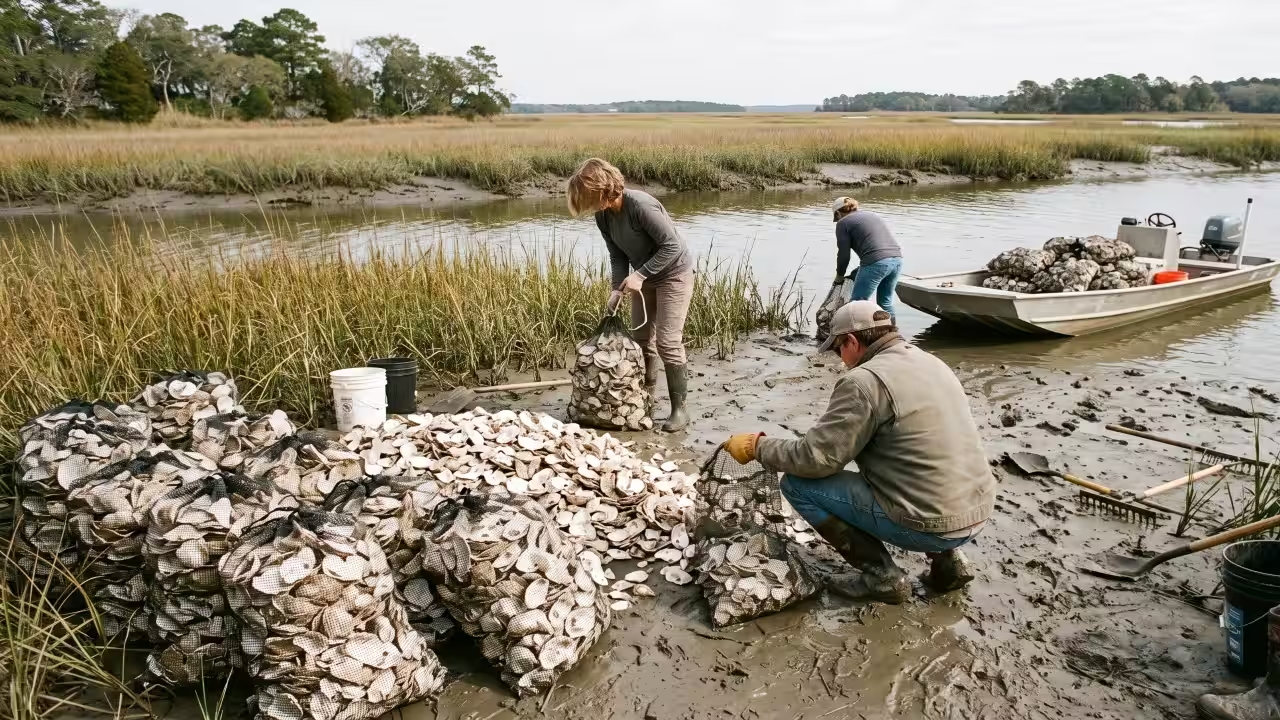
Oyster reefs once spread so widely across South Carolina's coastal marshes that early explorers reported entire creek banks covered in shell. Since free-swimming oyster larvae can only attach themselves to hard surfaces and the reefs' own discarded shells were historically the best surface of all, decades of fishing eliminated both the oysters and the very substance that future generations of oysters must settle on. Reef rehabilitation has increasingly looked to recycled oyster shells from restaurants as a practical source of hard substrate when other shell supplies are limited.A marine scientist with a habit of counting shellsDr. Keith Walters has spent much of his career working on oyster reef ecology and restoration. A marine science professor at Coastal Carolina University, Walters led the Coastal Oyster Recycling and Restoration Initiative (CORRI), which began in 2013 to recycle oyster shells from restaurants, build new reefs, and evaluate how those reefs functioned as habitat. His restoration work included constructing reefs from recycled shell across six South Carolina estuaries and monitoring the resulting oyster and fish communities.In 2013, Coen transformed that research focus into a practical collection effort, working with eateries to collect their leftover oyster shells instead of throwing them in the garbage and using the bagged shells to construct new reef structures along the coast of South Carolina. Over the course of the effort, he and his partners claim to have collected over 100 tonnes of restaurant shell. This is a significant harvest for a single season in a state where restaurants and shucking houses continue to discard significantly more shell than is recycled annually.Why the shell itself is the hard partThat shortage explains why Coen's restaurant partnership mattered so much. According to the South Carolina Sea Grant Consortium, less than 10 per cent of the oyster shell available for recycling in the state was being returned to the water, forcing the state’s own restoration programs to buy shell from out-of-state processors just to keep up with demand. Volunteers haul out bagged shells and load them onto barges or stack them in intertidal areas chosen for their tidal flow and existing colonies of oyster larvae, because a reef erected in the wrong place would simply wash away or lie unused no matter how much shell is put into it.The resulting reef then had to be monitored to determine whether it developed into functioning habitat rather than simply remaining a pile of shell. Generally, government-run schemes collect shells from public drop-off sites and a rotating list of restaurant partners, then quarantine them for months before they are safe to return to the water, reducing the risk of transferring illness to wild oyster populations.For restoration standards, a quick outcomeBy that measure, Walters' 2013 reefs fared well. Within one year of construction, the restored habitat was functioning as a refuge for reef-associated species across roughly 100 metres of shoreline, supporting a species assemblage that researchers would ordinarily expect only after several years of natural reef development. Reef development studies carried out through the South Carolina Department of Natural Resources have focused specifically on measuring these functional characteristics, tracking how quickly a bare shell structure begins supporting the fish, crabs and other species that make a reef ecologically useful rather than merely present.In a restoration field where results are measured in half decades, not months, a reef that reached that stage within twelve months was remarkable enough to be cited as evidence that restaurant shell, arriving in inconsistent batches and requiring lengthy quarantine before use, can build reef structure just as effectively as shell sourced in any other way. The project demonstrated that recycled restaurant shells could be collected, quarantined, bagged and used to construct functioning oyster habitat.Catch the latest World News and Live updates. Download the TOI app.
Topics in this story
Gathered from external sources. Rights to this text belong to whoever originally published it.