University of Miami students Jasmine Rodriguez, Farzad Rezaeicherati, and Sevil Ozsut are turning Virginia Key algae into biochar for lower-carbon concrete, and their research has now won the $25,000 VoLo Foundation VISTA Award
Discover how University of Miami students are transforming algae into biochar to create lower-carbon concrete, winning the VoLo Foundation VISTA Award to advance their groundbreaking research.
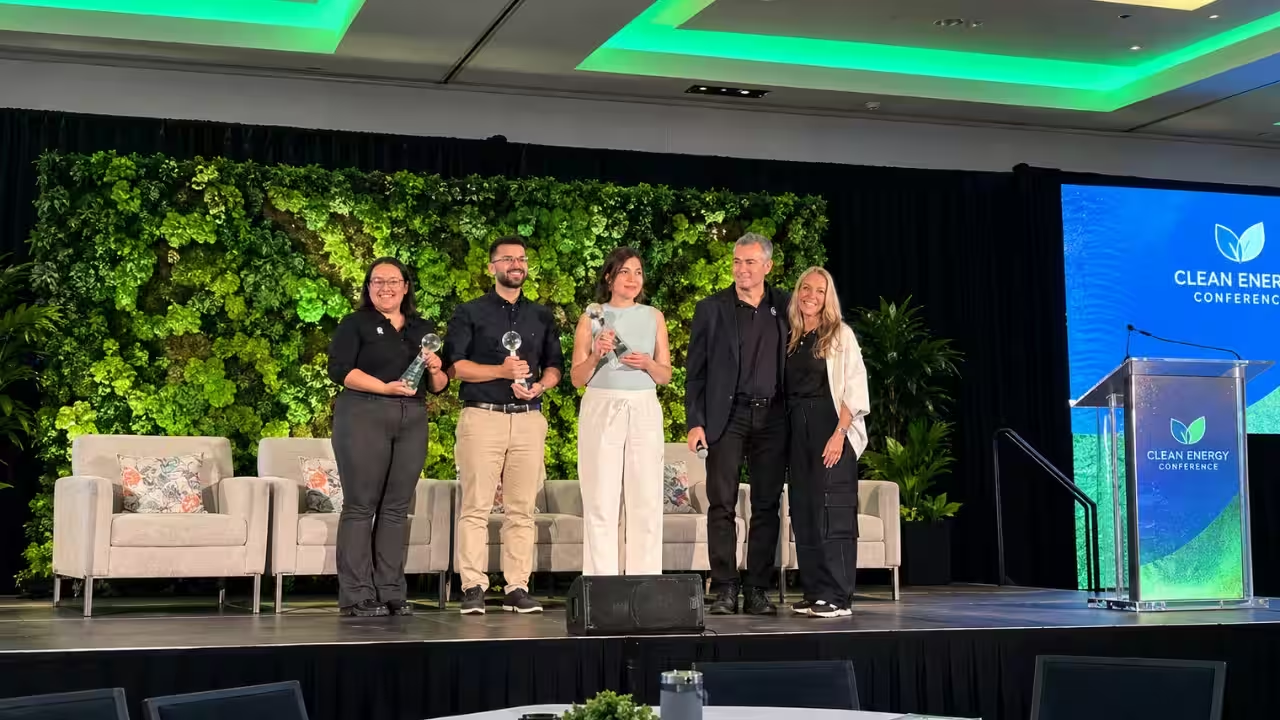
Algae collected near Florida’s coastline could help reduce the environmental impact of one of the world's most widely used construction materials. Three University of Miami researchers, Jasmine Rodriguez, Farzad Rezaeicherati and Sevil Ozsut, are converting locally grown algae into a biochar-like substance that can be incorporated into concrete to reduce its cement content while maintaining strength. Their research has earned them the 2026 VoLo Foundation VISTA Award, along with $25,000 to advance their work.The research, titled 'Functionalization and Pre-Carbonation of Florida-Native Algae Biochar for Carbon-Negative Cementitious Composites,' examines the potential for marine plant material to be used in construction. Led by civil engineering professor Ali Ghahremaninezhad, the students are trying to substitute some of the cement in an existing building material with biochar from algae and yet keep it strong and resilient. The award was made through the VoLo Foundation’s climate innovation program, which supported research conducted by students on environmental impacts.Turning locally grown algae into carbon-rich biocharThe algae they use are supplied by the University of Miami's experimental agriculture facility at the Rosenstiel School of Marine, Atmospheric, and Earth Science campus on Virginia Key. They grow Florida native algae and use their local source of biological materials from the team's research. In the first step, they clean, grind and sieve the algae before transforming it into biochar by pyrolysis, which involves heating organic material to around 500 degrees Celsius in an environment with very little oxygen. During pyrolysis, the organic material is not entirely burned, resulting in a solid residue that contains carbon, much of which was absorbed by the algae when it was alive.The biochar produced can then be added to cement-based composites. But if too much untreated biochar is added, it can cause concrete to be weak, as the particles don't stick well to the cement. So the team are now trying to functionalise the materials, which means chemically treating them to change their surface properties to work better with the cement. The method also offers an alternative use for some of this local algae material. Coastal communities in Florida and elsewhere in the region frequently have trouble disposing of the large amount of algae that builds up in their area. Repurposing it into construction materials could be a solution in this case, though that is not yet available as a commercial waste management option.Chemical treatment aims to improve concrete performanceA key part of their work has been to change the biochar so that a large fraction can be added to concrete without degrading its mechanical qualities. The team is investigating the use of chemical activation to boost properties such as porosity, water absorption, carbon dioxide absorption and bonding with cement. Another step involves precarbonisation, where the biochar is first exposed to carbon dioxide before being mixed into the concrete. A third step is to use carbon while it is solidifying. This treatment promotes calcium carbonate formation, which locks the carbon away in mineral form.The team had investigated biochar for partially replacing cement in a different study, publishing their results and industrial applications and products. They explored how biochar could be used to store carbon, highlighting what workability and strength issues arise when it is used at higher levels. A different team reported in Construction and Building Materials that chemically functionalised biochar was capable of higher replacement levels, while also enhancing the mechanical performance in cement-based composites. This provides the scientific basis for the Miami team's algae-derived composite material and its intended use. The research team will need to determine the optimal level of treatment and substitution through the use of tests in the lab.$25,000 award will support the next stage of researchThe VoLo Foundation Vista Award will give the team $25,000 to further refine its technology and, hopefully, buy new equipment to let scientists better modulate the production of biochar and its properties. In addition to the effects on compressive strength and durability, the team is also investigating how materials perform in Florida soil, considering moisture and salt from the sea spray and humidity in construction materials.The production of cement accounts for about 8% of the world's carbon dioxide emissions. Much of that comes from the manufacturing process, which takes a lot of energy and the chemical reaction itself. So if concrete uses less traditional cement, that could cut the amount of emissions coming from the construction industry. But for now, the algae-based material is still being tested, and the team is working to optimise their processing methods and find the best replacement rate before working with industry to look at commercial possibilities.In the long term, they hope to create a type of concrete that uses less traditional cement, as well as sequesters carbon into a solid mineral. Carrying marine resources into the field of construction materials, the University of Miami team is taking a novel solution to the worsening environmental issues of algae overgrowth and concrete carbon emissions. The grant of $25,000 will help with further testing and implementationYou use AI every day. Now get your AI Quotient. Take the AIQ test.
Topics in this story
Gathered from external sources. Rights to this text belong to whoever originally published it.