Pulaku: The two faces of Nigeria’s vigilantes
Allegations of torture and abuse shadow a Fulani-led vigilante group despite its role in clamping down on kidnappers.
Adamawa State, Nigeria - The night they came for Daniel Musa*, the dogs were barking.
At about 11:30 pm on May 23, 2023, Musa looked out of a window overlooking the gate of his home in Adamawa State, northeastern Nigeria.
The intruders wore all black, like the night. Their faces were uncovered.
Musa, 49, usually left his dogs loose in the compound at night. But the men who had climbed over the fence drove them back into their cage and locked it, clearing a path to the house.
Then they broke the padlock on a smaller gate and moved towards the main door. There, they began trying to force it open with a digger.
Musa, a local pastor, knew they were coming in. Rather than wait for them to break down the door, he opened it himself; he didn’t want any trouble.
He had already told his wife and his then 13-year-old daughter to stay in their bedroom. The men entered his home, pointed a gun at him, and ordered him to sit on the floor.
One went into his bedroom and took money and phones. Another walked to the fridge and helped himself to bread, milk, and water.
Then, at gunpoint, they led Musa out of his home; he did not struggle. He feared that if they did not take him, they might take his wife or daughter instead.
For six hours, Musa walked blindfolded with his captors through bushland, crossing shallow streams until they reached the mountains. There, he heard the familiar voice of his neighbour and discovered he had also been abducted.
He would remain in captivity for three days.
By then, negotiations with his relatives over ransom were under way. The kidnappers demanded 15 million naira (about $11,256 at the time) for his release. But after contacting Musa's family members, they switched off their phones. The family could only reach them when the kidnappers chose to make contact, leaving them unable to negotiate a lower ransom.
Musa, whose name has been changed to protect his identity, says he remained blindfolded throughout his captivity. His only drinking water came from a river, and even then, his captors allowed him just a few sips at a time, whenever they chose.
The captives, still blindfolded, were warned by their abductors that if they detected police officers or vigilantes approaching, they would kill their hostages before attempting to escape.
At about 4am on Friday, gunfire erupted.
For roughly 15 minutes, shots rang out around the camp.
Musa lay on the rocky ground between two other captives, urging them not to move. They could hear voices approaching but had no way of knowing whether they belonged to their abductors or the people trying to rescue them. Were the kidnappers returning? Had the security forces found them? Or were they about to be killed, as their captors had threatened?
“We were confused. We didn’t know who was coming, so I told the others not to move,” he said.
The voices told them not to be afraid, as they removed their blindfolds. Several men stood before them; he can’t recall how many, all dressed in olive-green uniforms.
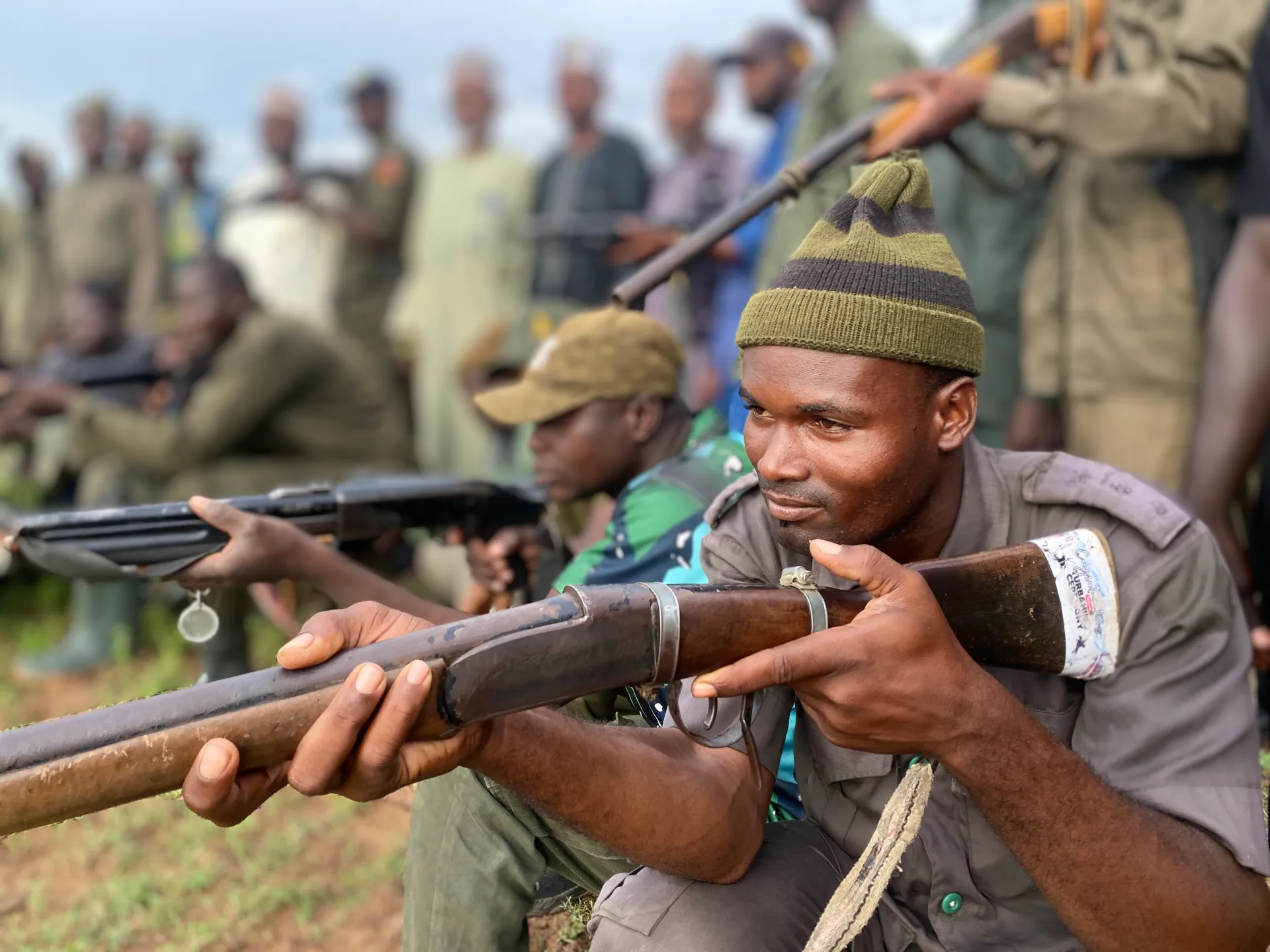
They belonged to Pulaku, a predominantly Fulani vigilante organisation fighting kidnapping and cattle rustling in northeastern Nigeria. Musa had heard of the group, but this was his first encounter with its members.
The kidnappers had fled, leaving behind food, phones and other belongings. Musa recalled that the rescuers also discovered what appeared to be a national identity card belonging to one of the suspects.
The captives then made their way down the mountain with their rescuers before the police took them to headquarters in Yola, the Adamawa State capital. There, Musa was reunited with his wife and daughter.
He recalls being filled with joy when he saw them again. He credits Pulaku with making that reunion possible.
“They saved my life,” says Musa. His church would later present Pulaku with an award, recognising its work in the community.
But the group’s growing role in fighting kidnapping has also brought the organisation under scrutiny. While some residents credit its members with saving lives, others accuse them of serious abuses. One man says they held him for more than two months and beat him so badly that he lost consciousness.
The two accounts reveal the uneasy place occupied by armed community vigilantes in a region where formal security forces have struggled to contain kidnapping and cattle rustling.
Topics in this story
Gathered from external sources. Rights to this text belong to whoever originally published it.