Built in 1831, New Jersey’s Morris Canal used 23 water-powered inclined planes to move boats up and down 100 feet in 15 minutes
In 1824, the Morris Canal & Banking Company was chartered to build a canal carrying Pennsylvania coal to markets along the eastern seaboard.
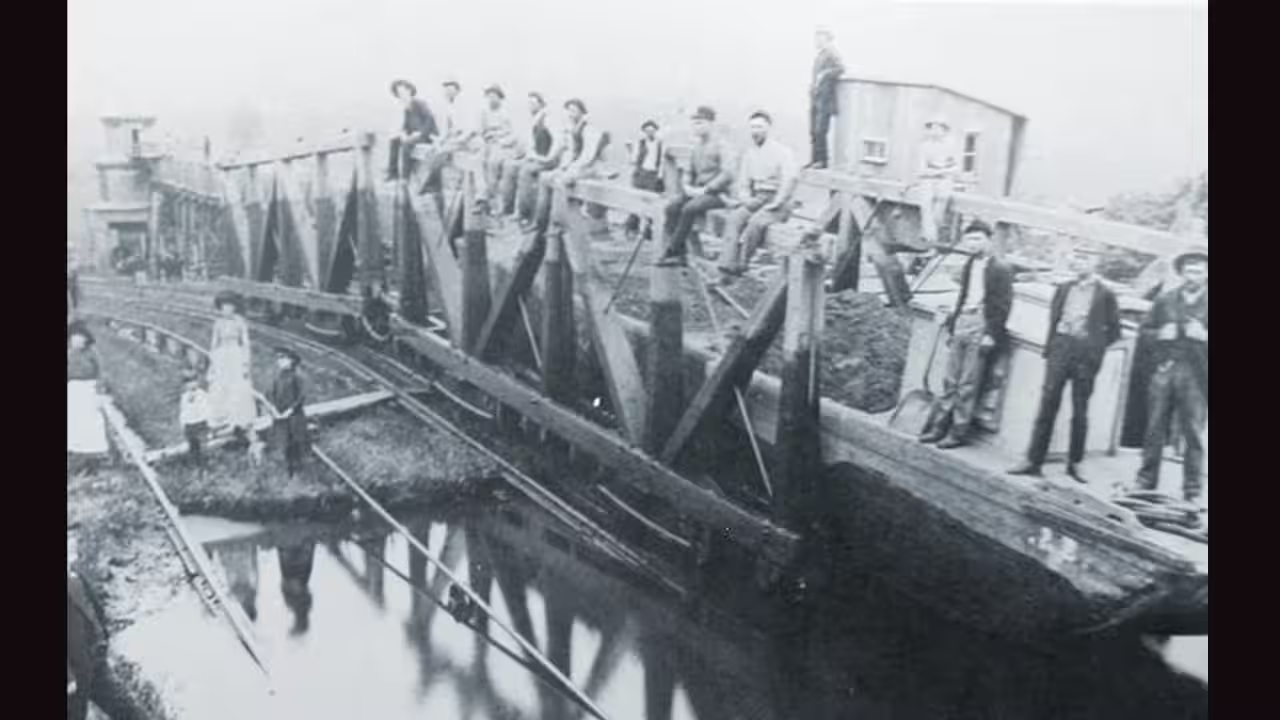
In 1824, the Morris Canal & Banking Company was chartered to build a canal carrying Pennsylvania coal to markets along the eastern seaboard. The Canal Society of New Jersey says the waterway opened in 1831 and relied on 23 lift locks and 23 water-powered inclined planes. According to the American Society of Civil Engineers, the inclined planes were essentially short railways that let boats change as much as 100 feet in elevation in 15 minutes. The canal climbed 914 feet from Newark Bay to Lake Hopatcong, then dropped 760 feet to the Delaware River at Phillipsburg.Why did the Morris Canal use 23 inclined planes and 23 locksAccording to the Canal Society of New Jersey, the canal stretched 102 miles from Phillipsburg on the Delaware River to Jersey City, overcoming the rugged terrain of the state's highlands. It states that engineers had to manage an elevation change of 1,674 feet. The total length was 106 miles. The canal climbed 914 feet from Newark Bay to the summit at Lake Hopatcong, then dropped 760 feet to the Delaware River at Phillipsburg. This gave the canal an average vertical slope of 18 feet per mile. This was steep compared with the Erie Canal's relatively gentle slope of one foot per mile.The hydraulic-powered inclined plane system was "the key civil engineering feature" that permitted the canal's successful completion in 1831. It states that the system consisted of 23 hydraulically powered inclined planes, used in combination with 23 locks. The locks handled elevation changes of 12 feet or less, and the inclined planes accomplished the remaining grade changes.The inclined planes were essentially short railways. They allowed canal boats to change as much as 100 feet in elevation in 15 minutes. The Canal Society of New Jersey likewise states that the canal's 23 lift locks and 23 water-powered inclined planes could raise or lower boats up to 100 feet at a time. It describes these structures as making the canal an engineering triumph of its era.What goods did boats carry on the Morris Canal during its peak operationMule-drawn boats capable of carrying up to 70 tons of cargo navigated the canal in five days. During its peak, it states, hundreds of boats transported coal, iron ore and agricultural products. The Society describes the canal as "New Jersey's first industrial transportation system" and says it reshaped the region's economy.The canal had become obsolete by the early 1900s because of advances in railroads and other transportation systems. It states that the canal was officially dismantled in 1924. Ownership of its water resources, including Lake Hopatcong, Lake Musconetcong and Greenwood Lake, passed to the State of New Jersey. The Society adds that the Morris Canal Greenway, led by the Canal Society and local communities, now works to preserve the canal's remains through interpretation, public education and recreational opportunities.You use AI every day. Now get your AI Quotient. Take the AIQ test.
Topics in this story
Gathered from external sources. Rights to this text belong to whoever originally published it.