In 2019, A Tasmanian couple used a $1.6m bequest to buy Prosser River Reserve near Orford; years later, it held 11 at-risk species and 14 vegetation communities
Rest of World News: A Tasmanian couple's generous $1.6 million bequest led to the purchase of Prosser River Reserve, a sanctuary for 11 threatened species and 14 unique vegetation communities, highlighting the impact of targeted conservation efforts.
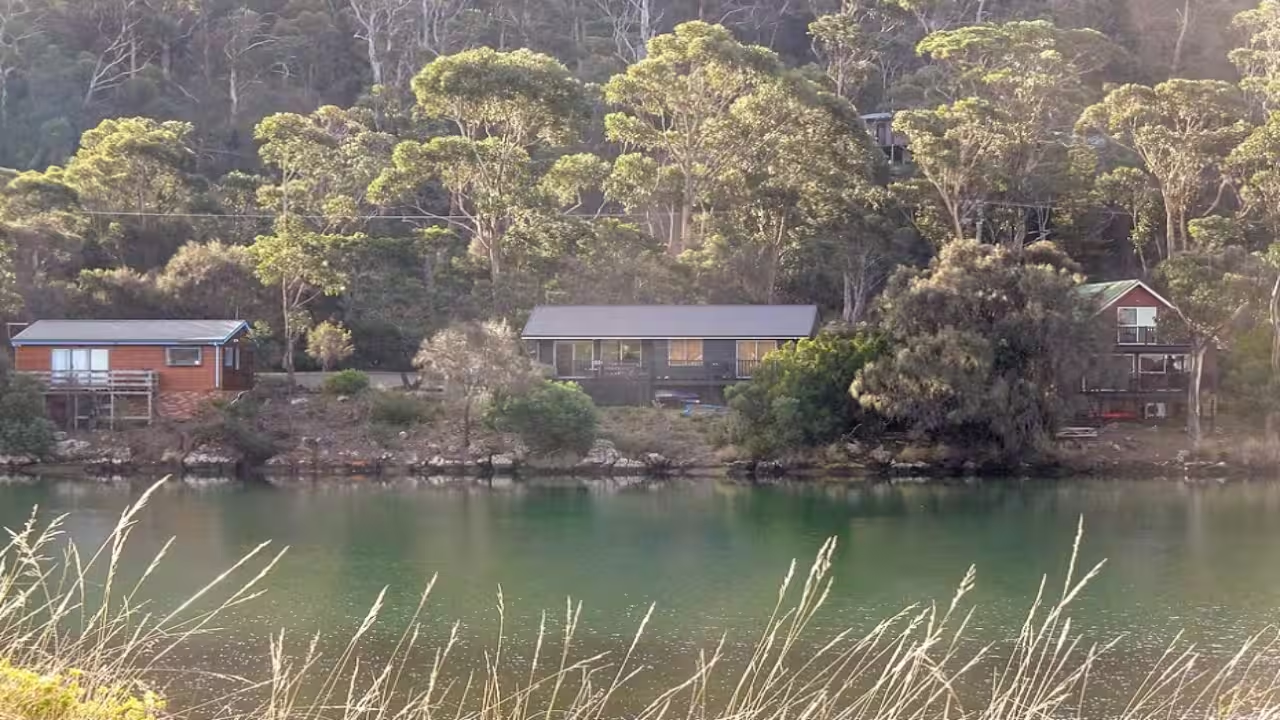
In 2019, a Tasmanian couple used a 1.6 million family bequest to help buy more than 1,500 hectares of bushland near Orford on the state's east coast. The land, now known as Prosser River Reserve, has since been confirmed to hold 11 threatened plant and animal species and 14 distinct vegetation communities, making it a significant private reserve in the state.The purchase was funded by the estate of David McGregor, whose family had a long-standing connection to conservation work in Tasmania. His son Bruce and daughter-in-law Ann used the bequest to enable the Tasmanian Land Conservancy to acquire the property outright, rather than simply donating funds toward an existing project. According to the Tasmanian Land Conservancy reserve page, the family had a preferred site in mind from the outset and worked closely with the conservancy to make sure the purchase matched David's wishes for the money. The property sits just outside Buckland, where the Prosser and Back Rivers cut through a valley of grassy woodland near Tasmania's east coast. That combination of varied terrain and underlying geology was associated with more ecological diversity than a typical block of similar size, a point the conservancy highlighted when the purchase was first made public.Where Old Forest Still StandsSome sections of the property had been selectively logged over the decades, but large areas were left largely untouched. Surveys later found at least 500 hectares of old-growth and undisturbed forest still standing across the reserve, providing shelter and nesting habitat that younger, previously cleared woodland simply cannot match. That older forest, combined with the freshwater systems running through the valley, gave ecologists far more to work with than they initially expected from a property that had spent part of its history under commercial use.Six of the vegetation communities eventually mapped on the reserve are listed as threatened under Tasmanian law, and one, black gum woodland, carries a critically endangered listing under federal legislation as well. That level of protection is notable for a single privately acquired property, and it reflects the ecological value that remained on land that was little known outside the local area.A home for devils, quolls and swift parrots The reserve is home to many of Tasmania's best-known threatened species. Tasmanian devils, eastern quolls, spotted-tailed quolls and eastern barred bandicoots all use the property, alongside masked owls, grey goshawks and white-bellied sea eagles that nest in the older forest sections. The swift parrot, one of Australia's most critically endangered birds, also passes through the area during its migratory cycle. Local legal commentary published by the Law Society of Tasmania noted that the species now benefit from formal conservation protection on land that might otherwise have remained in private hands.The reserve also carries deep cultural significance that predates its conservation history by centuries. The Payintaymirimina band of the Oyster Bay tribe once used a route along the Prosser River now known as the old convict road, later repurposed and paved with bluestone bricks during the colonial period. That layered history, spanning Aboriginal land use, convict labour and now private conservation can add another dimension to a property that was purchased primarily for its ecological value.Bruce McGregor's later recognition with an Order of Australia honour cited his role in permanently protecting Prosser River Reserve as one of the defining achievements of a lifetime spent supporting conservation work. For a family that described itself as not especially wealthy but deeply committed to nature, the reserve shows how a well-directed bequest can deliver significant ecological benefits.Unlike broader donations, a bequest tied to a specific piece of land ensures the money goes to that property and gives donors a lasting connection to the outcome. Weeding days and monitoring visits still bring together conservancy staff and members of the McGregor family. They remain involved with the property years after the original purchase closed, keeping the reserve's story visible whenever the subject of legacy giving comes up among prospective donors weighing how best to direct their own estates.Catch the latest World News and Live updates. Download the TOI app.
Topics in this story
Gathered from external sources. Rights to this text belong to whoever originally published it.