Meet Jiya Patel, the 17-year-old from Columbus, Georgia who turned restaurant leftovers into a 40-chapter network donating over $100,000 worth of food
US News: At just 17, Jiya Patel is already making an impact far beyond her school in Columbus, Georgia. A rising senior, Jiya balances academics with the schoo.
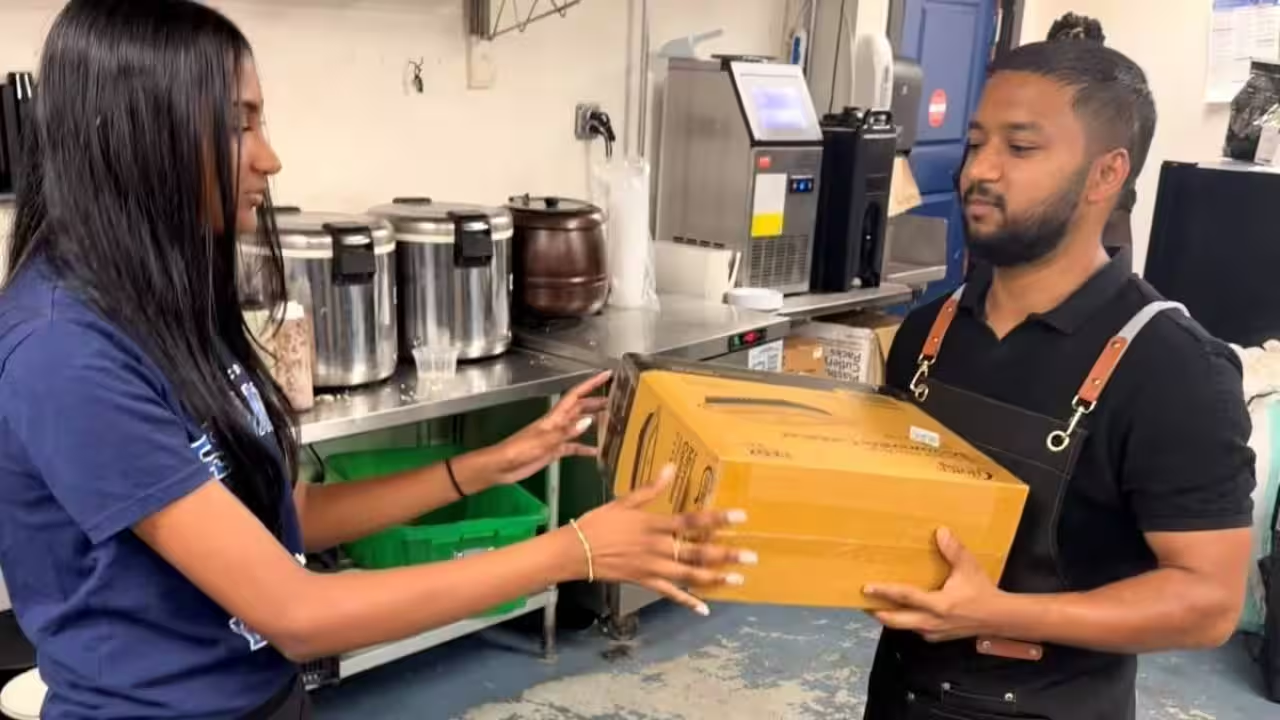
At just 17, Jiya Patel is already making an impact far beyond her school in Columbus, Georgia. A rising senior, Jiya balances academics with the school golf team, Honor Council and Student Live Committee, where she helps organise events such as prom and pep rallies. But her biggest contribution extends beyond the school campus.According to Points of Light, Jiya is the co-founder of Thrive2Gethr, a student-led initiative that tackles two major issues at once: food waste and food insecurity. What began as a personal response to something she witnessed during a family trip to India has now grown into a nationwide network with around 1,200 members across 40 student-led chapters.Together, the chapters have facilitated donations of more than $100,000 worth of food from restaurants and bakeries to shelters and food banks.A trip to India sparked an ideaJiya’s interest in volunteering began at her local temple, where she helped serve food and took part in gardening, cleaning and other activities. But a visit to India with her parents in 2023 changed the way she thought about hunger.“I went to India with my parents and saw a lot of families without food and necessary resources. It stuck with me, and I started thinking a lot about hunger,” Jiya said.She soon began looking into food waste in the United States and came across videos showing perfectly edible food being discarded.“I realized that food waste and people facing food insecurity could be connected to address both problems. The food already existed; it just wasn’t getting to people who needed it,” she explained.That realisation led Jiya to co-found Thrive2Gethr in 2023.From hearing ‘no’ to building 40 chaptersGetting the initiative off the ground was far from easy. In the early days, Jiya personally approached restaurants and other businesses in her community, hoping to convince them to donate excess food.“I would make a list of 100 businesses and struggle to find any partners. Many would just say no, right off the bat,” she recalled.But rejection did not stop her.“I’d keep following up with the ones that were leaning towards maybe,” she said.Jiya also coordinated volunteers who collected the food and delivered it to shelters. As the organisation expanded, her role evolved from making local connections to mentoring other young leaders.Today, she recruits and supports student chapter leaders, helps them establish relationships with restaurants, creates guides and resources, and answers questions as they build their own programmes.She estimates that she spends around 30 hours each month volunteering.Building a movement led by young peopleFor Jiya, the goal is not simply to make Thrive2Gethr bigger. She wants to ensure that existing chapters receive the support they need while continuing to expand.“I want to keep expanding, but I want to ensure each of our chapters is still getting the support they need,” she said, stressing the importance of finding a balance between growth and maintaining the organisation’s existing network.Another priority is encouraging restaurants to become more comfortable with food donations. Jiya believes concerns about potential liability can sometimes discourage businesses from participating.She points to the Bill Emerson Good Samaritan Food Donation Act of 1996, a federal law that provides certain protections for people who donate food in good faith.Thrive2Gethr provides restaurants with information about the law as part of its outreach, while also trying to raise awareness about food donation more broadly.The reward goes beyond the foodThe impact of the initiative, Jiya says, is not measured only in the amount of food redistributed. She also finds meaning in seeing other students become involved in helping their communities.“Giving so much food to people who need it has been rewarding to see,” she said.Depending on the location, the food is either delivered to a facility for distribution or given directly to people in need.Jiya particularly enjoys watching student volunteers become invested in the work.“I’ve also enjoyed watching students help people in their communities and be invested in it the same way I am,” she said.What volunteering has taught herThrough the experience, Jiya has learned that creating change does not have to be a solo effort.“It’s a lot easier to make change when you work together,” she said, pointing to the partnerships between students, restaurants and shelters.The experience has also taught her persistence. Convincing businesses to participate often means hearing “no” repeatedly before finding someone willing to help.“You have to push forward and hope that someone will end up saying yes,” she said. “I don’t let things stop me when it gets hard.”‘You don’t have to be a full-grown adult to start making change’Jiya believes one of the biggest misconceptions about volunteering is that people need extensive experience or resources before they can make a difference.“Everyone has to do their part to help. If you’re able to, you should at least try. It doesn’t have to be big,” she said.Her own story, she believes, is proof that one person’s decision to act can eventually create a much larger movement.“If you care about something and you work at it, even something small can create a big ripple effect. You never know who you’ll inspire,” she added.Jiya encourages others to start by contacting local restaurants, getting involved with existing initiatives or even creating a Thrive2Gethr chapter in their community.Her advice is simple: start small and keep going.“You don’t have to be a full-grown adult to start making change,” she said. “If you care about something, just start, and everything will work itself out.”As she prepares to head to college and pursue a career in business or economics, Jiya is already leaving behind a framework that other young leaders can use to make a difference.For her, the hardest part is not building a nationwide network. It is simply taking that first step.Catch the latest World News and Live updates. Download the TOI app.
Topics in this story
Gathered from external sources. Rights to this text belong to whoever originally published it.