A Minnesota homeowner built solar heat collectors from 270 roadside beer cans and salvaged materials; they helped heat his 1,100-square-foot home and cut firewood use by two-thirds
Discover how a Minnesota homeowner ingeniously built solar heat collectors from 270 beer cans and reclaimed materials, drastically reducing heating costs and firewood use for his home.
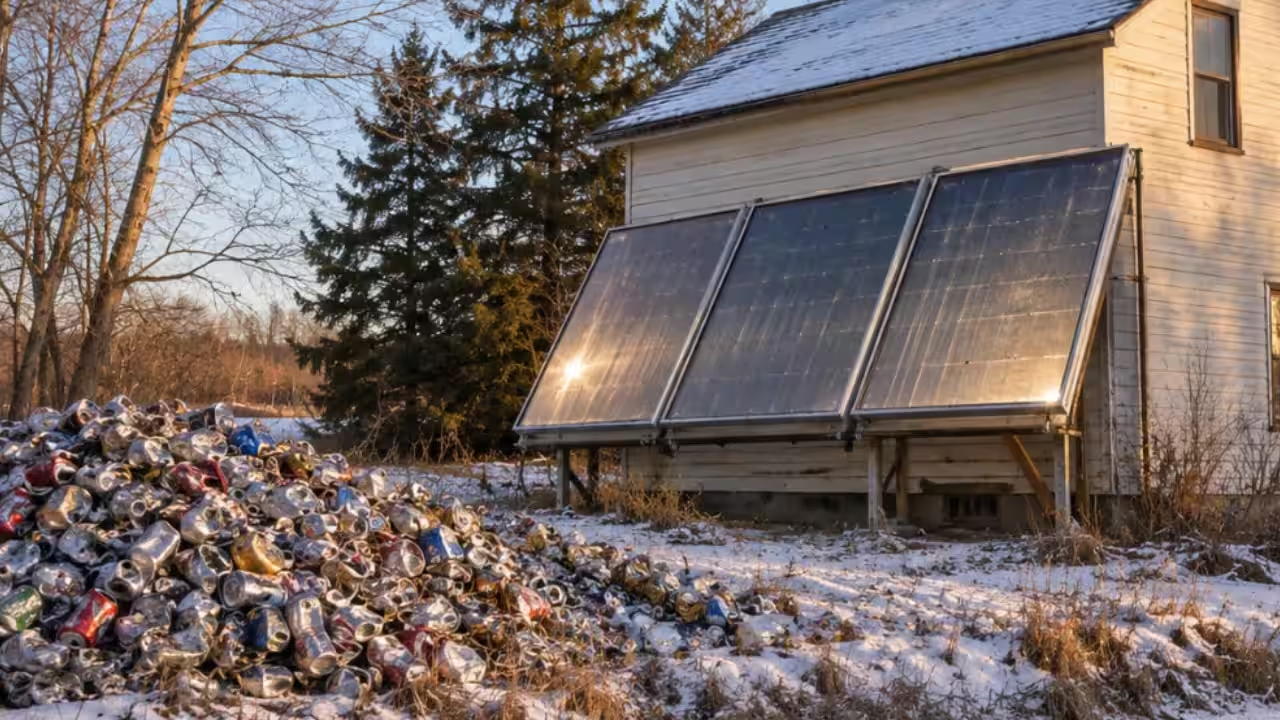
With rising winter heating bills, many households often look for cheaper ways to stay warm. In the 1970s, one Minnesota homeowner found a clever answer in the ditches beside his road. Al Lebens of Chaska made solar heat collectors from 270 discarded beer cans from the roadside and scrap materials, FARM SHOW magazine reported in 1978. The panels helped heat his 1,100-square-foot (about 102 square metres) home and cut his firewood use by two-thirds. These savings were Lebens's own figures.How the beer can panels workedLebens built three collector panels, each measuring 4 by 8 feet or about 1.2 by 2.4 metres. He placed these panels on the south wall of his home in autumn and took them down in the spring. Each panel had 90 cans, which he cut in half using a band saw, making it 180 pieces. He then strung the pieces onto rods and arranged them in horizontal rows, painting them black. All 270 cans were picked from roadside ditches, so they didn't cost him anything. Everything else he used was recycled except the fan and its controller, which cost him $40. A small fan, which was run by a thermostat, drew air from the basement through the panels. There the sun warmed it, and the fan blew it back into the basement. Some of that warm air could flow up through the floor vents into the rooms above, and some could be sent into a large box of rocks. These rocks stored the heat during the day and released it for several hours after sunset.What it saved the familyWhen the sun went down, a small wood stove took over, and the two systems together heated the whole house. Lebens said that without the panels, the family would need 15 or more cords of wood over a winter. This was equivalent to about 1,000 gallons of fuel oil, which they had used before. He got by on about five cords with the panels, so his firewood use fell by two-thirds. He also mentioned that he had not bought fuel oil for two years. The magazine noted that he did not spend a nickel on heat because he got his wood for free. Lebens was candid about the limits of the system. Overcast days didn't provide much solar heat, which was why he kept the wood stove as a backup. If the fan stopped on a hot day, the heat inside a panel could reach 300°F (about 149°C). To keep the glass from breaking, he put in relief valves that opened above 180°F (around 82°C).What the research saysThe US Department of Energy explained that air collectors can sit on a south-facing wall to warm one or more rooms and that air systems cannot freeze. It also added that building codes and mortgage institutions generally require backup heating. A wood stove can be a good idea for this. There is one part of Lebens's design that has since lost its appeal. The department does not recommend the use of a bed of rocks to store the heat, as it is inefficient and can cause damp and mould. Chigbo Mgbemene and colleagues used discarded soda cans as the absorber plate of a solar heater in their 2022 Renewable Energy paper. In their test, the air got to 128°C in a four-pass active heat system tilted at 21 degrees to the horizontal and facing south. The tests were done in the tropics and therefore cannot confirm the winter savings of Lebens. They do, however, show that old drink cans can help catch the sun's heat.You use AI every day. Now get your AI Quotient. Take the AIQ test.
Topics in this story
Gathered from external sources. Rights to this text belong to whoever originally published it.