A 1980 will left a historic merchant’s house to become a museum; a 2026 High Court ruling questioned whether the council had to preserve it under a trust
A 17th-century merchant’s house in Topsham, Exeter, has become the subject of a High Court ruling following a dispute over the wishes set out in its
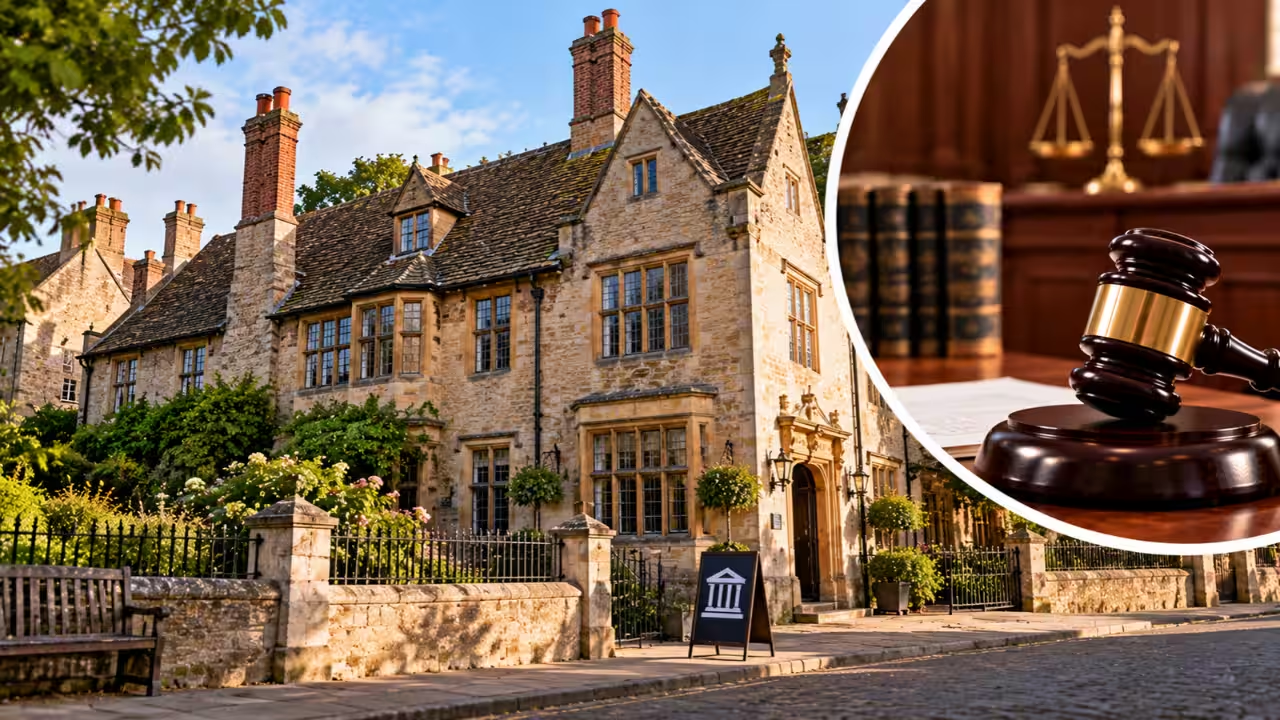
A 17th-century merchant’s house in Topsham, Exeter, has become the subject of a High Court ruling following a dispute over the wishes set out in its former owner’s 1980 will. Dorothy Holman left 25 The Strand to Exeter City Council so it could continue as a museum, having established one there in 1967. However, in a judgment handed down on 16 October 2026, the court ruled that the council owns the property beneficially and is not obliged to preserve it as a museum under a trust. The decision clarified the legal effect of Holman’s will and memorandum of wishes.How a 1980 will left the property to Exeter City CouncilThe property at 25 The Strand consists of a house and garden situated alongside the estuary of the River Exe in Topsham. According to the High Court judgment, the building was constructed in 1688, and part of it has been listed Grade II on the National Heritage List for England since 1952. Holman came from a family with a long history of involvement in merchant shipping and shipbuilding in Topsham. She reportedly purchased the property from her brother, Alwyn, in 1939 and died there in 1983, aged 95.Holman had already established a small museum in the property's sail loft in 1967. Its initial displays focused on her family's shipbuilding background, before expanding over the years. Under clause 4 of her will, she devised the freehold property to the council, subject to conditions set out in clause 10. These included a requirement that the council resolve, within six months of her death, to accept the property and confirm its intention to use it in accordance with a memorandum of wishes signed by her and found with the will.Why Holman wanted the property to remain a museum for TopshamHolman's accompanying memorandum explained why she wanted to give the property to the City and County of the City of Exeter. According to the document reproduced in the judgment, she wrote: "My object in giving my house and furniture to the City and County of the City of Exeter is to provide a place where members of the public interested in the history of Topsham can see both a museum of the town’s history and a typical Topsham merchant’s house of 1700–1870."She also expressed specific wishes concerning the building and its contents. Holman hoped that the furniture would remain in the house, that most of her pictures and all drawings and sculptures by her sister would be permanently displayed, and that the garden between the road and river would continue to be used as a garden rather than a car park. She also suggested that the museum could be expanded as more suitable material became available. Most importantly, she stated: "It is my wish that my home will always be the museum for Topsham. My gift is being made for no other purpose." If the house became unsuitable for use as a museum, she wished it to be sold and the proceeds used towards providing another museum within the parish of Topsham.However, the judge noted that the memorandum was signed by Holman but did not contain witnesses' signatures. It therefore did not comply with section 9 of the Wills Act 1837 and could not be treated as a testamentary document. The court considered its wording when examining the intention behind the will, but the memorandum's statements of hopes and wishes did not automatically create enforceable obligations.Exeter City Council accepts ownership of the historic Topsham museumFollowing Holman's death on 11 July 1983, probate was granted to the will's executors on 20 October that year. Exeter City Council accepted the property at a joint meeting of its Policy Committee and Leisure Committee on 22 November 1983, indicating its intention to use it in accordance with the memorandum. The full council received and adopted the meeting's minutes on 6 December 1983. The executors subsequently assented to the transfer on 16 July 1984, and the property was registered in the council's name.The Topsham Museum Society was formed by local residents to continue operating the museum. Its trustees obtained charitable registration in 1984, and the council granted them a six-year lease in April 1985. The museum reopened to the public in 1986. Further leases followed in 1991 and 1997, with the latter running for 30 years. In 2019, a new charitable incorporated organisation, Topsham Museum, was formed and registered as a charity. The remaining term of the 1997 lease was assigned to the organisation in February 2022.The dispute arose after the building required substantial repairs. In May 2024, the council commissioned work costing £106,000 to address problems with the render on the property's side elevation. After the old render was removed, additional structural repairs and upgrades were identified, increasing the estimated budget to approximately £430,000. The museum was temporarily closed in December 2024, and its artefacts were removed from the period-house section and placed in off-site storage. Work on the property stopped at the end of June 2025 after the original contract works were completed.By November 2025, the council had begun further work to make the premises watertight and allow scaffolding to be removed from the adjoining side street. However, the additional work required was estimated to cost another £500,000. The council said it could not meet the remaining costs from its existing budgets and would need to borrow to complete the repairs. Its legal position was important because, if it owned the property beneficially, it would have more options, including borrowing against the property or selling or leasing part or all of it on commercial terms.Why the court examined whether Holman's will created a legal trustExeter City Council issued its claim under Part 8 of the Civil Procedure Rules on 27 January 2026, asking the court to determine whether Holman's gift was an absolute gift or one that required the council to hold the property on trust. The defendants, David Macklin and Michael Gaye, were the executors of Holman's will. They supported the council's position that the property had been given outright and was not subject to a trust. The hearing took place on 18 June 2026 before HHJ Paul Matthews, sitting as a Judge of the High Court.In considering the case, the judge examined whether Holman's will demonstrated an intention to impose a legally binding trust obligation. He explained that the creation of an express trust requires certainty of intention, subject matter and objects. The use of the word 'trust' is not essential, but the document must demonstrate an intention to impose an obligation on the recipient. The judgment also referred to the established approach that expressions of hope or wishes, without stronger language, do not normally create enforceable trust obligations.The judge found that clause 10(1)(a) required the council to confirm its intention, at the time of accepting the gift, to use the property in accordance with the memorandum. It did not require the council to promise that it would continue doing so indefinitely. HHJ Matthews explained that, had Holman intended to impose a trust, she could have used wording requiring the property to be used exclusively as a museum. Instead, the will required the council to indicate its intention to continue the existing museum without imposing a continuing legal obligation to do so.Why the High Court rejected the possibility of a constructive trustThe judgment also considered whether a constructive trust could arise because the council accepted the property and its subsequent conduct. The judge noted that the council had allowed the property to operate as a museum for more than 40 years, in keeping with Holman's wishes. He therefore found no inequitable conduct that would justify imposing a constructive trust. The possibility of such a trust in circumstances involving different conduct was discussed, but the court did not need to decide that hypothetical question.In his conclusion, HHJ Matthews ruled that the gift was beneficial rather than one made on trust. The judgment stated: "It therefore follows that the claimant has no fiduciary or other duty to preserve the property as a museum for the people of Topsham, or indeed Exeter." He added that the council, as beneficial owner, could depart from Holman's wishes as a matter of property and trust law, although he noted that it had respected those wishes for more than 40 years.The ruling therefore resolved the legal question over ownership and the council's obligations under the will. It established that Exeter City Council was not legally required to preserve 25 The Strand as a museum under a trust, despite Holman's stated wishes for the historic merchant's house.You use AI every day. Now get your AI Quotient. Take the AIQ test.
Topics in this story
Gathered from external sources. Rights to this text belong to whoever originally published it.