War has returned to Ethiopia’s Tigray — and former enemies are now fighting together. What changed?
Nearly four years ago, a peace deal ended the brutal war in Ethiopia’s northern Tigray region, one of the deadliest conflicts of the 21st century. Now, the violence has returned — but the battle lines have changed.
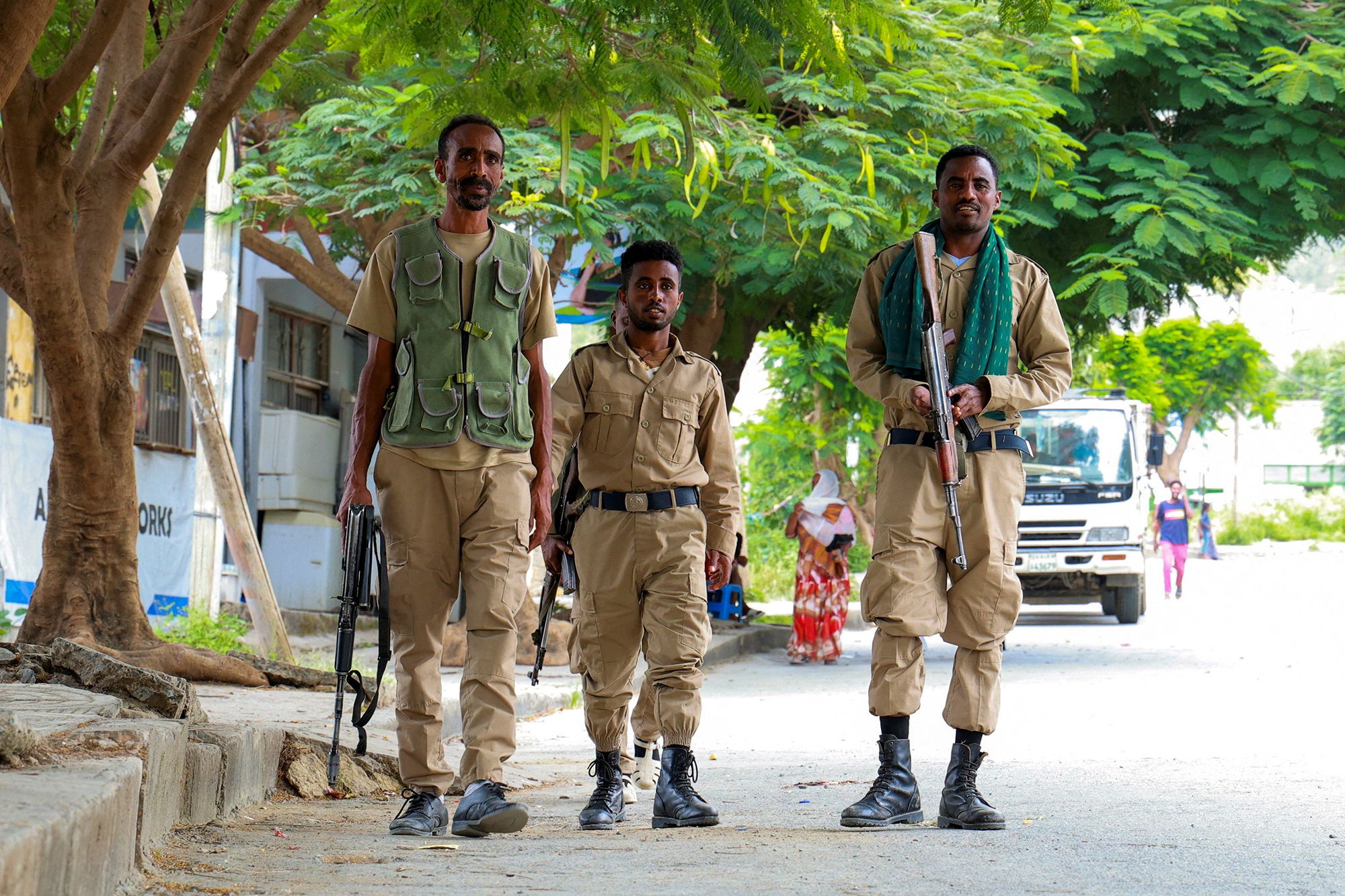
Nearly four years ago, a peace deal ended the brutal war in Ethiopia’s northern Tigray region, one of the deadliest conflicts of the 21st century. Now, the violence has returned — but the battle lines have changed. Tigrayan rebels are again fighting the federal government, while forces that were once enemies are now fighting side by side. On Wednesday, Tigrayan forces seized three airports controlled by the federal government, while fighting also broke out in the neighboring regions of Amhara and Afar. The hostilities have shattered the 2022 peace agreement that ended a war estimated to have killed around 600,000 people. Relations between the federal government and Tigray’s leaders had been worsening for months. It’s unclear what led to the recent fighting, with both sides offering conflicting accounts. Tigray’s regional government said federal forces attacked first and that it ordered its forces to respond, calling it a “defensive war.” While Getachew Reda, an adviser to Ethiopian Prime Minister Abiy Ahmed, said the TPLF had launched an “all-out offensive” against government positions in Afar and Amhara and seized the three airports in Tigray, accusing it of taking “irresponsibility to new heights.” The renewed violence this week follows almost two months of smaller clashes. The nongovernmental organization Armed Conflict Location & Event Data Project (ACLED) says fighting between Tigrayan and federal forces began near Ethiopia’s border with Sudan on August 1. The two sides also accused each other of starting those clashes. According to ACLED, federal drone strikes and Tigrayan troop deployments followed, with Tigrayan forces moving tanks and artillery south this month. National carrier Ethiopian Airlines has suspended all flights to Tigray after the airport seizures. How did Ethiopia get here? The TPLF was once Ethiopia’s most powerful political force. It dominated the coalition that governed the country for nearly three decades, despite Tigrayans making up a relatively small share of Ethiopia’s population. That changed after Abiy became prime minister in 2018 following years of anti-government protests. He introduced political reforms and made peace with neighboring Eritrea, which won him the Nobel Peace Prize a year later. But relations with the TPLF deteriorated. Abiy replaced the old ruling coalition with his Prosperity Party in 2019; the TPLF refused to join. After national elections were postponed during the Covid-19 pandemic, Tigray held its own regional vote despite objections from Addis Ababa. In November 2020, Tigrayan forces attacked federal military bases in the region. Abiy sent troops in, and Eritrean forces and fighters from Amhara later fought alongside the federal army. By the time the war ended two years later, millions of people had been displaced and parts of Tigray had been pushed into famine. Both sides faced accusations of serious human rights abuses. Why did the peace deal fail? Hostilities came to an end when the federal government and TPLF signed an African Union-brokered agreement in Pretoria, South Africa, on November 2, 2022. Under the deal, Tigrayan forces were to disarm and federal authority would return to the region. Humanitarian aid and basic services would resume, and an interim administration was later set up to govern Tigray until elections. But major disputes remained, including over territory claimed by both Tigray and Amhara and the return of people displaced by the war. Meanwhile, Eritrea, whose soldiers had fought alongside federal forces, was not party to the agreement. “The agreement didn’t collapse overnight — it was systematically hollowed out over three years,” Surafel Getahun, an Ethiopian geopolitics researcher, told CNN. Getahun said both sides bore responsibility. He accused the federal government of failing to fulfill key parts of the agreement, including returning displaced people, and the TPLF of breaching it by retaking control of the regional administration and rebuilding its military forces. The TPLF was also divided by an internal power struggle, which further weakened the peace process. Rival factions emerged around TPLF chairman Debretsion Gebremichael and Reda, the head of the Tigray interim administration who had been a senior TPLF figure. Reda was later expelled from the party by Gebremichael’s faction, and Abiy appointed a new interim leader in April 2025. A month later, Gebremichael’s faction took back control of Tigray’s government. It restored the regional legislature that existed before the war and installed Gebremichael as regional president. On Sunday, the TPLF joined six other armed groups in a new alliance seeking to remove Abiy’s government and establish a transitional administration. The alliance includes former enemies who fought on opposite sides of the last war. TPLF spokesman Michael Asgedom told the Associated Press the groups would cooperate politically and militarily. Asked whether joining the alliance violated the Pretoria agreement, Asgedom said the accord was “no longer valid.” The Amhara Fano National Movement fought alongside the federal government against the TPLF during the last war, then turned against it in 2023. The Oromo Liberation Army, which has long fought Abiy’s government in Oromia, is also a member. Reuters reported Wednesday that Tigrayan forces were fighting alongside the Fano group in Amhara and a local armed group in Afar. But Getahun questioned how long the alliance would hold. The TPLF and Fano remain divided over contested territory, particularly Western Tigray, and its members have different political and military goals. “This is a temporary marriage of convenience against a mutual enemy rather than a lasting political agreement,” he said. Abiy’s spokesperson, Billene Seyoum, told Reuters on Monday that the groups had already been working together with financial backing from Eritrea. Relations between Ethiopia and Eritrea have deteriorated since their forces fought together in the last war, though the Eritrean government has repeatedly denied supporting Ethiopian armed groups. The African Union (AU) said Wednesday that the airport seizures were inconsistent with the Pretoria deal and urged both parties to de-escalate. It also asked for help from former Nigerian President Olusegun Obasanjo, who helped mediate the 2022 agreement. Could the war spread further? Tigray has yet to recover from the last war, with communities still rebuilding and many displaced people still unable to return home. Ethiopia is already dealing with armed conflicts in Amhara and Oromia, and ACLED says the federal military was “stretched” before the renewed fighting with the TPLF. But the armed groups in the new alliance vary in their fighting capacity, with several lacking the organization or recruits for wider operations and others largely confined to local areas, according to the conflict monitor. There is also the risk of Eritrea’s military becoming involved. Tensions have grown between the two countries over Ethiopia’s push for access to the Red Sea, including through Eritrea’s port of Assab. The AU urged Ethiopia’s neighbors to avoid actions that could fuel the conflict. The region is already grappling with the war in Sudan and longstanding tensions between Ethiopia, Egypt and Sudan over the Nile. Getahun warned that the current fighting could become even more devastating than the previous conflict. “A renewed war would likely end up far bloodier and more widespread than the 2020–2022 fighting,” he said. “Immediate de-escalation and dialogue” are now essential, he added, arguing that negotiations remain “the only viable path forward.”
Gathered from external sources. Rights to this text belong to whoever originally published it.