In 2025, a Virginia grandmother won $150,000 in the Powerball after asking ChatGPT for lottery numbers, then donated the entire prize to three charities close to her heart
In 2025, Carrie Edwards of Midlothian won the prize and gave every dollar of it to three charities.
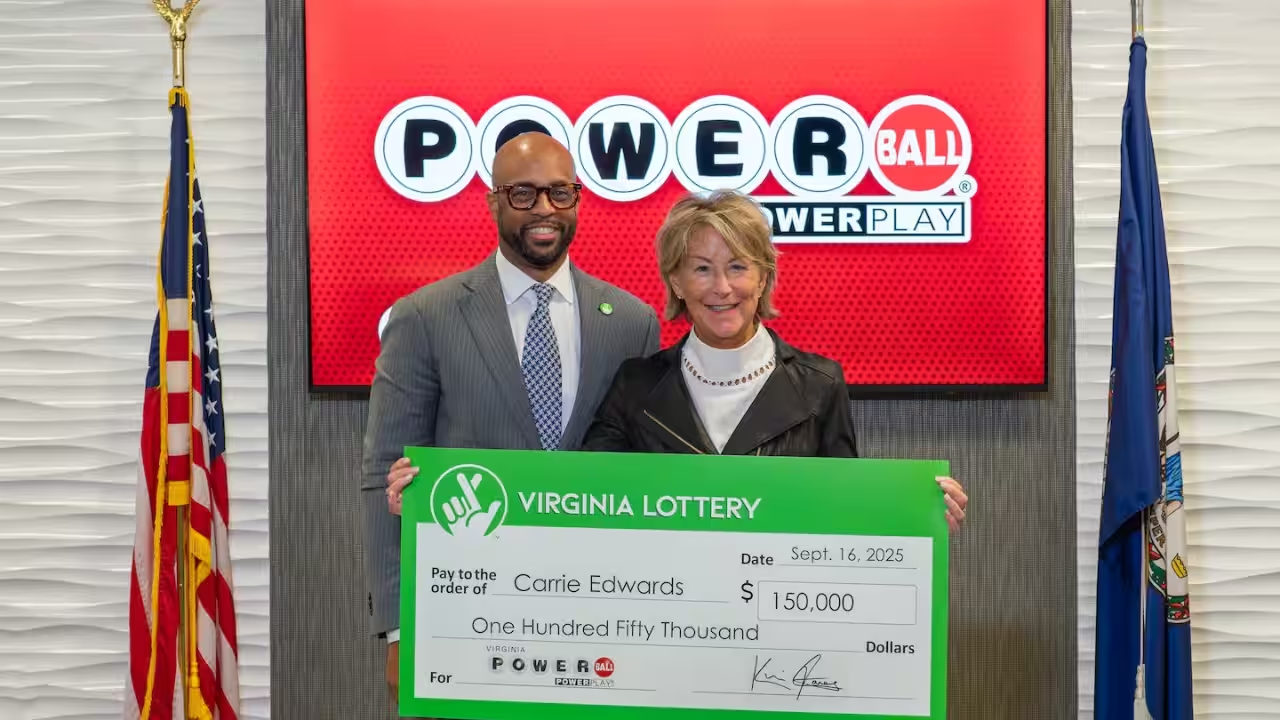
In 2025, Carrie Edwards of Midlothian won the prize and gave every dollar of it to three charities. Her story spread around the world after the Virginia Lottery publicised the gift. A retired public relations professional who rarely played, she says the decision to give the prize away came to her instantly. The causes she chose reflect her father’s naval career, her late husband’s illness and her volunteer work with a food-growing organisation in the Richmond area, and two of them received the money as demand for their services rose.How a friend’s lottery advice, an online ticket and ChatGPT led to a Powerball winAccording to The Washington Post, Edwards, who was 68 when the story was reported, walked into a 7-Eleven with a friend who wanted two Powerball tickets. The jackpot for the 6 September 2025 drawing had climbed above $1.7 billion, the second-largest ever. Edwards hardly ever played, and her friend, an active player, gave her two warnings, always buy a paper ticket, and never touch the Powerball multiplier because it is a scam. She ignored both.Instead, she created a Virginia Lottery account on her phone. Rather than relying on family birthdays or lucky numbers, she asked ChatGPT, which she had only recently started using for research, whether it had any winning numbers for her. The chatbot first replied that luck is luck, then supplied a set of numbers. She entered them and paid an extra dollar for the Power Play option.When she missed the huge jackpot, she assumed luck had not been on her side. She had not realised that she had chosen the option that re-enters the same numbers in the next drawing. A phone notification told her she had won, and she suspected a scam or a small prize of perhaps $10. Out of curiosity, she logged in and found she had matched four of the five numbers plus the Powerball, a $50,000 prize that the multiplier tripled.Why she decided within moments that the windfall was not hers to keep and where it should goAlone in her kitchen, Edwards was thunderstruck by the news. Almost at once, she said, she felt an overpowering conviction that the money was not hers. She resolved to give it all to her three most cherished charities.Her next thought was a joke at the expense of the friend whose advice she had ignored. He is an Army veteran, while she comes from a Navy family, so she privately gave the Navy the first point. Her three adult children were surprised by the win, and they supported her decision.How a naval family’s legacy sent money to military households as government pay worries grewEdwards is the daughter of a career naval officer. Her late father, a fighter pilot who ended his career in the office of the chief of naval operations at the Pentagon, asked in his will that his children donate part of their inheritance to the Navy-Marine Corps Relief Society. The non-profit provides financial assistance and other services to members of the military and their families.Her gift reached the society at a critical moment, according to its president and chief executive, Robert Ruark. Concerns were growing over government pay and furloughs as the federal government shut down at the end of September 2025. Ruark said the money was being used to help families facing hardship from the shutdown, deployments and everyday family emergencies.The husband’s illness behind a gift to dementia research and what the money was meant to fundHer late husband, Steve, inspired the second donation. In his late 50s, he was diagnosed with frontotemporal degeneration, the most common form of dementia in people under 60, which has no approved treatment to stop or slow it. As his condition worsened, Edwards retired from her public relations work to care for him. In 2023, the couple moved from Fairfax County in Northern Virginia to Midlothian, a Richmond suburb, so he could be closer to their children and new grandchildren. Steve died at the end of that year.After retiring, Edwards began volunteering for and giving to the Association for Frontotemporal Degeneration. Its chief executive, Susan Dickinson, said gifts range from $5 to more than $1 million, but the larger sums usually come from research partnerships and benefactors, so a single donation of Edwards’s size is rare. Dickinson described it as wonderfully impactful. The money was to go towards research, grants for pilot programmes, and bringing together people with the disease and those working on treatments.Why a food-growing organisation near Richmond saw her gift arrive just as demand surgedThe third beneficiary was Shalom Farms, where Edwards volunteered and served on the board when the story was reported. The non-profit grows fresh local produce and distributes it to about 10,000 Richmond residents. Her gift landed when the shutdown delayed food-assistance benefits, which drove a surge in demand.Executive Director Anna Ibrahim said the surprise donation let the farm buy more items so that it would have enough for everyone who came. The money was also to be invested across the organisation to support local farmers and other initiatives.Edwards told The Washington Post she had no regrets. She felt blessed to have been able to spread the word about causes she holds dear, and she hoped to inspire others. The attention, she said, gave her a platform to set an example for her children and to honour her husband’s and her father’s legacies through actions rather than words.You use AI every day. Now get your AI Quotient. Take the AIQ test.
Topics in this story
Gathered from external sources. Rights to this text belong to whoever originally published it.