Rare zebra-striped bee in West a 'huge surprise'
A zebra-striped bee is seen in Somerset for the first time, offering hope in restored saltmarshes.
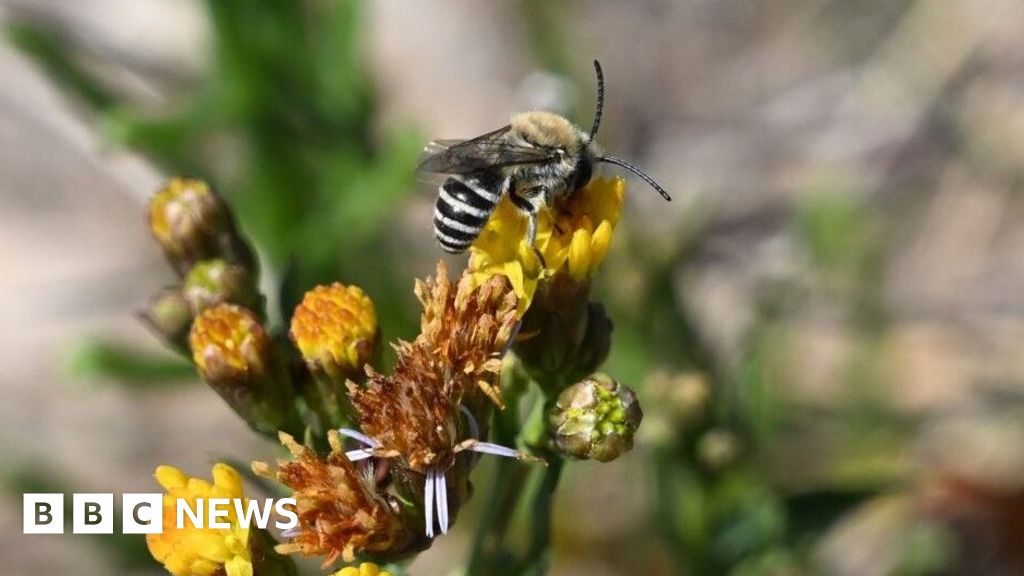
A tiny zebra-striped bee, usually found along England's south and east coasts, has made an unexpected journey to the West Country.
The rare sea aster mining bee has been spotted at Steart Marshes in Somerset by naturalist Nigel Phillips, who said the find "was a huge surprise".
The Wildfowl and Wetlands Trust said saltmarsh restoration work at the nature reserve had helped create the perfect home for the newcomer.
The charity says the discovery shows how rare species and wildlife can thrive by restoring coastal habitats.
We're just tax-collectors, say pub landlords asking for help
Tributes paid to couple killed in A358 crash
Work on controversial £2.35m cycle path paused
The sea aster mining bee has a particular taste in flowers and relies on the sea aster, a pink and yellow flower that blooms on coastal marshes, as summer moves into autumn.
The restoration project at Steart Marshes was completed in 2014, transforming former farmland into a coastal wetland by allowing seawater to flow back across the fields.
The reserve supports a wide variety of coastal wildflowers, including plenty of sea aster, which is thought to have finally attracted the bees to the Steart peninsula.
"There were lots of them and several colonial nest areas in the dry sandy ground," said Phillips.
"At the time I thought they were only found in salt marsh areas around the Thames estuary."
Of the 290 invertebrate species found in these habitats across the UK, 148 can only be found in saltmarshes.
Site manager Bay Alys Laver said: "People usually associate saltmarshes with huge flocks of wading birds, geese and ducks, but there is so much life here that goes unnoticed.
"Spotting such a rare species here is a testament to the brilliant work our staff do in maintaining the reserve in concert with local graziers.
"I was so happy to hear that we have been found by our first sea aster mining bees."
Follow BBC Somerset on Facebook and X . Send your story ideas to us on email or via WhatsApp on 0800 313 4630 .
Carbon tracking tower put on Scotland's largest saltmarsh
Moves to protect 'climate hero' saltmarshes
UK's muddy saltmarshes vital to tackle climate change, report finds
Topics in this story
Gathered from external sources. Rights to this text belong to whoever originally published it.