In 2009, birds disabled both engines of a US Airways jet minutes after takeoff; its captain ditched it in New York’s Hudson River, and all 155 people got out alive
Discover the incredible story of US Airways Flight 1549, which faced a dual engine failure due to a bird strike and successfully ditched in the Hudson River with all 155 individuals onboard surviving. Learn about the heroic actions of Captain Sullenberger and the critical safety lessons from this aviation emergency.
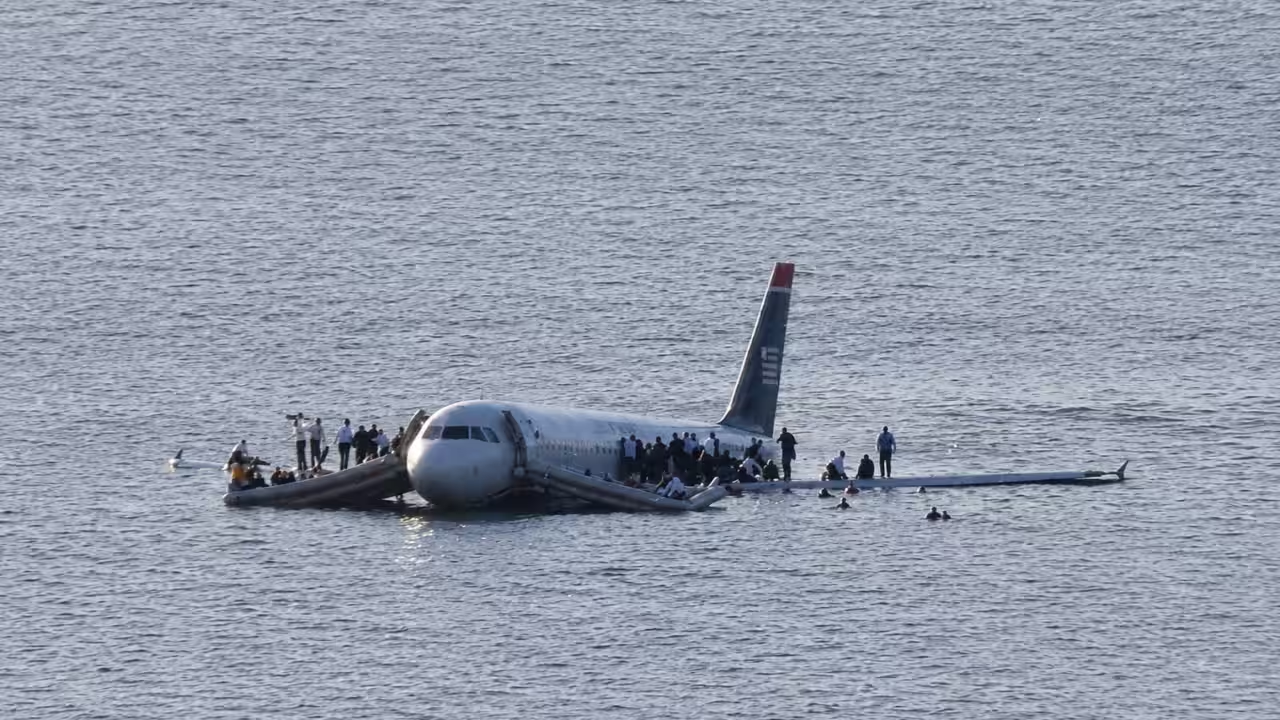
On January 15, 2009, US Airways Flight 1549 had been airborne for just over two minutes when the pilots in the cockpit encountered a flock of birds over New York City. Bound for Charlotte, North Carolina, the Airbus A320-214 had departed LaGuardia Airport with 150 passengers and five crew members aboard. The bird strike caused an almost complete loss of thrust in two engines, thus leaving the aircraft unable to maintain a normal powered flight. With very little time to analyse the problem at hand, the pilots decided to return towards an airport but soon realised that neither LaGuardia nor another nearby runway was within reach. Ultimately, Captain Chesley “Sully” Sullenberger ditched the aircraft in the Hudson River, near Weehawken, New Jersey. Although all 155 occupants survived, five sustained serious injuries.A bird strike resulted in the disabling of both enginesThe aircraft took off at 3:24:54 pm local time from LaGuardia Airport. Sullenberger was monitoring the departure, while first officer Jeffrey Skiles was initially flying. At 3:27:10 pm, the captain called out that he could see birds. Seconds later, the cockpit voice recorder captured sounds of impacts, followed by a shudder and a change in engine noise. Following this, both engines started losing speed almost simultaneously. Sullenberger took control at 3:27:23 pm and instructed Skiles to consult the checklist for a loss of thrust in both engines.The pilots tried to restart the engines while managing the aircraft’s descent. Initially, the air traffic controllers offered a runway at LaGuardia for an emergency landing. But Sullenberger informed them that the aircraft might likely end up in the Hudson River. Teterboro Airport in New Jersey was also considered as an option for an emergency landing, but the crew concluded that they possibly wouldn’t be able to reach it either.Investigation reports by the National Transportation Safety Board (NTSB) later revealed that the aircraft had struck Canada geese. The Smithsonian Institution analysed feather and tissue samples recovered from the engines and recognised the remains as belonging to the species. Furthermore, the birds were identified as migratory birds rather than members of the resident Canada goose population around New York.The ditching on the Hudson RiverSullenberger aimed for the Hudson River as there were no suitable runway options available. At approximately 3:30:43 pm, Flight 1549 touched down on the water. The aircraft struck the river at approximately 125 knots, and the impact reportedly damaged the fuselage and the left engine separated from its mounting beneath the wing. As water entered the rear section of the cabin, it made aft exits unusable. Nevertheless, the aircraft remained afloat, which gave time for the occupants to evacuate through the forward and overwing exits.The NTSB found that the aircraft’s original ditching conditions differed from those assumed during certification testing. The captain faced difficulty in maintaining his intended airspeed on the final approach amid the demands of the emergency, thus contributing to the damage sustained by the fuselage and the loss of availability of the aft slide.An evacuation in freezing conditionsPassengers and crew began the process of evacuation within seconds of the ditching. The rear of the cabin flooded rapidly, forcing people seated at the back to move forward instead of using the aft exits. Some even climbed over seats to reach the usual exits. The aircraft was equipped with four slide/rafts because it had been configured for extended overwater operations. The forward slides proved exceptionally important after water entered the rear cabin and made the aft ones unavailable. However, passengers who evacuated onto the wings were exposed to the freezing water reaching waist level within two minutes.Nearby ferries played an important role as they became the first major rescue vessels to reach the aircraft. The first ferry arrived at approximately 3:34:40 pm, and six more arrived within about 10 minutes. According to NTSB’s estimate, all occupants were rescued within approximately 20 minutes of the ditching, with five people sustaining serious injuries and 95 passengers with minor injuries. The remaining 55 occupants were recorded as uninjured, with zero fatalities.The NTSB identified the ingestion of large birds into both engines as the probable cause of the accident. Furthermore, the investigation led to safety recommendations that addressed engine bird-ingestion testing, wildlife hazard management, emergency checklists and many more. The event, widely remembered as the “Miracle on the Hudson,” became a significant case study in aviation emergency response.You use AI every day. Now get your AI Quotient. Take the AIQ test.
Topics in this story
Gathered from external sources. Rights to this text belong to whoever originally published it.