Retired American school buses sell for up to $5,000 before becoming Guatemala’s colourful chicken buses, with repairs, religious signs and LED lights
Retired American school buses are finding a second life on Guatemala’s roads as brightly painted chicken buses, carrying passengers between towns and
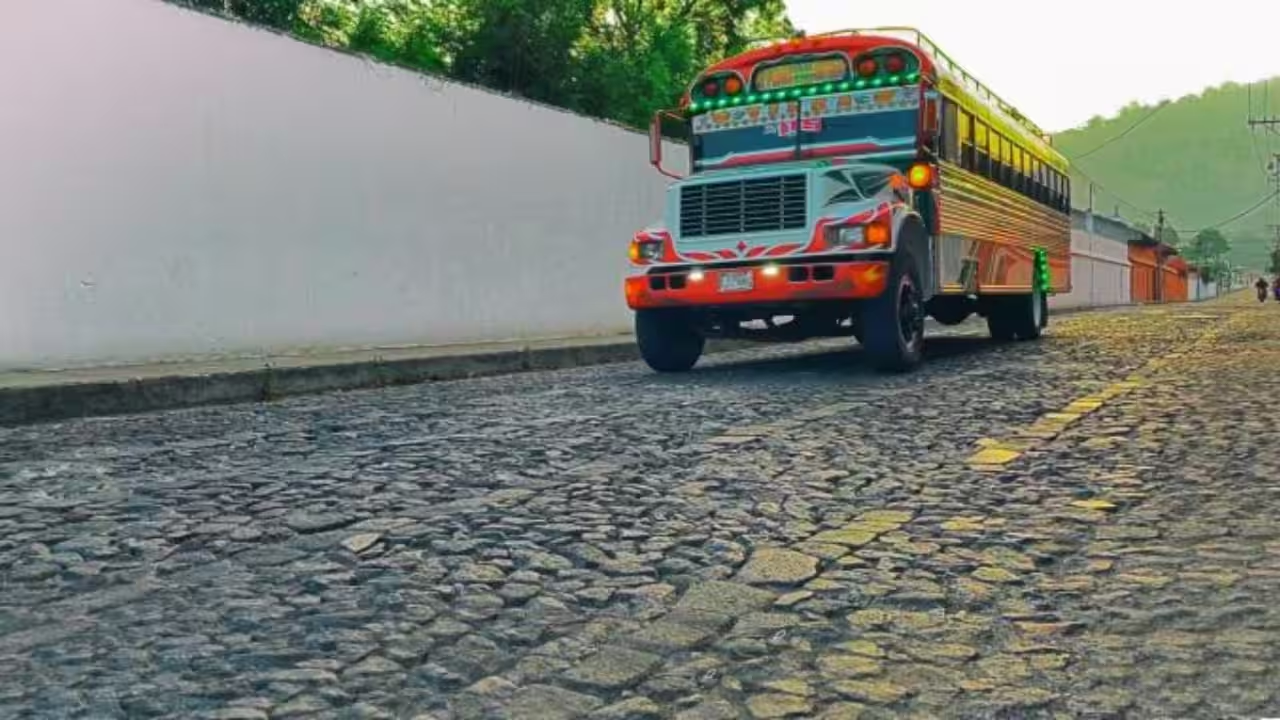
Retired American school buses are finding a second life on Guatemala’s roads as brightly painted chicken buses, carrying passengers between towns and through rural areas. According to a report by Brooklyn News Service, bus driver and repair worker Cándido Obando said his employer, Roberto Cabezas, travels to the United States every two weeks to buy used yellow school buses for between $2,000 and $5,000. Once in Guatemala, the vehicles are repaired, repainted and decorated with stickers, religious signs and LED lights before returning to service under their distinctive names.How do retired American school buses become chicken busesThousands of retired yellow school buses from the United States operate in Guatemala, where they serve as local and intercity transport. Known as chicken buses in several Central American countries, these vehicles travel through rural areas and are also associated with the transport of live animals, including chickens.The buses are purchased second-hand in the United States and brought to Guatemala for further use. The report, written by Shirley Alvarez, describes how vehicles that have finished their service in the American school transport system continue operating on Guatemalan roads after being repaired and adapted for their new role.Why does a bus buyer travel to the United States every two weeksCándido Obando, a 48-year-old bus driver and repair worker with more than 25 years of experience, explained how the vehicles are acquired. According to Obando, his employer, Roberto Cabezas, travels to the United States every two weeks to purchase used yellow school buses for between $2,000 and $5,000.Obando also explained that Cabezas keeps some vehicles and resells others to drivers who cannot travel outside Guatemala to purchase buses themselves. These resale prices are generally higher to cover travel expenses. The account describes a second-hand vehicle market that enables retired American school buses to enter Guatemala's public transport network.How are retired American school buses repaired in GuatemalaAfter arriving in Guatemala, the buses undergo inspections and repairs before returning to service. Obando explained that workers examine which parts remain usable and which need replacing. Rather than routinely hiring outside mechanics, experienced bus workers often carry out the repairs themselves, drawing on their knowledge of the vehicles.The buses are then repainted according to their owners' preferences. Their appearance can include bright colours, stickers, religious signs and LED lights. Each bus also has its own name. Obando, for example, had worked with a bus called Yolandita for ten years. The vehicle operated three times daily on a route between Antigua, Guatemala, and Panajachel.How do chicken bus fares vary across GuatemalaChicken buses carry passengers between towns and across rural areas, while local buses also operate within city limits. The Brooklyn News Service report described different fares depending on the route and journey length. At the time of the report, Obando said local transport could cost one or two Guatemalan quetzals, while journeys between nearby towns could cost around 30 quetzals and longer routes around 95 quetzals.Obando also explained that fares could vary according to the passenger and the route. He said tourists might be charged more than residents. He further noted that some drivers faced weekly or monthly payments to gang members in certain areas to protect themselves and their passengers or to gain access to particular locations. The report also noted that many of these buses were not formally regulated and lacked permits.Why do tourists ride Guatemala’s colourful chicken busesChicken buses are also a recognised part of the tourist experience in Guatemala. Yeruti Vera, a 23-year-old visitor from Paraguay interviewed by Alvarez, said riding one of the buses was among the experiences she had looked forward to during her visit. She described the journey as a distinctly Guatemalan experience, while noting that drivers travelled at high speeds even on uneven and winding roads.Vera also highlighted the atmosphere inside the buses, where passengers encounter music, vendors selling goods, conversations in Spanish and Indigenous Guatemalan languages, and, at times, live animals. Views of the countryside through the windows form another part of the journey. Her account illustrates how the buses function not only as transport but also as an everyday setting in which visitors encounter local travel and trading practices. Retired American school buses continue to operate in Guatemala through a process involving second-hand purchases, mechanical repairs, repainting and resale. The vehicles' continued use connects their earlier role in American school transport with their present function carrying passengers across Guatemalan towns and rural routes.You use AI every day. Now get your AI Quotient. Take the AIQ test.
Topics in this story
Gathered from external sources. Rights to this text belong to whoever originally published it.