Nashville replaced 6.5 acres of parking with Cumberland Park; a hidden tank beneath it now captures about 1 million gallons of stormwater from nearby streets each year
Discover how Nashville transformed a 6.5-acre parking lot into Cumberland Park, an innovative green space that captures and reuses 1 million gallons of stormwater each year, promoting environmental sustainability.
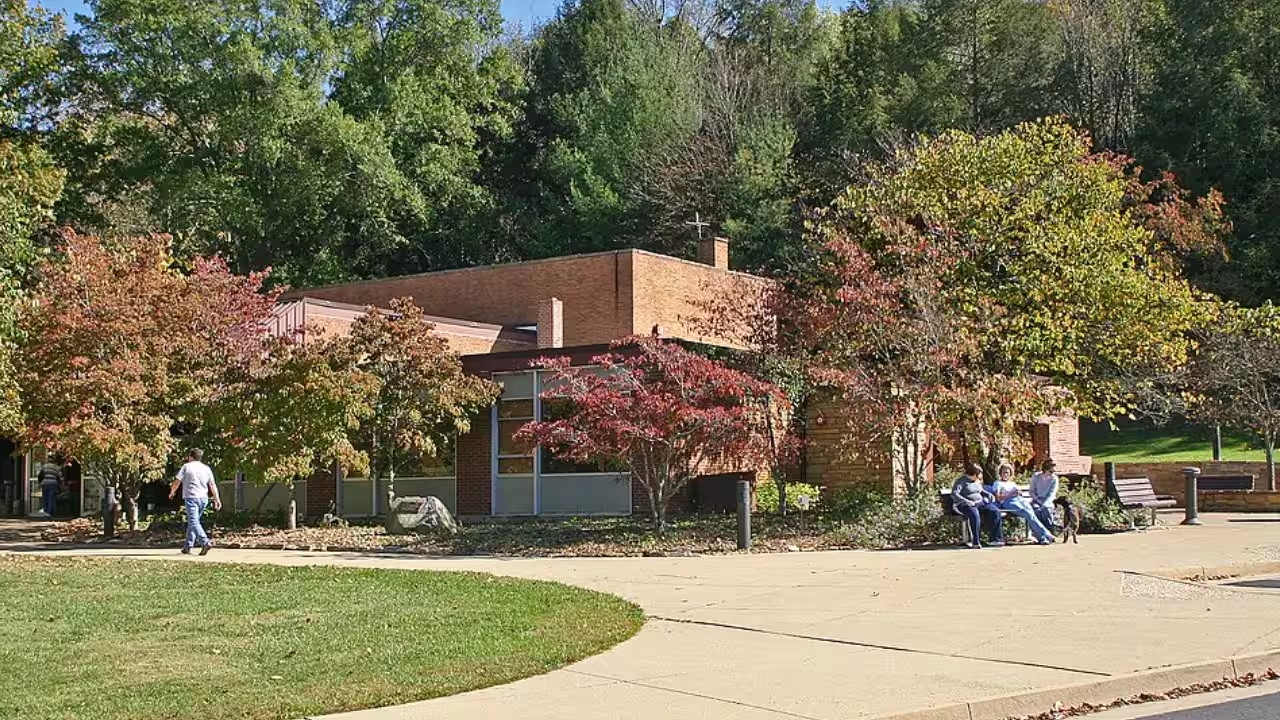
A large paved parking area is not usually thought of as part of a city's water infrastructure. In Nashville, Tennessee, however, a former parking site along the Cumberland River was transformed into Cumberland Park, a 6.5-acre public space designed to combine recreation with measures for managing rainwater.According to City Parks Alliance, Cumberland Park opened in 2012 as part of Nashville's wider riverfront redevelopment. Beneath the landscaped park is a rainwater-harvesting cistern that captures stormwater from the park, nearby streets and parking areas. The system can collect about 1 million gallons of water in a typical year, which is then reused to irrigate the park.From parking lot to public parkCumberland Park sits on the east bank of the Cumberland River, beneath the Shelby Street Bridge, on a 6.5-acre site that was once largely occupied by surface parking and other developed land. The redevelopment turned the area into a public landscape with lawns, walking paths, play areas, gardens, a climbing wall and an outdoor amphitheatre. The project formed part of Nashville's New Riverfront Revitalisation Plan, which aimed to reconnect downtown with the river, while its design also had to account for the area's floodplain. The 2010 Nashville floods, when the Cumberland River reached levels not seen since the 1930s, led designers to reconsider parts of the project before construction was completed. According to the Tennessee Department of Environment and Conservation, the redevelopment also included brownfield remediation, floodplain preservation and habitat restoration, with more than 1.6 acres of meadow and riparian grasses restored as part of the project.Water hidden beneath the landscapeAmong other features of Cumberland Park is the stormwater management system. According to the City Parks Alliance, there is also an underground cistern which is able to collect around 1 million gallons of stormwater annually. In addition, this water is not discharged to the municipal stormwater system but is used for irrigation purposes. Initially, the design of the project explained the system of collecting the stormwater from the park, as well as the parking lot and adjacent vehicle bridge.This is one instance where a city park does more than just offer empty spaces. In this park, rainwater is not drained away but instead stored in the ground and then used at a later time. This is especially significant in a place like Nashville, where heavy rainfall leads to large amounts of surface runoff. In this city, the stormwater system typically moves rainwater through the drains, pipes and ditches into creeks and rivers. The runoff from the streets might even have pollutants mixed in.A park with several jobsManaging stormwater runoff was only a portion of the redevelopment of Cumberland Park. It was also hoped that Cumberland Park would provide new green space along a portion of the riverfront area where there was previously a predominance of paving and industry. There is an amphitheatre at Cumberland Park that can hold up to 1,200 individuals, as well as water-play elements, paths, and areas for recreation. In addition, native and traditional planting was included in the landscaping of the site, and meadow and riparian restoration added plants to the riverfront area.Contaminants found during the assessment process included Polycyclic Aromatic Hydrocarbons, Lead, and Arsenic in various sections of the former brownfield. It included processes such as soil excavation, capping of certain sites and institutional controls before the land could be put back into use as a public park. Therefore, the water collection process is part of a bigger redevelopment project. The former parking lot has been transformed to become public space, the contaminated land has been remediated, vegetation planted, and rainwater harvested.The Cumberland Park project demonstrates how one piece of urban land can be used in more than one way. On the surface level, the park is an area where people can walk, play, and meet by the river. Beneath the surface, the infrastructure is able to store rainwater. Once impervious and paved, the land has been redeveloped to catch and reuse some of the rainwater.You use AI every day. Now get your AI Quotient. Take the AIQ test.
Topics in this story
Gathered from external sources. Rights to this text belong to whoever originally published it.