<b>After losing his wife in 2014, a Wisconsin farmer planted 4.5 miles of sunflowers; their seeds later helped raise money for cancer research</b>
US News: After losing his wife to cancer, Don Jaquish turned a shared dream into reality by planting 4.5 miles of sunflowers along Highway 85, creating a stunning memorial that raises funds for cancer research.
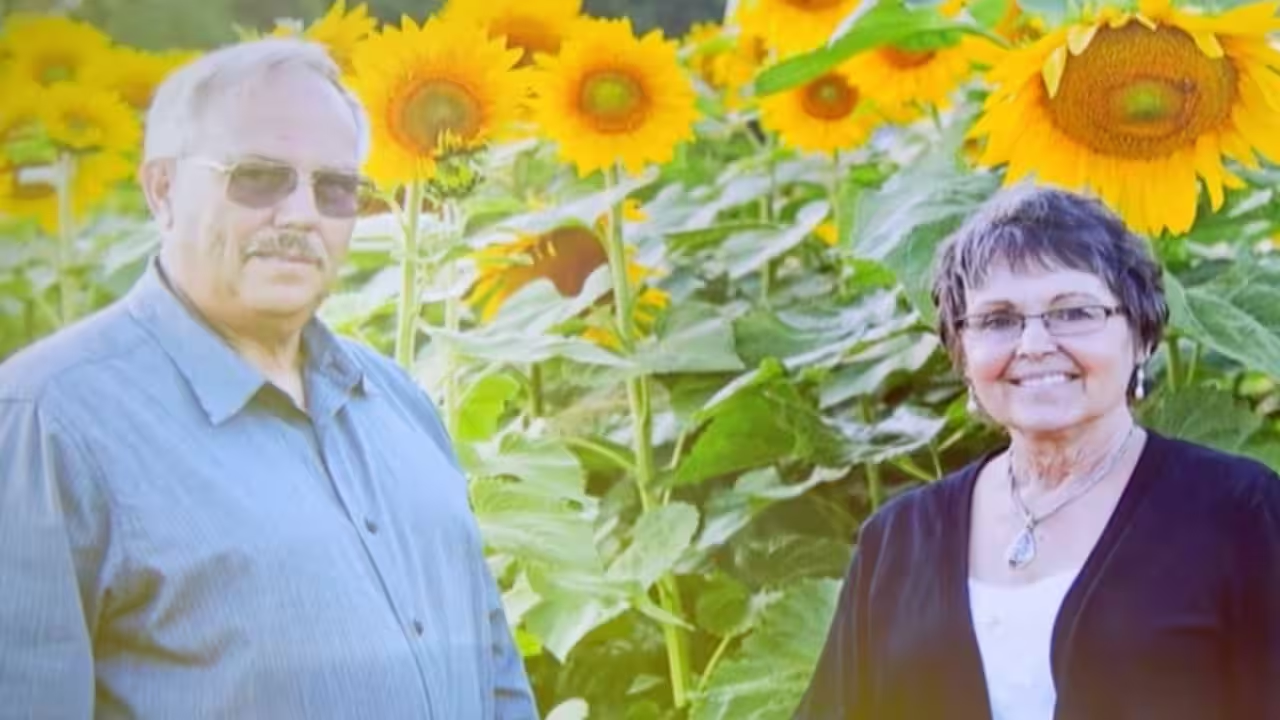
After losing his wife, Babbette, in 2014, Wisconsin farmer Don Jaquish turned a dream they had shared into one of the region's most memorable living memorials. Babbette had loved sunflowers and had imagined planting them along Wisconsin Highway 85 so that motorists could enjoy the bright yellow flowers. At the same time, the harvested seeds could eventually help people affected by cancer. Her idea became especially meaningful after she was diagnosed with multiple myeloma in 2006. Over the following years, she underwent treatments and clinical trials while continuing to support the idea of using sunflowers to raise money for cancer-related causes. She died in 2014, leaving Don to decide what could be done with the dream they had discussed together.After Babbette's death, Don decided that planting the sunflowers would be more than a personal tribute. He wanted the project to reflect her love of the flowers as well as her interest in helping other people facing cancer. .In summer 2015, he rented land from neighbouring farms along Highway 85 near Eau Claire, Wisconsin, and planted the sunflowers across nearly 400 acres, creating a 4.5-mile stretch of yellow flowers. According to an account of the project published by Wisconsin Life, Don rented land from neighbouring farms and planted the sunflower fields the following summer, turning Babbette's favourite flower into a large public memorial. What had once been a private idea between husband and wife had become a memorial visible to people travelling through the area.A 4.5-mile corridor of sunflowersThe scale of the planting made Babbette's favourite flower highly visible. The sunflowers grew along both sides of Highway 85, creating a long yellow corridor through the Wisconsin countryside. Don had chosen the location because the flowers could be seen by people travelling along the road, allowing the memorial to reach far beyond the family's own farmland. When the plants reached full bloom during the summer, the fields attracted attention from local residents, motorists and visitors who stopped to photograph the unusual landscape. The project also carried a personal meaning that went beyond its size. Don had described sunflowers as a flower that suited Babbette's personality, recalling her warmth and the way she could brighten a room. She had become known in the community as the âSunflower Lady,â and the flowers were already closely associated with the couple's farming life before her death. Her idea, therefore, grew from something personal and familiar rather than from a project Don conceived only after she was gone.Turning Babbette's idea into Seeds of HopeBabbette's original idea also involved using sunflower seeds to help others affected by cancer. She had understood the importance of cancer research and clinical trials through her own treatment, and Don later worked to turn that part of her vision into a charitable project. The family created Babbette's Seeds of Hope, with the intention of selling sunflower seeds and directing part of the proceeds toward hospitals, cancer research and patient advocacy. The project gave the fields a purpose beyond remembrance: the flowers could generate support for people facing the same disease that Babbette had battled for years.The first harvest brought another emotional stage to the project. Once the bright flowers faded and the growing season ended, the sunflowers had to be harvested like an ordinary agricultural crop. Don used farm machinery to collect the seeds, which could then be packaged and sold. During the summer, the fields served as a giant memorial that filled the highway with colour; later, the same plants became a source of funds for the charitable purpose Babbette had imagined. According to Wisconsin Life's account of Babbette's Seeds of Hope, the nonprofit had raised more than $50,000 for cancer research by 2018, showing how the memorial had grown into an ongoing fundraising effort.The fields became a community memorialThe sunflower project expanded beyond Don's original tribute. News and photographs of the enormous planting spread widely, bringing attention to both Babbette's story and the charitable purpose behind the fields. People who had never met her could see the flowers and learn why they had been planted. For the Jaquish family, the response also showed how a deeply personal loss could become something that connected them with other families affected by cancer. The project continued in later years through Babbette's Seeds of Hope. The sunflower fields became associated with seasonal events that allowed visitors to experience the flowers more directly. In 2016, a sunflower maze created as part of the tribute attracted thousands of visitors, with donations supporting cancer research. The family's efforts eventually gave the memorial a recurring role in the community rather than limiting it to a single summer. Each new planting brought back the image that had become associated with Babbette and gave the family another opportunity to connect the flowers with cancer support.The continuing project also allowed other people to attach their own memories to the fields. Visitors came not only because the sunflowers created an unusual sight along the highway but also because the story behind them gave the landscape an emotional meaning. The fields represented a woman who had spent years fighting cancer and wanted to use something she loved to help others. For people who had lost relatives or friends to the disease, the sunflower project offered a visible reminder that grief could be turned into an act of support.A living tribute that carried her idea forwardWhat Don created in 2015 was more than a field of flowers. It combined Babbette's love of sunflowers, her experience with cancer and her wish to contribute to research and patient support. The scale of the planting made the tribute visible from the highway, while the harvest gave the project a practical charitable purpose. The family continued the tradition in later years, keeping the connection between the flowers and Babbette's memory alive.Babbette never saw the 4.5-mile stretch of sunflowers that eventually carried her name, but the project allowed Don and their family to complete an idea she had once imagined. The fields transformed an ordinary stretch of Wisconsin farmland into a seasonal memorial that brought together agriculture, remembrance and charity. Each summer bloom recalled Babbette's favourite flower, while the work surrounding the harvest helped continue the purpose behind her dream. Don's decision to plant nearly 400 acres turned that idea into something visible across miles of Wisconsin farmland.Catch the latest World News and Live updates. Download the TOI app.
Topics in this story
Gathered from external sources. Rights to this text belong to whoever originally published it.