A Utah man cut down his neighbour’s mature trees with a tractor, arguing that a historic easement allowed him to build an access road; repeated clashes led to a stalking injunction
A disagreement over access to private land in Utah escalated after a man used a tractor to clear mature trees on his neighbour’s property, arguing that an
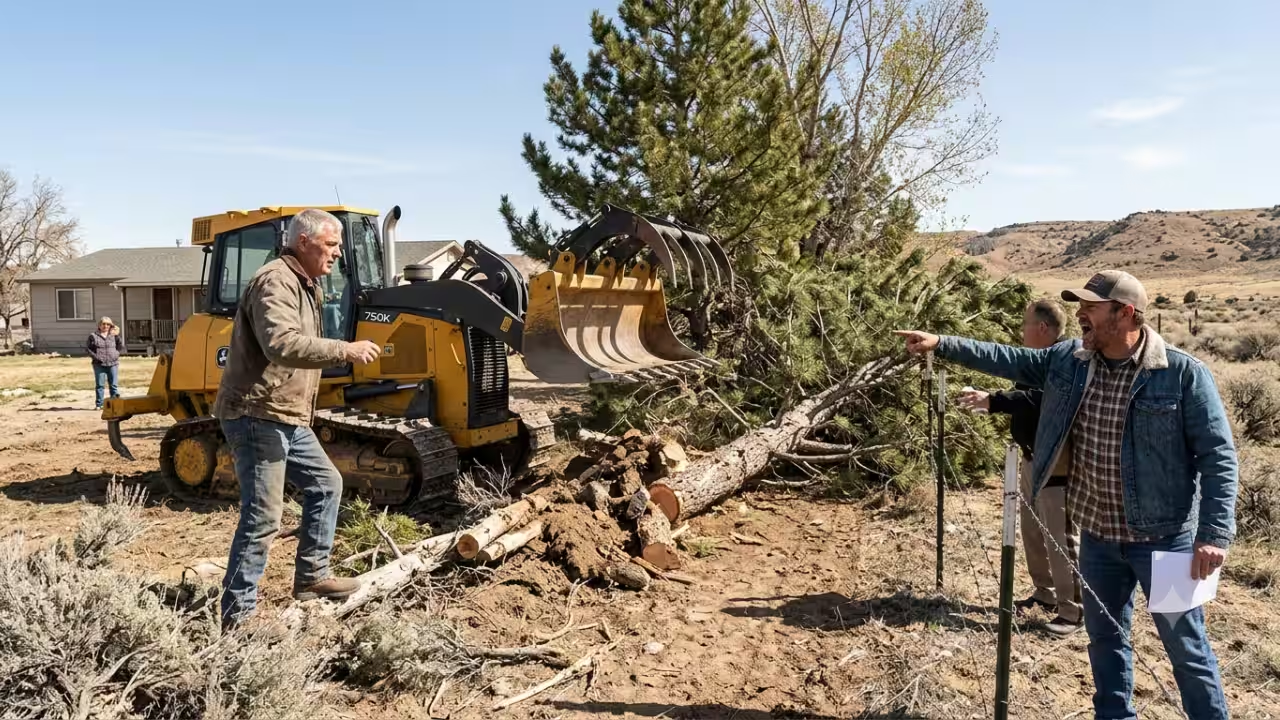
A disagreement over access to private land in Utah escalated after a man used a tractor to clear mature trees on his neighbour’s property, arguing that an old easement gave him a route to reach his own land. The dispute eventually involved more than the question of where a road could be built. The neighbour sought a civil stalking injunction, and the courts had to consider whether conduct linked to a property disagreement could justify restrictions intended to protect an individual. The Utah Court of Appeals dated May 2026 upheld the injunction against the man, while a separate civil case over the disputed easement remained unresolved. The ruling also examined how quickly courts must hear challenges to such orders.Utah land access dispute escalates after alleged property damageThe case, Hasemeyer v. LeFevre, concerned neighbours living in a rural part of southern Utah. Matthew LeFevre believed a historic easement crossed the northern edge of Eric Hasemeyer’s property and would allow him to reach an undeveloped section of his own land. He wanted to use that route to build an access road, with plans to develop the land for a house.Hasemeyer disputed that interpretation. An easement had historically existed in the area, but the neighbours disagreed over whether it remained valid and where it ran. Access to the disputed route was also complicated by a locked county gate. The court did not settle the ownership and access question in the stalking proceedings; that issue was being pursued separately.The disagreement became more serious in October 2024. LeFevre asked Hasemeyer for a key to the county gate without explaining why he needed it. After handing over the key, Hasemeyer noticed trees falling near the back of his property. He went to investigate and found that LeFevre had used a tractor to destroy two or three mature trees, according to the Utah Court of Appeals’ account of the evidence.When Hasemeyer challenged him, LeFevre said he was removing the trees because he had an easement. He stopped the work after the confrontation, but the incident prompted Hasemeyer to seek legal advice.On 16 October 2024, Hasemeyer’s lawyer sent LeFevre a cease-and-desist letter. The lawyer said an initial review of the property deeds and related records suggested that the claimed easement did not exist, while a formal title search was still being pursued. The letter demanded that LeFevre stop trespassing and causing further damage.Utah easement dispute intensifies after more trees are removedThe first confrontation did not settle the matter. LeFevre later sent Hasemeyer a survey document that he believed supported his claim to the route. Reportedly, on 7 November 2024, he returned to the disputed area with heavy equipment, apparently the same tractor, and removed more trees and shrubs while beginning to grade a road.The neighbours remained at odds over the documents. In February 2025, LeFevre emailed Hasemeyer to ask about the response to the material he had provided. The following day, Hasemeyer’s lawyer sent another letter, arguing that any easement LeFevre held ran through the southern part of the property, not the northern section where the trees had been removed. The lawyer again demanded that he stop the work.A further confrontation followed on 26 February 2025. Hasemeyer’s wife was working in a greenhouse at the northern end of the property when she saw LeFevre operating his truck and tractor. As he approached the disputed route, she stepped onto the path in front of him.According to the evidence later considered by the court, LeFevre continued moving slowly until the tractor was immediately in front of her legs. She told him to stay off the property. He laughed and left, taking a county road back to his house rather than using the disputed route.The encounter did not end there. Hasemeyer had witnessed part of it from inside the house and called 911. Before officers arrived, LeFevre returned to the area with a blade extension attached to his tractor. His neighbour’s wife recorded the second approach on her phone. She testified that he turned quickly onto the disputed route and came towards her at speed, lifting the tractor’s blade as he advanced. She had to step backwards to avoid him before he stopped.Utah court weighs stalking injunction amid a disputed property easementHasemeyer sought a civil stalking injunction after the incidents. The request was not simply about the loss of trees or the construction of an unwanted road. It also relied on the repeated entries onto the property and the February encounters involving the tractor and Hasemeyer’s wife.The court initially granted an injunction without first hearing from LeFevre. Such an order is known as an ex parte injunction. LeFevre challenged it and requested an evidentiary hearing, at which both sides could present their accounts and supporting material.During the hearing, the parties offered documents relating to the disputed easement as well as evidence about the three incidents. LeFevre maintained that he was trying to reach his own land, not harass or threaten his neighbours. He argued that he genuinely believed he had a legal right to use the route and that a stalking injunction was an unsuitable way to resolve a property dispute.Appeals court rejects challenge to stalking injunction over disputed Utah landLeFevre appealed to the Utah Court of Appeals, arguing that his actions did not amount to stalking, the evidentiary hearing was delayed improperly, the pending easement lawsuit prevented the injunction, and its restrictions were too broad.The court rejected his main arguments, finding that the repeated property entries, tree removal and tractor encounters supported the injunction under Utah’s stalking law. Judge Ryan D. Tenney, who wrote the opinion, added a section on his own behalf (Part I(C)), which the two other judges, Gregory K. Orme and Ryan M. Harris did not join.In it he suggested that Utah Supreme Court precedent on when conduct is ‘directed at’ an individual should be reexamined. He acknowledged, however, that the result was compelled by existing caselaw, and the injunction was upheld.The court also examined the delay in the hearingLeFevre had requested an evidentiary hearing on 10 March 2025, three days after the initial injunction was issued. The district court held an initial hearing on 24 March, heard evidence on 7 April and received closing arguments on 21 April. The final ruling therefore came 42 days after his request.Utah law generally requires an evidentiary hearing within ten days of a respondent's written request, unless compelling reasons justify a delay. The appellate court agreed that the statute referred to an evidentiary hearing, not simply any court appearance. It also accepted that scheduling pressures could amount to compelling reasons in certain circumstances.The judges said courts should weigh the reasons for a delay against the prejudice it causes the person subject to the injunction. The length of the delay and the importance of the restrictions also matter. In this case, the injunction did not prevent LeFevre from accessing his home or workplace, although it prevented him from entering his neighbour's property to use the disputed route. The court found no reversible error in the delay.The easement question remains unresolvedThe appeal did not determine whether LeFevre had a valid easement across the northern part of Hasemeyer's land. The court declined to consider his argument that a pending civil lawsuit over the route legally barred the stalking injunction because he had not properly raised that issue in the lower court. It also rejected his challenge to the injunction's scope. The order barred him from entering Hasemeyer's home, premises or property for a period of three years. Although LeFevre argued that this effectively prevented him from exercising the access rights he claimed, the court said the restrictions were within the district court's discretion under the circumstances. The judges noted that if LeFevre succeeds in the separate easement litigation, he can ask the court to modify or revoke the injunction. For now, the restrictions remain in place.You use AI every day. Now get your AI Quotient. Take the AIQ test.
Topics in this story
Gathered from external sources. Rights to this text belong to whoever originally published it.