In 2026, Thailand installed 47 Hanuman-themed figures among 73 reef structures off Racha Yai; a monsoon later damaged part of the site and prompted a warning to divers
Discover the unique Hanuman-themed underwater installation off Koh Racha Yai, Thailand, which aims to promote marine conservation amidst challenges from seasonal monsoon currents.
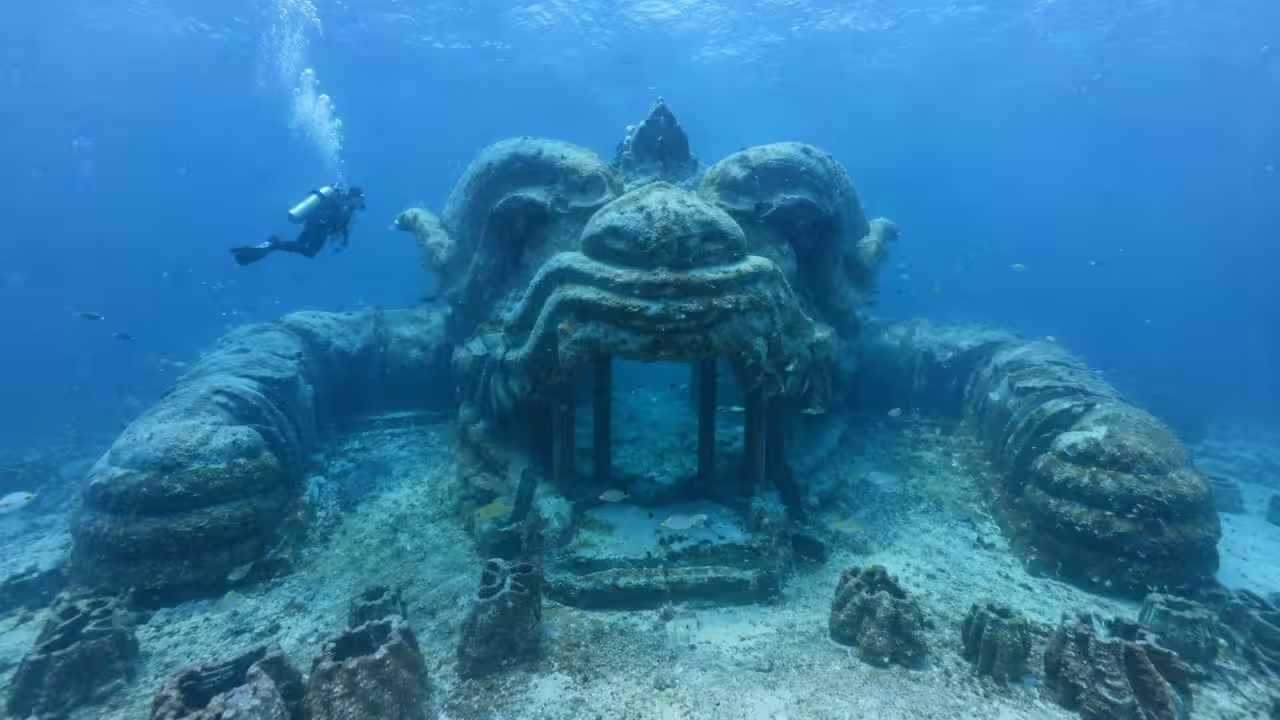
At Siam Bay, off Koh Racha Yai in Phuket, Thailand, in April 2026, an unusual underwater installation was completed. The project placed 73 structures on the seabed, which included 47 sculptures depicting Hanuman, the Hindu deity and one of the central characters of the Ramayana. The structure was designed to function as an artificial reef as well as an underwater attraction. The intention behind this installation was to provide surfaces for coral growth and create additional habitat for the marine ecosystem. However, within weeks of its installation, strong currents and underwater waves during a southwest monsoon damaged part of the structure. The authorities warned divers and diving operators to avoid the site because sections of the structure were unstable and were at risk of further collapse.An underwater reef inspired by the Hindu epic RamayanaKnown as Hanuman Nimitkai, the installation was developed under the initiative of The Magical Save Underwater World. According to the DMCR, between April 7 and 10, the transportation of the structures to the offshore location took place. Meanwhile, the underwater positioning and installation reportedly began on April 11. The 73 elements consisted of 47 Hanuman-themed sculptures, 15 three-dimensional-printed fence structures and 11 artificial coral reef units.At an approximate depth of 12 to 19 metres in Siam Bay, the structures were placed. The project’s objective was to combine marine conservation with sustainable tourism. The organisers intended the structures to provide a hard surface where coral larvae could attach and grow. This would eventually create a habitat for fish and other marine animals. In addition, the Hanuman installation was intended to become the first major attraction in a larger underwater art project. Later reports from The Phuket News noted that the wider aim of the project was to install sculptures depicting characters and episodes from the Ramayana. Therefore, the April installation represented an initial phase rather than the completion of the entire proposed underwater museum.Monsoon currents damaged part of the installationThe major setback came within a few weeks after the completion of the installation. On May 16, the authorities instructed diving shops, individual divers and instructors not to approach the Hanuman sculpture site until further notice. A report published by The Phuket News on May 19 noted that the right side of the structure had suffered severe damage. Strong currents and underwater waves during the southwest monsoon had reportedly caused significant movement in the rest of the sections, thus making them unstable and raising questions about safety.By September, officials had reported that the damaged Hanuman sculptures had been removed for repairs and had been reinstalled subsequently. The director of the Racha Islands Protected Area Management Center in Phuket told The Phuket News that the repairs had been completed, and that the sculptures had been open to visitors since August.Following the repairs, the wider project continued to advance. In September, reports described plans for additional sculptures depicting figures including Rama and Ravana. The plans also included installing scenes from the Ramayana. The underwater installation is reportedly scheduled for 2027. Therefore, the damage to the original Hanuman installation pointed out a practical challenge for the artificial reef project: structures placed underwater must be prepared in such a way that they can withstand seasonal changes in currents and wave conditions while remaining safe for divers and marine life.You use AI every day. Now get your AI Quotient. Take the AIQ test.
Topics in this story
Gathered from external sources. Rights to this text belong to whoever originally published it.