Blind and visually impaired people fear smart glasses backlash
Smart glasses are banned in some venues but disabled wearers describe them as game-changing.
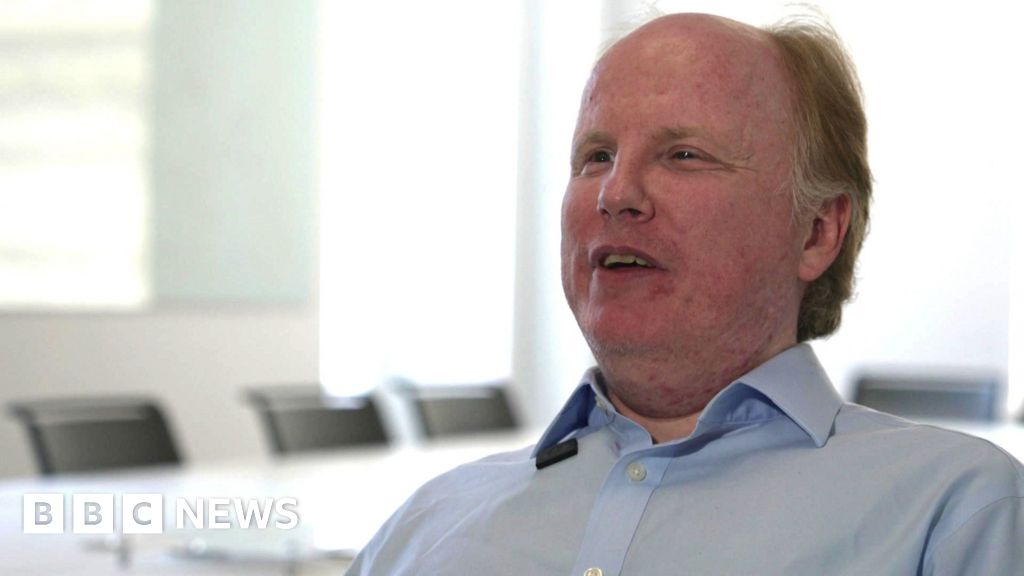
Sitting at his desk with some post in front of him, Darren Paskell puts on his glasses and says: "Hey Meta, read aloud all the text you can see on the letter."
Within seconds a female voice reads the words on the page. For the past 18 months, Darren, who is visually impaired, has used smart glasses for tasks including sorting through post and reading labels.
"They're really good for identifying different jars in the kitchen," said Darren. "I'm in my 40s now and this is the first time that I've been in a position to wear something, talk to something and, with a single command, get the information that I'm looking for. This technology is absolutely life-changing for me."
Darren, who works for the charity Guide Dogs, wears the glasses at home, but would like to use them more in public.
He said: "It would be great to have an idea what's happening on the street while I'm walking down it, or where are the queues if I'm looking to buy something."
However, a number of venues have restricted the use of the glasses, which have a tiny camera embedded in the frames.
The glasses are banned in courtrooms and some schools, as well as some pubs, restaurants, cinemas and theatres .
This followed concerns about their use. It can be difficult to tell when the camera is on, and some women have reported being secretly recorded by the devices and then harassed .
The glasses have a blinking white LED that switches on when the camera is active.
Exact sales figures are unknown, but Ray-Ban's parent company EssilorLuxottica reported that it sold seven million pairs last year.
Meta, the company that owns WhatsApp, Facebook and Instagram, started selling smart glasses in 2021.
Darren, who travels from his High Wycombe home to the office in Euston for work, said he was worried about how the backlash towards the technology could affect him.
"It is concerning for me when I'm not allowed to use them," he said.
"That is essentially a little bit like an organisation saying: 'As a blind person you're not welcome coming into this place'," he said.
Sight loss charities agree. Khadija Raza, the Royal National Institute of Blind People's policy lead on accessibility, said the unintended consequence of organisations banning the devices could be that blind and partially sighted people "feel less safe and ultimately excluded from activities that others take for granted".
Khadija said the institute urged venues and service providers to take an "inclusive, proportionate approach" to the technology that protects privacy but also allows blind and partially sighted people to use smart glasses.
Rachel Taylor, technology programme lead at the charity Guide Dogs, said she expected the number of people with sight loss who use smart glasses to increase.
"Guide Dogs calls on businesses and venues to consider the use of AI wearables as a reasonable adjustment, recognising the vital role these devices can offer," she said.
But the stigma around the devices seems to be growing.
They have been nicknamed " pervert glasses " and were mocked in a series of unauthorised adverts and signs in London.
Stickers that were designed to look similar to Transport for London (TfL) safety notices were placed on the London Underground by activist group Everyone Hates Elon. The group also organised billboards that dubbed the devices "pervert technology".
A spokesperson for the group said: "As a woman in London, you feel really unsafe. The last thing we need is more things that help abusers to do things without our consent.
"That's why these glasses are really scary and we wanted to tell people about the risks of them and make them culturally unacceptable."
They said the group wanted to shame people wearing the devices, adding: "We don't want to be filmed all the time. I think you're seeing a global pushback against a loss of privacy."
TfL said unauthorised adverts that appeared on its network were removed as soon as they were identified.
Liz Hunter said she was so appalled by the glasses that she helped launch a petition and database called Stop Smart Glasses, which invites people to contact their local retailers and ask them not to sell the technology.
Liz said: "The government has not caught up, law hasn't caught up with this.
"What we're seeing is big tech racing ahead, again, of regulation. Now we're in this awful mess where consent is supposedly an LED light in a pair of glasses. That is not consent."
Liz added: "They're being used for blackmail, for sextortion. They are an absolute infringement of our human rights. The general public is infinitely more at risk because of these devices."
Filming people in public is generally legal, but it can still breach harassment or stalking laws, and filming people in places where they have a reasonable expectation of privacy may be unlawful.
A spokesperson for the Department for Science, Innovation and Technology said: "The government has no current plans to introduce specific legislation on the use of smart glasses for filming in public spaces because there are already criminal offences in place to deal with harmful conduct."
The Meta glasses revolution - is it okay to film people in public?
Campaigners argue smart glasses have legitimate uses for people with visual impairments, but should not be widely used in public.
A spokesperson for Everyone Hates Elon said: "Meta have some of the best technologists and brains in the world. So let's see them focus on helping disabled people, rather than trying to profit so much from our imagery, our voices and our data".
Meta said its glasses provided valuable accessibility benefits for blind and other disabled users and could help users navigate their surroundings, access information and carry out everyday tasks more independently.
It has previously said that, as with any recording device, people using smart glasses should not engage in "harmful activities like harassment, infringing privacy rights, or capturing sensitive information".
Listen to the best of BBC Radio London on Sounds and follow BBC London on Facebook , X and Instagram . Send your story ideas to hello.bbclondon@bbc.co.uk
Woman covertly filmed for 'humiliating' social media content - then told to pay
'I was secretly filmed with smart glasses and then trolled online'
TikToker faces police probe over secret filming using 'smart glasses'
Topics in this story
Gathered from external sources. Rights to this text belong to whoever originally published it.