In 1987, scientists added radioactive cadmium to Ontario’s Lake 382 to track metal pollution; in six years, sediments trapped 90% to 95% of everything added
Rest of World News: Discover the groundbreaking research conducted at Ontario's Experimental Lakes Area, where scientists added radioactive cadmium to Lake 382 to study pollution effects on aquatic life. The study provides crucial insights into metal pollution and sediment interactions.
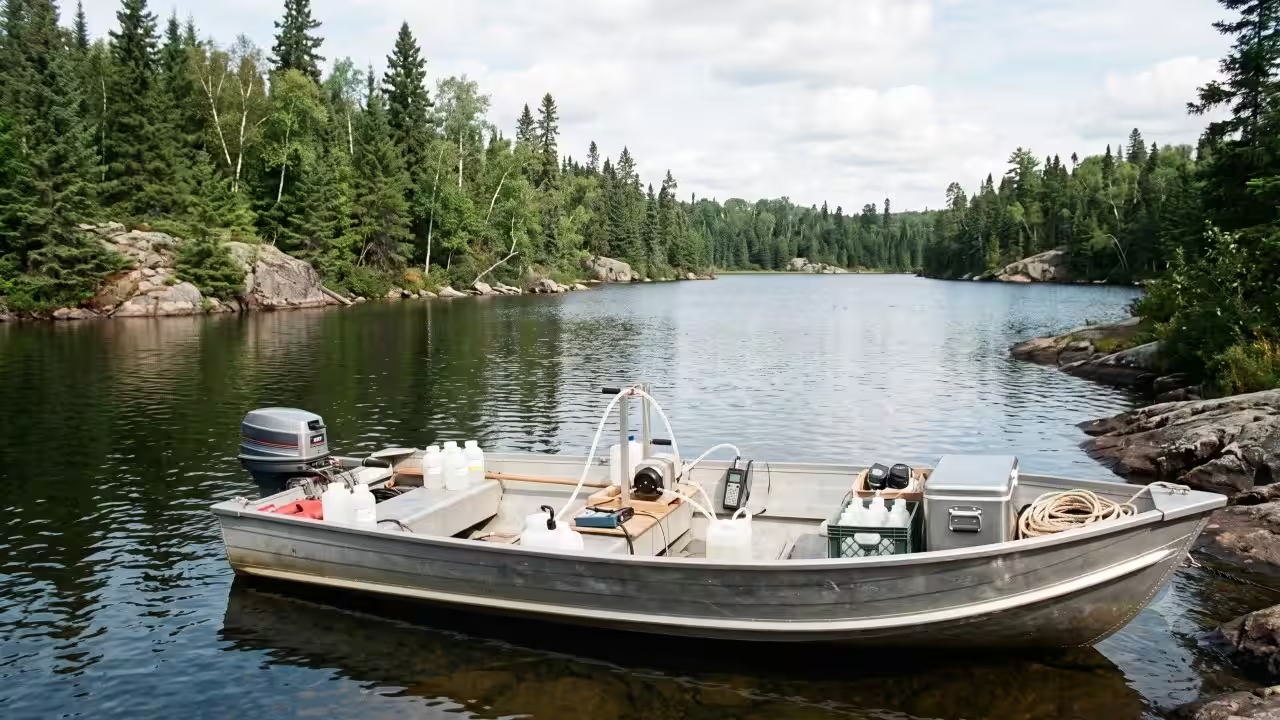
Understanding exactly what happens to a toxic metal once it enters a lake is far harder than it sounds, since real-world pollution rarely arrives in neat, measurable doses. Rather than guess from scattered field samples, Canadian researchers working at a rare environmental laboratory decided to add a carefully measured, traceable amount of cadmium to an entire lake themselves and follow exactly where it went.The setting was the Experimental Lakes Area, a cluster of dozens of small, pristine lakes in northwestern Ontario that the Canadian government set aside in the late 1960s specifically so scientists could run large-scale experiments impossible to attempt anywhere people actually depended on the water. According to the site's operators, now known as IISD Experimental Lakes Area, the facility has spent decades manipulating whole lakes rather than small laboratory tanks, since results at that scale can be useful when applied to real-world policy. In 1987, researchers chose Lake 382 within the reserve for a cadmium study, adding the metal in a dose deliberately matched to levels measured in lakes situated a few kilometres downwind of a copper and zinc smelter in Flin Flon, Manitoba. Crucially, the cadmium was spiked with a radioactive tracer isotope, allowing scientists to follow its exact path through the water, sediment and food web rather than relying on ordinary chemical sampling alone.Tracking where the metal actually wentThe tracer approach paid off almost immediately. Researchers could measure cadmium moving from the open water into plankton, insects, mussels and fish with a precision that ordinary monitoring could never match, since the radioactive signature made even tiny concentrations easy to detect. A retrospective account of the programme published in the Canadian Journal of Fisheries and Aquatic Sciences records that the added cadmium moved into the lake's sediments remarkably quickly once it settled out of the water column. Within around six years of the additions beginning, researchers found that sediments had captured somewhere in the range of ninety to ninety-five per cent of everything added, effectively locking the great majority of the metal away from the organisms living in the open water above it. Even so, some cadmium kept cycling back into the food web for years afterward, with later studies tracking small but measurable amounts being carried out of the lake entirely by emerging aquatic insects such as midges and mayflies as they left the water as adults.Why a slow moving toxin still matteredDespite the alarming premise of deliberately poisoning a lake, researchers observed no major die-off or collapse in the lake's fish and invertebrate populations at the doses tested. That did not mean the cadmium was harmless. Elevated levels showed up for years in the tissue of lake trout and other species, and scientists later noted that some fish appeared to cope by producing higher levels of a metal binding protein that helped limit the damage internally. The experiment ultimately helped regulators judge how realistic environmental cadmium guidelines actually were, since it showed both how effectively natural sediments can bury a pollutant over time and how long a supposedly buried toxin can keep quietly resurfacing through a lake's smallest creatures. Decades later, the Experimental Lakes Area remains one of the few places where an experiment like this could have been run.Catch the latest World News and Live updates. Download the TOI app.
Topics in this story
Gathered from external sources. Rights to this text belong to whoever originally published it.