In 2017, Chile certified Chañaral Island free of invasive rabbits; seven years later, rare seabirds had four active natural nests there with help from audio lures
In a significant conservation success, the Peruvian diving petrel is nesting naturally on Chañaral Island for the first time in over 40 years, seven years after invasive rabbits were removed. This article explores the efforts made to revive the seabird population and its implications for biodiversity.
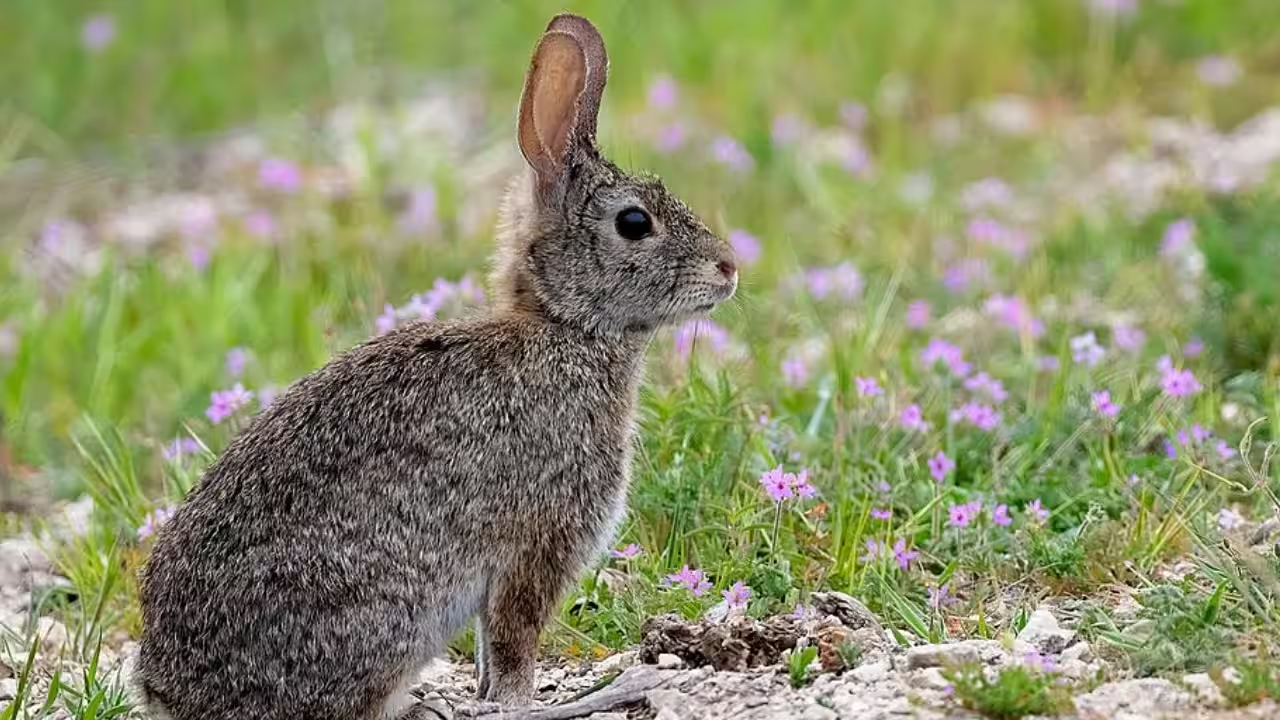
In early 2024, conservationists visiting Chañaral Island, off the coast of Chile, found four active natural nests of the Peruvian diving petrel, a small ground-nesting seabird that had stopped nesting on the island decades earlier. According to Island Conservation's release of 6 February 2024, the nests were the first active natural ones there in over four decades, and they appeared roughly six to seven years after the island was declared free of invasive rabbits. According to the announcement, the nests followed social attraction efforts that used solar-powered audio devices to play the petrel's call.Chañaral lost about 100,000 breeding pairs of Peruvian diving petrels to foxes and rabbitsChañaral was once home to the world’s largest colonies of Peruvian diving petrels, but in recent decades about 100,000 breeding pairs have been lost due to the introduction of foxes and rabbits. While the foxes ate the petrels, the rabbits made them flee from their nests by uprooting the vegetation in the surrounding areas. The foxes were eliminated some decades back, yet the rabbits survived and prevented the petrels from nesting.Rabbit removal on Choros from 2013 and Chañaral certified rabbit-free in late 2017The removal was led by Chile's National Forestry Corporation, known as CONAF, working with Island Conservation. The project began on Choros Island in 2013 and later expanded to the larger Chañaral Island. In 2014, rabbits were eradicated from Choros Island, and in 2017, certification of eradication was achieved on Chañaral Island.An experienced Labrador retriever named Finn contributed to confirming the eradication process of Choros. These two islands fall under the jurisdiction of the Humboldt Penguin National Reserve, which, together with other reserves on the coast of Atacama and Coquimbo, harbors nearly 80 percent of the world’s population of Humboldt penguins. The effects of the eradication process became evident on Choros Island very rapidly, where native seedlings were growing on hillsides and petrels settled in burrows previously used by rabbits.September 2019 social attraction project with two solar speakers and artificial burrowsClearing the land was just the beginning of the process. The implementation of the project for social attraction took place on Chañaral Island in September 2019 through collaboration between Island Conservation, CONAF, and Universidad Católica del Norte, together with technical assistance from Project Puffin. This strategy imitates both sight and sound that would be expected in a natural breeding colony. To do this, the team installed PVC artificial nests and two solar-powered speaker systems playing recordings of petrel calls. Park ranger Cristian Rivera said the petrels arrived within days of the speakers being installed. Motion-sensing cameras recorded regular visits. About a year and a half after installation, the team found its first naturally built burrows. After three years of work, it had found three such burrows and, using a burrowscope, documented the first chick seen on the island in 40 years. Island Conservation announced the chick in February 2023.Four active natural nests in early 2024, including two with chicks and one with a fledglingDuring a monitoring visit to Chañaral Island on 6 February 2024, Island Conservation and CONAF reported four active natural nests of Peruvian diving petrels: two with chicks, one with an adult, and one with a fledgling. According to Rivera, other sites that did not have the sound system exhibited no signs of the petrels, a sign that the speakers made all the difference. The International Union for Conservation of Nature had previously listed the species as endangered four years ago and has now listed it as near threatened, even though the species is still listed as endangered by the environment ministry of Chile. Coral Wolf of Island Conservation believes that the speakers will be removed someday because the birds will no longer require them.A 2020 study counted about 12,500 breeding pairs in Chile from 2010 to 2014, 95% of them on ChorosA peer-reviewed study published in 2020 in Bird Conservation International put the Chañaral story in context. Researchers surveyed Chile's colonies between 2010 and 2014 and found that the number of breeding pairs had increased to about 12,503, with a 95% confidence interval of 10,613 to 14,676. That was roughly 34% of the 36,450 pairs reported for Peru, and Choros Island held about 95% of Chile's total. The authors attributed the increase to legal protection of Choros, but they cautioned that this pattern alone could not justify a change in the species' conservation status, since time series were needed for all the other significant colonies. Because the survey data ended in 2014, before Chañaral was certified rabbit-free in 2017, the study could not show the effect of the eradication on Chañaral nests.You use AI every day. Now get your AI Quotient. Take the AIQ test.
Topics in this story
Gathered from external sources. Rights to this text belong to whoever originally published it.