He was their ‘little miracle.’ What happens when antibiotics stop working
No autopsy was conducted, but the series of events convinced his parents that antimicrobial resistance – or AMR – had played a role in his death.
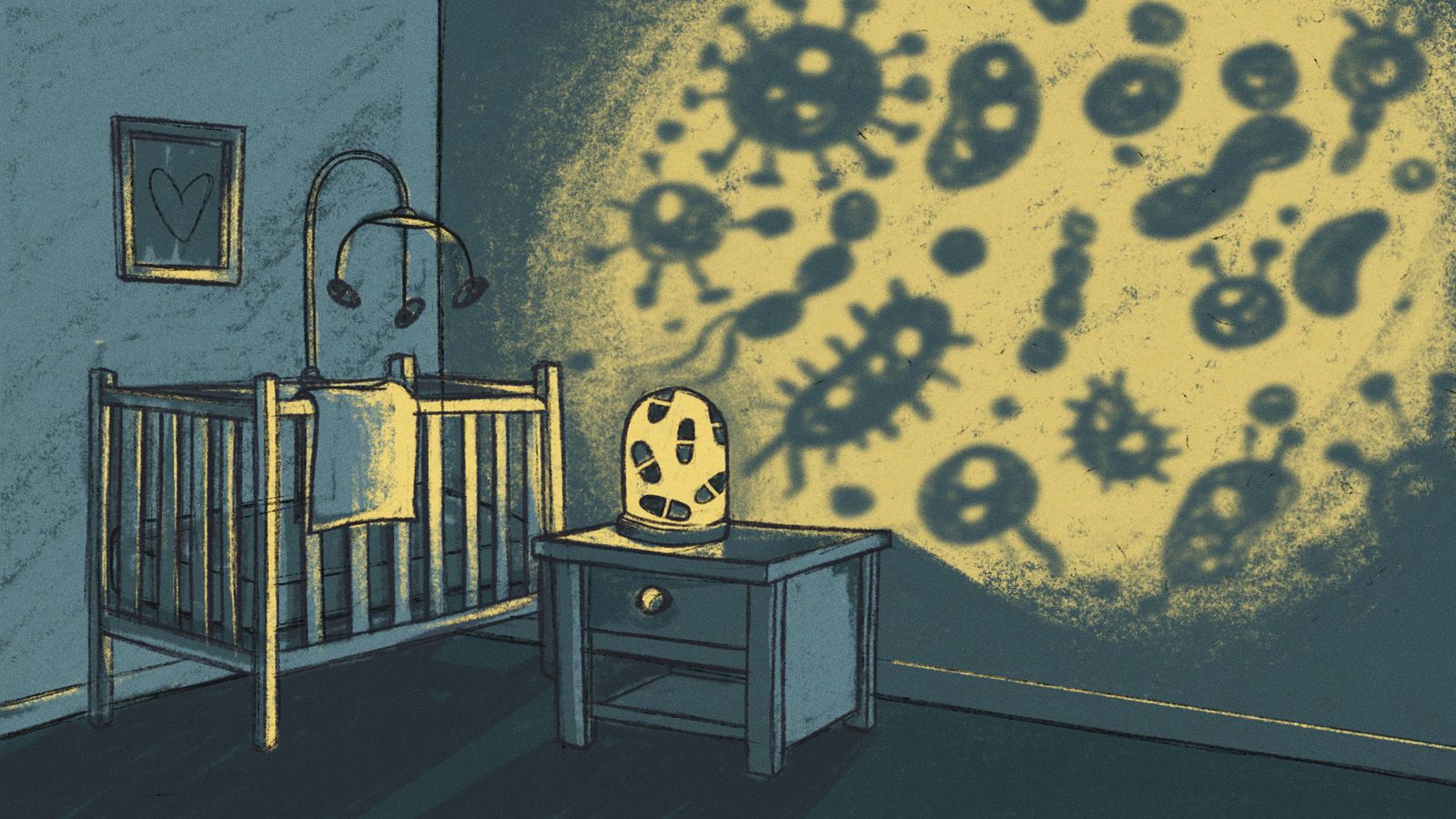
Dr. Felix Liauw remembers the first time he held his son, Obelix. “He looked perfect. He was our little miracle,” the pediatrician, 40, told CNN. After seven years of trying to conceive, Liauw and his wife were overjoyed to welcome their firstborn. But their happiness was soon overshadowed when his tiny body rejected food, with vomiting and diarrhea after every bottle, up to eight times a day. Early on, Liauw’s wife adjusted her diet, suspecting a breast milk allergy. But symptoms persisted, and Obelix was put into neonatal intensive care and rehydrated at just 2 weeks old. “He just kept crying, crying, crying, all day long,” Liauw said from his home in Bekasi city, Indonesia. “If we didn’t feed him, he was OK, but he was so hungry all the time.” Liauw consulted a pediatric nutritionist who suggested a special milk formula for Obelix, but this didn’t help, and his weight dropped from 2.4 kilograms (about 5 pounds) to 2.2 kg. At 1 month old, he was given a feeding tube and diagnosed with a bowel infection at a hospital in Jakarta. Doctors prescribed different types of antibiotics, hoping to find one that would work, but to no avail. Blood tests later pointed to congenital short bowel syndrome, a rare disorder that prevented Obelix from digesting food and led to prolonged hospital care. Still tiny, Obelix developed sepsis, an extreme reaction to infection. Blood tests showed that none of the antibiotics doctors had hoped would tame the infection were working, and Obelix died in hospital on February 12, 2020. He was just 3 months and 2 weeks old. No autopsy was conducted, but the series of events convinced his parents that antimicrobial resistance – or AMR – had played a role in his death. What causes AMR? AMR is one of the global health challenges of the 21st century. According to the World Health Organization (WHO), it happens when bacteria – as well as viruses, fungi and parasites – change in ways that make the drugs used to treat them no longer effective. Although this process happens naturally, it’s been a known threat for a long time. About 100 years ago, Oxford researchers observed bacteria that could destroy penicillin, even before the drug was widely used. By the 1980s, doctors were seeing multidrug-resistant strains spreading globally. Since then, awareness and efforts to combat AMR have increased – but so has the threat. In 2021 – a year after little Obelix’s death – the phenomenon was linked to 4.7 million deaths worldwide. By 2050, WHO estimates, that number could rise to as many as 39 million annually, and eventually affect everyone. One of the main drivers of resistance is the overuse of antibiotics, both in people and in farming, which can speed up the emergence of drug-resistant “superbugs.” That’s why WHO warns against self-medicating with antibiotics and urges people to always finish any prescribed course. Still, in the five years to 2023, the WHO found that more than 40% of antibiotics had lost their effectiveness against routine illnesses like urinary tract and sexually transmitted infections. “These findings are deeply concerning,” said Dr. Yvan Hutin, head of WHO’s AMR department. “As antibiotic resistance continues to rise, we’re running out of treatment options, and we’re putting lives at risk.” Despite growing awareness, global antibiotic consumption is rising. And it’s not just people who are taking them when they’re ill; Large volumes of antibiotics are used in agriculture, typically to promote growth in poultry and livestock – a practice seen worldwide, far beyond Liauw’s home in Indonesia. The European Union has taken action, banning antibiotics as growth agents for farm animals in Europe and will extend this rule to all livestock imports in September. However, the US still allows antibiotics for growth promotion, and reported a 16% rise in the sale and distribution of antimicrobials for food-producing animals between 2023 and 2024, according to the most recent figures. Some of that was due to the outbreak of Avian metapneumovirus in turkeys and chickens and bird flu, according to the US Food and Drug Administration (FDA). ‘It’s like a fire’ Mallory Smith died in Los Angeles at age 25 from an infection that antibiotics could not beat. Diagnosed at age 3 with cystic fibrosis, a genetic disease that clogs the lungs with sticky mucus, Smith grew up with doctors expecting a cure to arrive in time to save her. But as she approached her teenage years, her lungs became infected with B. cepacia, a dangerous bacteria that resists most antibiotics. The infection led to nearly 70 hospitalizations. By 2016, antibiotics had failed. Smith had a double lung transplant, but her infection lingered, and she died two months later in November 2017. “Antibiotics couldn’t resolve the infection,” her mother, Diane Shader Smith, told CNN. “It’s like a fire you thought you put out, but the embers still remain, and the flames come back hotter, faster and harder to control.” Before Smith’s death, doctors had secured approval from the FDA to give her bacteriophage therapy, an experimental therapy available in the US only through emergency compassionate use or one-off requests as an investigational new drug. Discovered over a century ago, bacteriophages use viruses – created by nature – to attack “superbugs.” However, finding the right phage to target a patient’s infection is an enormous challenge; so many phages exist that scientists estimate there’s a trillion for every drop of water or grain of sand. So far, the use of phages to treat bacterial infections is limited to a handful of countries, and some see them as a potential solution to the growing problem of antibiotic resistance. Although phage therapy did not save Smith’s life, an autopsy confirmed that it had begun to work, her mother said. Throughout her life, Smith documented her journey in diary entries, often describing the solace she found at sea, where salt water soothed her scarred lungs and surfing calmed her mind. “Losing Mallory was a catastrophic event in my life, but raising awareness has propelled me forward,” Shader Smith said. Since her daughter’s death, Shader Smith has traveled the world, raising awareness about AMR and about the potential of phage therapy to save lives. WHO says phage therapy is generally safe, as phages don’t target human cells, but more testing is needed before their use becomes more widespread. The medical treatment isn’t a universal fix for all bacterial infections. Like antibiotics, phages can cause the release of endotoxins, or toxic substances, which can cause a severe inflammatory – and potentially fatal – response, like septic shock. Fighting AMR Unlike Smith’s story in Los Angeles, AMR tends to hit hardest in lower-income countries – in Southeast Asia where Liauw lives, as well as South Asia and sub-Saharan Africa – according to the US National Institutes of Health. But these resistant bugs circulate worldwide, “affecting healthcare systems across all income levels,” Dr. Xin Deng, professor of biomedical sciences at the City University of Hong Kong, told CNN. What separates countries is not the germs themselves but the resources available to tackle them, Deng added. Other factors include a country’s ability to prevent infections, diagnose accurately, control environmental contamination and enforce regulations, Deng said. For some, even treating cuts and wounds could become problematic if AMR spreads due to the risk of a runaway infection. “Some bacteria inherently pose higher AMR risks,” said Deng, who has studied the topic for 15 years. One example is a bacterium called Pseudomonas aeruginosa, he said, which is linked to infections like meningitis, pneumonia and septicemia – a major risk to people with cystic fibrosis, like Smith. Along with smarter antibiotic use, Deng called for more public education, healthcare training, vaccination programs and investment for research and diagnostic tools. “The harsh reality is that with each year of inaction, the AMR crisis will only become more dangerous, more costly to address and significantly more difficult to control,” he said. By 2050, AMR could cost the world $1.7 trillion in annual GDP losses, research suggests. Momentum to address antimicrobial resistance is building, with more than 170 countries developing action plans and WHO member states agreeing last year to an updated strategy to reduce AMR-related deaths by 10% by 2030. The new plan seeks to slash the quantity of antimicrobials used in the world’s agri-food systems and improve sanitation and hygiene. It also calls for better lab tests and improved surveillance – steps that could help in cases like Obelix’s. For Liauw, it’s a cause he continues to champion in honor of his child. “We shouldn’t always diagnose infections only based on certain symptoms. We have to take a more holistic approach, like with my son,” Liauw said. “His case is not a common one, but it shows the risk of AMR can be deadly.”
Topics in this story
Gathered from external sources. Rights to this text belong to whoever originally published it.