In the 1970s, Britain imported North American signal crayfish for farms; they escaped, bred in huge numbers and now infest rivers across England, Wales and Scotland, carrying a plague deadly to native crayfish
UK News: In the 1970s, British aquaculture businesses imported North American signal crayfish to stock farms, hoping to build a profitable new freshwater fishe.
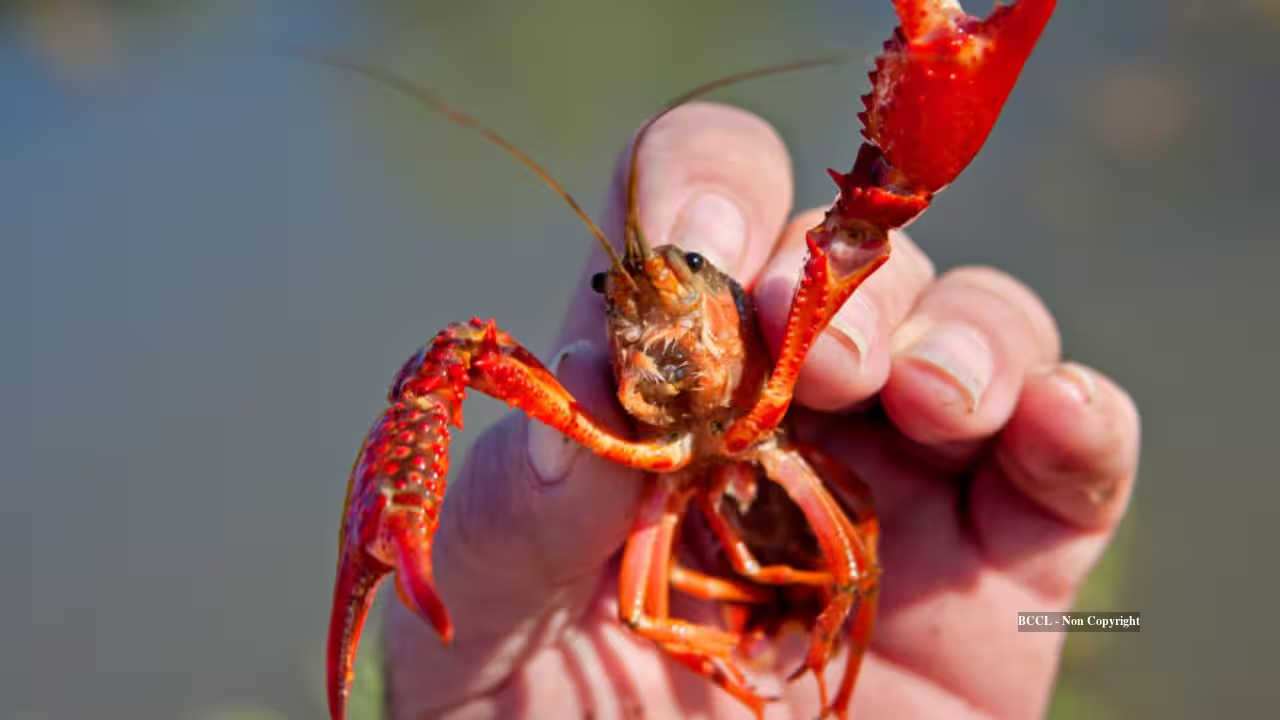
In the 1970s, British aquaculture businesses imported North American signal crayfish to stock farms, hoping to build a profitable new freshwater fishery. But the plan backfired: the hardy invaders escaped into rivers, multiplied rapidly and spread across England, Wales and Scotland. Today they dominate many waterways and carry crayfish plague, a disease that is usually fatal to the UKâs only native crayfish, the white-clawed species. The UK Government documents describe signal crayfish as a textbook case of how non-native species can damage biodiversity, out-compete natives and alter river ecosystems. This story is based on UK government policy reports and recent Environment Agency reporting on native crayfish conservation. Read on to know more:How signal crayfish arrived, and why they spread so fastSignal crayfish (Pacifastacus leniusculus) were brought into the UK from North America in the 1970s for farming, intended as a commercial species for restaurants and local markets. They are larger, faster-growing and more aggressive than the native white-clawed crayfish (Austropotamobius pallipes), giving them an immediate advantage in competition for food and shelter.Once they escaped from farms into the wild, they proved exceptionally good at colonising new habitats. They breed in large numbers, tolerate a wide range of water conditions and can move through connected river systems with relative ease. Over the decades, they have established populations in rivers and streams across much of England, Wales and Scotland, turning what began as a controlled aquaculture experiment into a widespread invasive-species problem.The hidden weapon: crayfish plagueThe most damaging aspect of the signal crayfish invasion is not just competition: itâs disease. Signal crayfish carry crayfish plague, a waterborne pathogen caused by the oomycete Aphanomyces astaci. The disease rarely harms signal crayfish themselves, but it is usually lethal to white-clawed crayfish, which have no natural immunity.When signal crayfish move into a river system that holds native populations, they can trigger mass die-offs.The plague spreads through the water and via contaminated equipment, clothing and boats, making it hard to contain once established. This dynamic has pushed the white-clawed crayfish toward local extinctions in many catchments and contributed to its status as an endangered species in the UK.Impact on rivers, banks and other wildlifeSignal crayfish do far more than crowd out native species; they tear apart whole river ecosystems. As they dig burrows into riverbanks, they weaken the soil and trigger severe erosion in small streams and ditches. Their relentless appetite makes things worse. By devouring fish eggs and aquatic bugs, they starve local wildlife and unravel complex food webs. Once these aggressive generalists take over, rich, diverse waters degrade into simplified systems dominated by a single pest. Protecting our native crayfish is about more than saving one creature. It is about keeping entire freshwater habitats healthy and resilient.A recent scare and glimmers of hope for native crayfishThe vulnerability of native populations was underscored in autumn 2024 when some 100 white-clawed crayfish were found dead in the River Wansbeck catchment in Northumberland, a nationally important stronghold for the species. Surveys in summer 2025 revealed that many affected crayfish had unusual orange patches and ulcers on their shells, but the symptoms didnât appear to be fatal at the population level. Investigations by the Environment Agency, the National Trust and university researchers found that some crayfish, especially younger individuals, could recover through normal moulting, and that mortality seemed concentrated in older, larger animals. No further deaths were reported after autumn 2024, and the Wansbeck population is still considered a key refuge for the species. Importantly, no signal crayfish are known from the Wansbeck catchment, and crayfish plague was ruled out as the cause of those particular mortalities.What the government is doing, and what the public can doUK policy explicitly recognises signal crayfish as a non-native species that has âcaused troubleâ for native wildlife, and uses it as a case study for why stricter controls on importing and moving live aquatic species are necessary.Regulations now require risk assessments for new species introductions and govern the movement of live fish and crayfish between water bodies to reduce disease spread.Conservation efforts focus on creating âark sitesâ, isolated water bodies where white-clawed crayfish can live and breed without exposure to signal crayfish or plague. After the 2024 incident, healthy âberriedâ females were rescued from the Wansbeck, their eggs hatched in captivity, and the offspring are being released into ark sites to bolster populations.For river users, the advice is simple but critical: Check, Clean, Dry.Check clothing and equipment for mud, aquatic animals or plant material and remove anything found.Clean everything thoroughly as soon as possible, using hot water where feasible.Dry for at least 48 hours, or use a suitable disinfectant before using gear elsewhere.Anyone who sees crayfish, alive or dead, is urged to leave them in place and report sightings to the Environment Agency, as it is illegal to handle or remove crayfish without the correct licences.A cautionary tale for invasive species policyThe story of signal crayfish in the UK is a clear example of how short-term economic decisions can create long-term ecological costs. What began as a promising aquaculture venture in the 1970s has become a persistent threat to native biodiversity, riverbank stability and the future of the white-clawed crayfish.Today, the focus is on containment, conservation and public awareness: protecting remaining strongholds, expanding ark sites and ensuring that people who enjoy rivers and lakes understand their role in preventing further spread. For policymakers, the signal crayfish episode underpins stricter rules on non-native species and reinforces the principle that preventing introductions is far easier, and cheaper, than trying to reverse them once they take hold.Catch the latest World News and Live updates. Download the TOI app.
Topics in this story
Gathered from external sources. Rights to this text belong to whoever originally published it.