In 1924, a Wisconsin farmer began transforming his new home into a world of carved birds and painted figures, creating Bird’s Park, an unusual art environment now recreated in a museum
In 1924, Wisconsin farmer Albert Zahn moved into a house he had built in Baileys Harbor and began filling it with carved birds, angels and wooden figures.
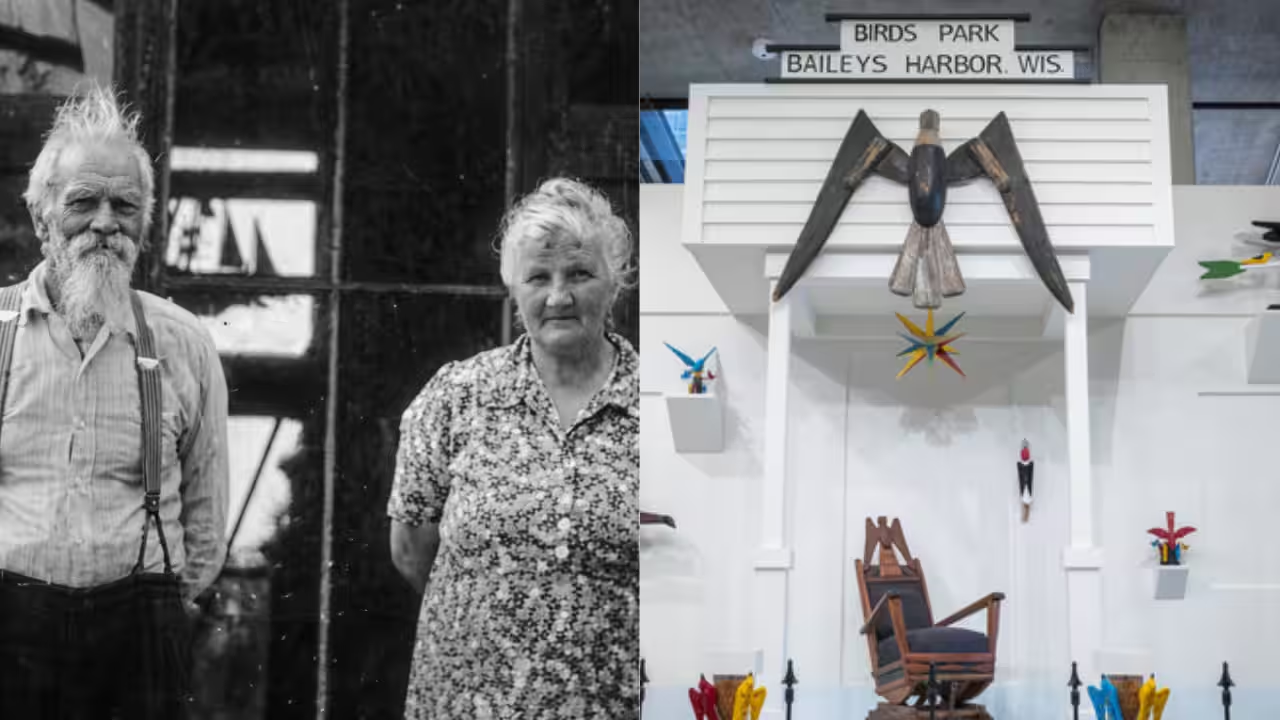
In 1924, Wisconsin farmer Albert Zahn moved into a house he had built in Baileys Harbor and began filling it with carved birds, angels and wooden figures. His wife, Louise, painted the creations, turning their home into Bird’s Park, a local attraction that drew visitors for years. Although the original art environment has since been dismantled, the house still stands and many of the carvings survive. The Kohler Foundation acquired numerous pieces, while the John Michael Kohler Arts Center in Sheboygan preserves a substantial collection and recreates elements of Zahn’s unusual home at its Art Preserve.How Albert Zahn turned woodworking into Bird’s ParkZahn’s route to carving began long before he settled in Baileys Harbor. Born in 1864 in what is now north-western Poland, he emigrated to Wisconsin with his family as a teenager. He later recalled whittling wood while working as a shepherd in Europe. In Wisconsin, he became a dairy farmer and raised a large family with Louise, whom he married in 1891.Woodworking was initially part of everyday life. Timber from the surrounding area supplied material for practical household pieces, including tables, dressers and wardrobes. Zahn decorated some of these objects with birds and other creatures, imagery that gradually became the centre of his artistic work.In 1924, the family left its farm and moved to a house Zahn built from concrete blocks in Baileys Harbor, on the Door County shoreline. There, carving occupied much of his time. He produced birds, woodland animals, angels and figures drawn from local stories. Louise painted the wooden forms, using ordinary house paint to give them colour.By the early 1930s, the house and its grounds had become crowded with carved creatures. Birds appeared in groups and on structures around the property, creating an environment that was as much about their arrangement as the individual objects. Locals knew the place as Bird’s Park, and visitors came to see it while Zahn was still alive. He died in 1953; Louise had died three years earlier in 1950.The wider collection behind Zahn’s bird carvingsBirds became Zahn’s best-known subject, but his work extended into other forms. He carved angels, sailors and sea captains, as well as ships, whirligigs and pieces of furniture. One recurring motif was the bird tree, a sculptural arrangement in which multiple birds occupied the branches of a single form.The objects reflect both sides of Zahn’s working life. Some pieces grew out of his experience making furniture for a household and farm; others were created for display, with painted figures and unusual shapes turning familiar materials into something more elaborate. His wife’s contribution was important to the finished appearance of the work. Zahn carved the forms, while Louise painted many of them, helping establish the bright look associated with Bird’s Park.The house still stands, but the collection that once covered its exterior and grounds was dispersed and the setting dismantled. Individual carvings, furniture and other objects survived, however, and later collectors and institutions worked to bring pieces together.How Zahn’s work entered museum collectionsThe Kohler Foundation has acquired numerous works by Zahn through relatives and private collectors. The collection includes birds and other carved figures, a ship, a rooster weathervane, a bird tree and a rocking chair, alongside furniture and other objects. Their condition varied. Some needed substantial conservation, while others required little more than cleaning and minor stabilisation.As reported by Kohler Foundation, conservation work was carried out by Megan Thumm Mackey, a conservator based in Madison, Wisconsin. Such work helped prepare pieces for continued care and public display, particularly where age or earlier conditions had left the wood and painted surfaces in need of attention.The John Michael Kohler Arts Center in Sheboygan holds a substantial collection of Zahn’s work. In 2003, the centre organised a major exhibition that brought together more than 200 pieces from around the country. The show offered visitors a chance to see the range of his carving, beyond the birds that made his name locally.The place that remains in Baileys HarborThe house Zahn called Bird’s Park remains at the north end of Baileys Harbor, a physical reminder of the place where he and Louise assembled their unusual display. The carvings that once filled its exterior and grounds are no longer gathered there, so the building and the surviving collection now tell different parts of the story.Zahn’s work is preserved across collections rather than within the original setting alone. The Art Preserve’s reconstruction helps explain how the objects related to one another, while individual pieces document the details of his carving and Louise’s painting. Together, they offer a record of an art environment built gradually by a farmer and his wife in Door County.You use AI every day. Now get your AI Quotient. Take the AIQ test.
Topics in this story
Gathered from external sources. Rights to this text belong to whoever originally published it.