In 1968–1969, Robert Redford acquired a Utah ski area and surrounding land amid development pressure; his family later placed 865 acres of wildlife habitat under permanent protection
US News: Discover how Robert Redford saved Timp Haven ski area from development and established the Redford Family Nature and Wildlife Preserve, ensuring the protection of critical wildlife habitats in Utah.
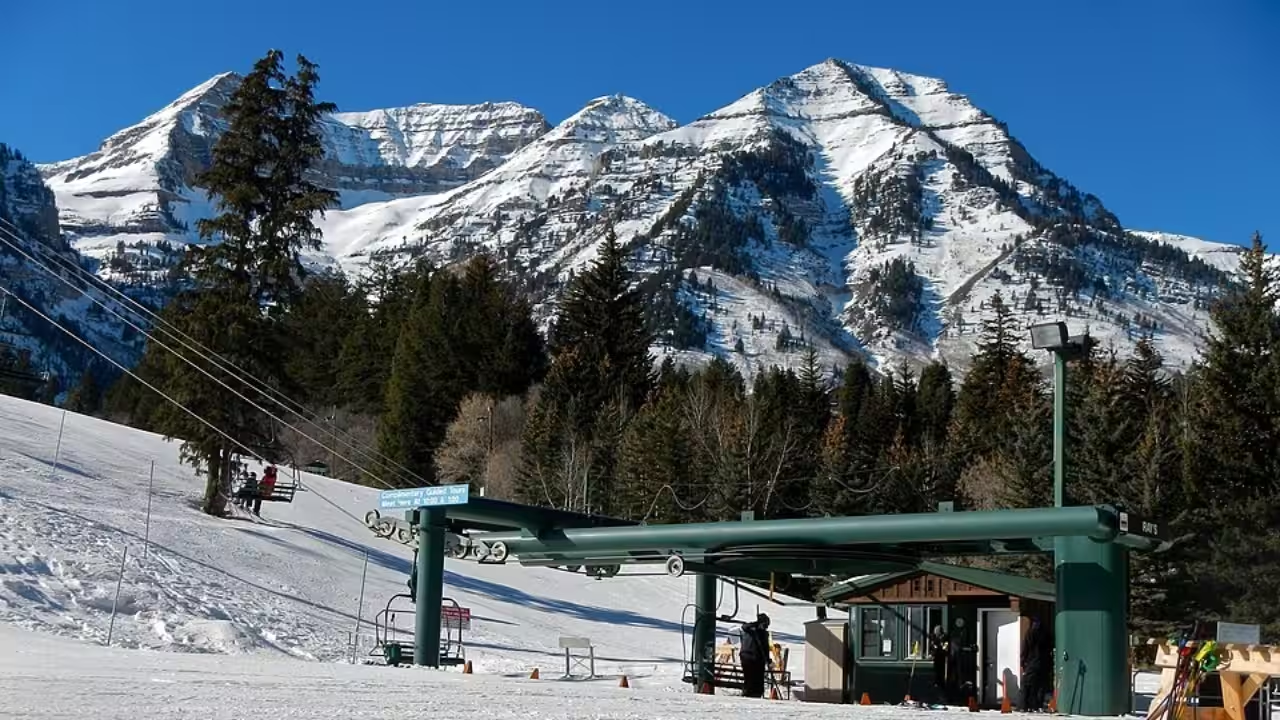
In the late 1960s, when Robert Redford turned his attention to Timp Haven, a small ski area in Utah’s Provo Canyon, the surrounding landscape was facing pressure from development. Sundance Institute's corporate archives show that in 1961, Redford first encountered the canyon when he purchased two acres and built a cabin near Mount Timpanogos. Several years later, he acquired thousands of additional acres and, in August 1968, purchased the entire Timp Haven ski operation. The next year, Redford renamed the property Sundance, the mountain resort and community named after his role in the film Butch Cassidy and the Sundance Kid.While modern resort retrospectives simplify this milestone to a single 1969 opening date, a closer cross-reference of land management records and Ski Utah’s historical records mention that he purchased the existing Timp Haven operation in August 1968. Together, the separate records show a transition that unfolded across two years rather than a single transaction in 1969.Redford’s decision to acquire the property was influenced by concerns about how the canyon could be developed. Ski Utah’s history reported that in the late 1960s he acquired around 3,000 acres in an effort to prevent a proposed housing development of A-frame cabins on small parcels from being built in the canyon. Subsequently, he purchased Timp Haven itself and pursued a different model for the mountain, one that included recreation with preservation of the surrounding landscape.From Timp Haven to Sundance Mountain ResortThe Stewart family developed Timp Haven in the 1940s, and the operation expanded over the following years. By the time Redford purchased it, the resort already had lifts and other ski infrastructure. Therefore, his role was not to create skiing in the canyon from scratch, but to take over the existing operations and reshape its future.Redford chose a different approach from intensive mountain development, as he intended to develop little and preserve a great deal. The archives notes that when Redford purchased the land, he redesignated a large majority of it as wilderness preserve. Consequently, the resort’s conservation philosophy developed alongside its recreational infrastructure instead of requiring the ski area to disappear. The institute recorded the 1969 acquisition at 5,000 acres, and the resort subsequently described Sundance as a destination set within those acres of preserved wilderness.The Sundance area lies on the southeastern flank of Mount Timpanogos and contains forests, meadows, wetlands and streams. Furthermore, snowmelt from the mountains feeds waterways that flow toward the North Fork of the Provo River, thus giving the region an important watershed role alongside its wildlife and recreational value.The 865-acre conservation easement by the Redford familyIn 1997, the Redford family donated a permanent conservation easement covering 865 acres to Utah Open Lands. The permanent deed describes the Redford Family Nature and Wildlife Preserve as more than 860 acres of critical wildlife habitat, vital watershed and undisturbed alpine meadows protected in perpetuity.The contract explains that such an easement is different from donating the land itself, as it is a binding legal agreement that restricts development while the property can remain in private ownership. In this case, the easement ensured that the protected acreage's conservation value would remain safeguarded even as ownership or use of its surrounding landscape could change in future.The preserve lies above the Sundance property in North Fork Canyon and includes habitat and watershed resources that the organisation considers important. The protected landscape is reportedly used by wildlife such as elk, mule deer, moose, cougar and black bear, as well as numerous bird species.The protection expanded after the original easementThe conservation efforts by the Redford family continued for decades following the original 865-acre easement. In 2020, Utah Open Lands protected another 316.5 acres through the Redford Family Elk Meadows Preserve. The property reportedly contains year-round moose habitat, important elk habitat, wetlands and areas used by black bears, cougars and coyotes.The latter protection highlights the continuity in the family’s approach to the landscape. The 1997 easement established permanent protection for one major block of habitat, while the later agreement added another area with important wetlands and wildlife habitat.Meanwhile, the resort itself continued to evolve. In 2020, Redford sold Sundance Mountain Resort, and the new ownership vowed to maintain the balance between responsible development and land preservation associated with the resort’s history. The change in ownership did not erase the conservation commitments established during Redford’s tenure. Today, the Redford Family Nature and Wildlife Preserve represents the most concrete permanent protection associated with the family’s early conservation efforts at Sundance.Catch the latest World News and Live updates. Download the TOI app.
Topics in this story
Gathered from external sources. Rights to this text belong to whoever originally published it.