California raises soil saturation to 90% using artificial seeps at Camp Pendleton to restore endangered Willow Flycatcher habitat, but eight passing birds and no nests are recorded
California’s efforts to restore habitat for the endangered Southwestern Willow Flycatcher at Marine Corps Base Camp Pendleton include artificial seeps and
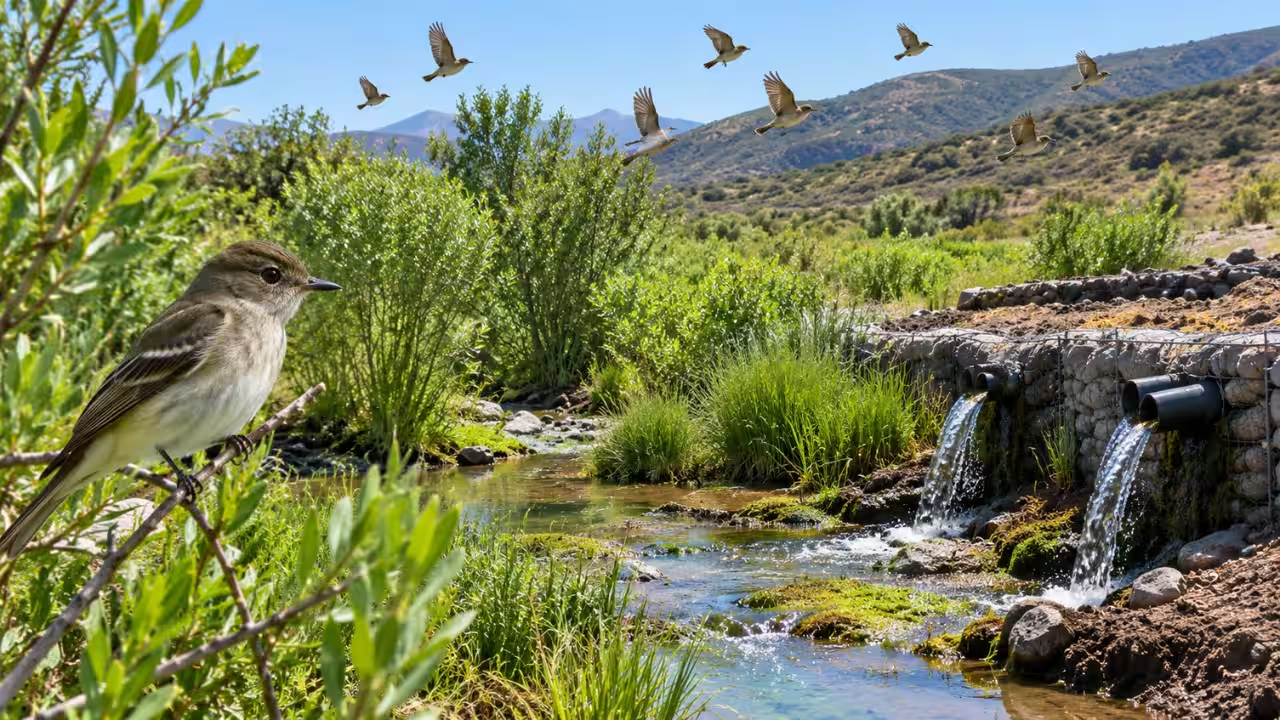
California’s efforts to restore habitat for the endangered Southwestern Willow Flycatcher at Marine Corps Base Camp Pendleton include artificial seeps and birdsong broadcasts designed to encourage breeding. According to the US Geological Survey report, seep sites had higher soil saturation than nearby reference areas in 2025, although significant improvements were not recorded across all vegetation measures. Surveys detected eight transient Willow Flycatchers of unknown subspecies, but no resident birds or nesting activity. Researchers also documented non-native plants and damage to willow and sycamore trees associated with invasive shothole borer infestations, highlighting continuing challenges for habitat restoration and the species’ recovery.How do artificial seeps improve Willow Flycatcher habitatCamp Pendleton began operating an artificial seep along the Santa Margarita River in 2019 as part of a habitat enhancement project associated with the Conjunctive Use Project. Two additional seeps were installed in early 2021, bringing the total to three. The pumps were designed to draw shallow groundwater to the surface during daylight hours, generally from around mid-April to the end of August, to improve conditions in areas used historically by breeding Willow Flycatchers.Surface water and saturated soil are important components of Willow Flycatcher habitat. Researchers established permanent vegetation sampling locations in 2025 to assess the effects of the seeps and compare them with nearby reference sites without artificial seeps. The study included 48 vegetation sampling locations across the seep and reference areas. Although pump operation was affected by maintenance issues, soil saturation remained significantly higher at seep sites than at reference sites during the study.How did artificial seeps affect soil saturation and vegetationThe 2025 assessment found average soil saturation of 90 per cent at seep sites, compared with 30 per cent at reference sites. Researchers also reported that non-native vegetation cover was higher at reference sites than at seep sites across the measured height categories. These findings documented differences in moisture conditions and some vegetation characteristics associated with the artificial seep project.However, the report did not find significant differences between seep and reference sites in total vegetation cover, woody vegetation cover, total herbaceous cover or native herbaceous cover. Researchers also found no significant differences in average or maximum canopy height between the two site types. The results therefore did not demonstrate that increased soil saturation had translated directly into all the vegetation conditions associated with suitable breeding habitat.How did researchers find eight transient Willow FlycatchersEight transient Willow Flycatchers were observed during surveys conducted between May and July 2025. Seven were detected along the Santa Margarita River and one along Las Flores Creek. No Willow Flycatchers were detected at Fallbrook, Pilgrim or San Mateo creeks. The birds were observed in mixed willow and riparian scrub habitats, and researchers did not observe nesting during the 2025 breeding season.Exotic vegetation was present at most locations where transient flycatchers were detected, and poison hemlock was the most common non-native plant recorded in those locations. Researchers also observed dead and declining willow and sycamore trees associated with an ongoing invasive shothole borer infestation. The report identifies continued operation of artificial seeps, further assessment of vegetation changes and continued use of vocalisation broadcasts as measures that could contribute to future recovery efforts.You use AI every day. Now get your AI Quotient. Take the AIQ test.
Topics in this story
Gathered from external sources. Rights to this text belong to whoever originally published it.