Trump backs Iraqi PM's crackdown on oil smuggling, risking clash with Iran allies
US President Donald Trump has backed Iraqi Prime Minister Ali al-Zaidi's efforts to bring the country's oil exports, border crossings and armed groups
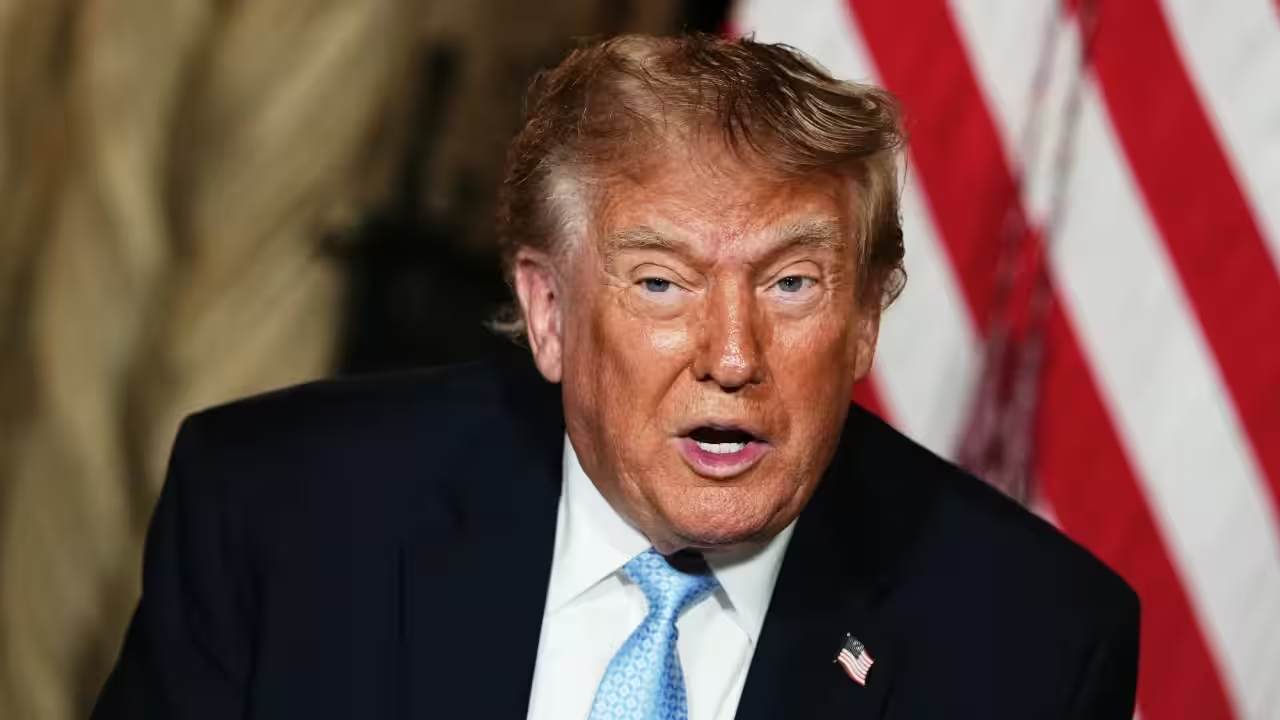
US President Donald Trump has backed Iraqi Prime Minister Ali al-Zaidi's efforts to bring the country's oil exports, border crossings and armed groups under the control of the federal government, a move that risks escalating tensions with Iran-backed militias and Kurdish authorities.In a post on Truth Social on Friday, Trump expressed support for Zaidi's efforts to strengthen Baghdad's authority across Iraq, including tackling oil smuggling, corruption and the presence of weapons outside state control."We support Iraqi Prime Minister Ali al-Zaidi’s efforts to assert state authority throughout Iraq, stop the smuggling of Iraqi oil, end corruption, and bring all weapons under the exclusive control of the state," Trump said.The US president's remarks came as Baghdad stepped up efforts to bring oil exports and border crossings in the semi-autonomous Kurdistan region under federal control. The measures have triggered protests among Kurds and put the Iraqi government on a collision course with powerful armed groups and regional authorities.Baghdad steps up action against oil smugglingIraqi government spokesman Haider al-Aboudi said crude oil exports made without going through the State Oil Marketing Organisation (SOMO), the country's official oil marketing agency, amounted to smuggling because the revenue did not reach the state treasury.Speaking to the Iraqi state news agency, Aboudi said Iraq had lost an estimated $100 billion to oil smuggling through the Kurdistan region between 2008 and 2025. However, it was not immediately clear how the government arrived at the figure.The government has made tackling oil smuggling a priority as Iraq seeks to attract large-scale foreign investment to strengthen its often-struggling economy.On Thursday, Baghdad shut two border crossings in the Kurdistan region, one with Syria and the other with Iran, after Zaidi directed federal authorities to take control of crossings administered by the regional government.The move prompted thousands of Kurds to protest against the federal government's plans to bring oilfields under its control and deploy federal troops along the region's international borders.Crackdown puts govt on collision course The action against Kurdish authorities comes just a week after Zaidi ordered a confrontation with Kataib Hezbollah, a heavily armed Shi'ite militia aligned with Iran.The Iraqi prime minister directed the army to prepare to enter Jurf al-Sakhar, a town south of Baghdad where the government accuses the militia of operating an oil-smuggling network. Kataib Hezbollah initially resisted the move but later agreed to allow Iraqi soldiers to enter the town.The two confrontations have been linked to alleged oil-smuggling operations and reflect the challenge facing Baghdad as it attempts to bring powerful armed factions and regional authorities under central government control.Armed groups have accumulated considerable influence in Iraq over decades of ethnic and sectarian conflict, making efforts to disarm them particularly difficult.Court backs federal control as Kurds push backZaidi received a boost on Wednesday when Iraq's highest court ruled that Baghdad could deploy federal forces along all international borders, including those in the Kurdistan region.The ruling was seen as a victory for the 41-year-old prime minister, a multimillionaire businessman and political newcomer who came to power six months ago following a political compromise. However, analysts have cautioned that enforcing the measures could prove difficult because of the entrenched interests involved.Relations between Baghdad and the Kurdistan Regional Government have frequently been strained over disputes concerning oil revenues, territory, trade and the distribution of government funds.Tensions escalated sharply in 2017 when the central government responded with force after the Kurdistan region held an independence referendum. Relations have since become relatively calmer, but disagreements over control of oil resources have persisted.The Kurdistan Regional Government on Wednesday criticised what it described as the "military language and threats" in a statement issued by the Iraqi military spokesman announcing the latest measures.It said it was working with federal authorities to tackle corruption and called for an end to oil smuggling across Iraq.Iraq, one of the world's largest oil producers, maintains close ties with both the United States and Iran, making the government's latest moves particularly sensitive given the competing influence of the two countries.You use AI every day. Now get your AI Quotient. Take the AIQ test.
Topics in this story
Gathered from external sources. Rights to this text belong to whoever originally published it.