My son donated his body to science and became a 'silent teacher'
Barbara Scott's son has already donated his body to Edinburgh University's medical school to help students to learn about anatomy.
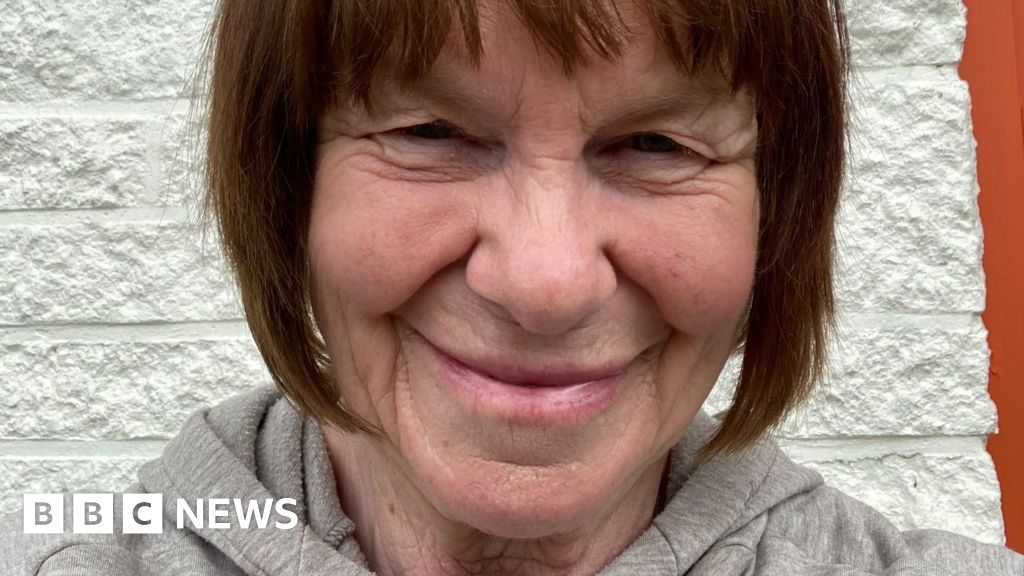
Fifteen years ago Barbara Scott signed documents to leave her body to medical science.
Her son Oliver McNeil Scott liked the idea and five years ago he also signed up to the body donation programme.
Barbara, from Lenzie in East Dunbartonshire, never thought her son would go before her - but in April 2025, Oliver died from colorectal cancer at the age of 48.
His body was signed over to the University of Edinburgh's medical school.
Despite not having a funeral for her son, Barbara has taken great comfort in his last act.
Known by those in the medical profession as silent teachers, every body donor contributes to the education of more than 1,000 anatomy students at the university every year.
Oliver, who was a regular marathon runner, had Ramsay Hunt syndrome, a rare neurological disorder caused by the same virus that results in chickenpox and shingles and affects facial nerves.
Barbara said being diagnosed with colorectal cancer only added to his determination to combat illness.
"He always wanted to do the best he could, and even during his illness, he researched all the new cures," Barbara said.
"In the end, he was going to be receiving a drug from America that he actually found himself, but unfortunately it was too late for Oliver.
"He knew how important research is and hopefully in 10 years his cancer will be very treatable, which was important for him."
Following Oliver's death, his body was taken from the Royal Infirmary of Edinburgh to the University of Edinburgh's medical school.
Anatomy bequest co-ordinator Laura Shiels and her team of technicians work to ensure that every individual who gifts their body is cared for with dignity and respect.
"After Oliver died, it was really quite a shock to us," Barbara said.
"But when Laura took this on and explained to us all what was going to happen with Oliver, it was so nice."
Since Oliver's body arrived at the medical school in April 2025, Barbara has frequently visited the anatomy department so she can feel close to her son.
"It's just a lovely thing to sit here and think about him and about what a special thing he's done," she said.
"For Oliver, it is really life after death because he is facilitating students to find out more in the future about what's happened to him, how they can move forward. It's really, really important."
The University of Edinburgh is one of five universities in Scotland that receives body donations for medical education.
In the past five years there have been 200 people taken into their care at the end of life and there are currently 4,000 who have signed up.
The anatomy department can keep donated bodies for three years. Laura says they are vital in helping medical and biomedical students learn about the human body.
Tom Gillingwater, head of the department, believes body donors are possibly the most important people in the department.
"The only way that someone could properly have that experiential engagement with what lies inside the body, with what is the true anatomy of the body, is if they are able to look at, touch, and engage with a real body," he said.
"And when we want to do that looking underneath the skin, the only way we can do it is with someone who's willing to give us their body, where we can cut through that skin and look underneath it. These are our silent teachers."
The silent teachers also help practising surgeons, some from overseas, to pioneer new medical procedures.
Laura helps to care for donor families as they come to terms with loss and their relative's decision to leave their body to medical science.
John Green's parents, Alexandria and John, also donated their bodies to the university.
"The first time I heard about silent teachers was when my mother told me there were not going to be funerals because they were leaving their bodies to medical science," said John, from Sighthill in Edinburgh.
"I think at the time it never really registered."
After John's mum died from cancer in October 2024, he found the document she had signed to donate her body.
John said his parents had no connection to the university but he felt their decision may have been down to them wanting to spend their retirement money living, rather than saving for funerals.
After three years at the university, bodies are cremated in the Borders.
Every April, the anatomy department organises a memorial service for all the donor families, offering loved ones an opportunity to pay tribute and mourn.
About 500 relatives and medical students attend every year.
The names of the silent teachers who came into the university's care that year are read out.
John attended the service to honour his mum in April 2025.
"I was expecting to see maybe 30, 40 people and we'd sit and have a cup of tea and whatever," he said.
"To turn up and see how massive this was and how many people attended, it blows you away. I certainly did not expect something as big as that."
John's father died shortly before the service.
"I got the phone call to say that my dad was going to be delivered to the university on the same day as the service," he said.
Laura said: "We made a promise to this family that they would be together where possible in the departments that we have them together, and we'll cremate them on the same day."
John took great comfort from this but admitted he had struggled with his parents' decision.
"There is that part where there's no closure," he said.
"They've not gone yet, even though they're dead. I don't know how I'll be once I get that phone call from Laura to say 'they were cremated yesterday'."
Oliver's mum Barbara said his decision to donate his body was the best thing to happen to them both.
She said the memorial service was "amazing".
"For me personally it was much, much more emotional than having a funeral," she said.
"It was for all the other families, and they were going through the same thing. They made you feel that this gift was very special."
One of the important elements of the service is the line of photographs families have sent in of their loved ones.
"When you see them end of life and they've obviously been ill, it's actually so nice to see pictures being sent in when they are well and happy and with family," Laura said.
At the last memorial service, Laura put a photo of John Green's mum next to one of his dad John, who was being honoured this year.
John said: "When you walk up to the front and say 'right, where's my dad's picture?' and there's my mother beside him, you're like: 'Wow'.
"It then kind of hit home thinking 'this is the end', because I'm getting to say goodbye to both of them at the same time. That was like a closure in my mind."
In collaboration with the Scottish Chamber Orchestra, Scottish composer Jay Capperauld was commissioned to write a piece of music in tribute to the silent teachers.
He said: "It might be a three-year-long process before those families have been able to say a real and proper goodbye to their loved ones.
"I hope the legacy of this piece within the service of thanksgiving will be a moment of musical reflection and a real release of all of those emotions that may have been building up over those three years."
BBC Radio 3's Between the Ears , being broadcast at 19:00 on Sunday, follows Jay as he writes the Silent Teachers' piece, which will be played at every memorial service.
Would you give your body to medical science?
Topics in this story
Gathered from external sources. Rights to this text belong to whoever originally published it.