What Chinese viewers are learning from America’s political chaos
What many Chinese viewers see is not a nation falling apart, but a freedom they have never been allowed to have at home.
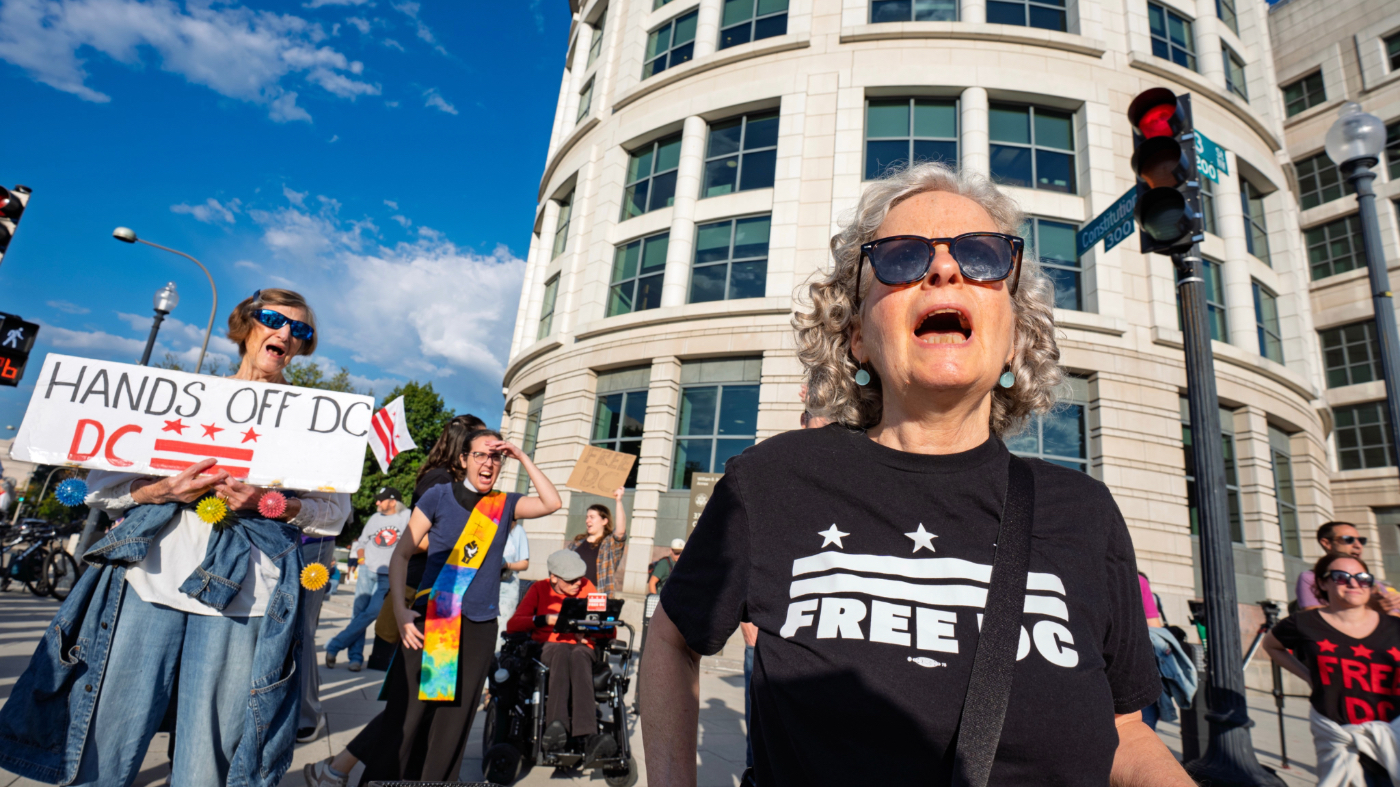
Chinese viewers see America’s political chaos differently from Westerners: as a civics lesson forbidden at home.
I know the feeling. When I left China as a 26-year-old graduate student, my faith in the Communist Party shattered the moment my first plane, a Boeing 747, lifted into the sky; a display of industrial power China could not match. For viewers raised in a closed, leader-centered society, the American show is full of surprises that Westerners take for granted.
Even behind the Great Firewall, American politics has never been more visible in China. Clips of White House briefings, court rulings and congressional hearings circulate on Weibo and WeChat, often with Chinese subtitles, until the censors catch up; others climb over the wall with VPNs.
Political chaos is routine in democracies, but the Trump administration has made it especially dramatic, with a running series of clashes between the president, Congress and the courts. In February, the Supreme Court ruled that the emergency powers law he invoked did not authorize his sweeping tariffs; in June, it struck down his order restricting birthright citizenship. No side wins every round, and no one can cancel the series.
Many Americans are tired of the fighting, but people in China are watching and quietly drawing lessons. Five stand out.
First, everyday life goes on despite political turmoil. In China, where the party controls the government, schools, businesses and nearly every other institution, upheaval at the top shakes every corner of daily life, as the Cultural Revolution showed. American life largely goes on, and the country keeps leading the world in innovation.
Second, something stands above the ruler. Chinese tradition is human-centered and secular: Heaven and the ancestors were invoked, but no authority stood above the emperor. America’s founders declared that people are “endowed by their Creator” with rights that no government grants and none may take away. Whether one grounds these rights in God or in natural law, the effect is the same: The ruler is not the highest authority. When American politicians invoke these principles, Chinese viewers hear something new, and often inspiring.
Third, facts make the decision in court. In Chinese tradition, authorities define words and concepts, and facts are made to fit. American courts decide cases on evidence and law, argued in the open by opposing sides. A judge asks what happened and what the statute says, not which outcome serves the correct ideology. In China, verdicts follow the party line, and conviction rates exceed 99 percent .
Fourth, there is the rule of law, not of men. In China, law is an instrument the party uses to govern the people, never to bind those who govern. In America, the president himself can be sued, and he is legally bound to comply when he loses. These checks bind presidents of both parties: In 2023, the Supreme Court struck down Joe Biden’s student loan forgiveness plan, just as it has blocked Donald Trump’s tariffs. Despite repeated attempts to bend the rules, the separation of powers still works much as the founders designed.
Finally, there’s the freedom to speak and to organize. China’s constitution grants these rights on paper only. Every newspaper answers to the party, independent groups are suppressed and protests such as the 2022 “white paper” demonstrations against zero-COVID rules are quickly crushed. American newspapers criticize the president daily, comedians mock him nightly and citizens organize, protest and sue the government without asking permission.
Beijing’s state media present all this as proof that democracy breeds chaos and that “the East is rising and the West is declining.” On Chinese social media, only voices supporting the official line survive. Dissent is silenced: the Nobel Peace Prize laureate Liu Xiaobo died in state custody in 2017, and the outspoken property tycoon Ren Zhiqiang is serving an 18-year sentence .
Even China’s artificial intelligence is censored. When I asked the chatbot DeepSeek about Liu, it returned nothing. I asked about Ren, and it left out the essay widely seen as the real reason for his imprisonment, in which he was understood to call Xi Jinping “a clown stripped naked who insisted on continuing being emperor.”
No one can measure what people inside China truly think, because dissent carries a heavy price, and many Chinese abroad stay cautious too. But those who dare to speak freely tell a different story. The American chaos is real, yet it is the visible surface of something harder to see: liberty, power checking power and a society free enough to keep inventing. The noise is the sound of a nation arguing with itself rather than obeying one man or one party.
What many Chinese viewers see is not a nation falling apart, but a freedom they have never been allowed to have at home.
Yan Zhou, who grew up in China and earned a Ph.D. in mathematical economics from UCLA under Nobel laureate Lloyd S. Shapley, is an independent researcher in Seattle and the author of “From Scripts to Worldviews.”
Topics in this story
Gathered from external sources. Rights to this text belong to whoever originally published it.