In 2021, more than 9 inches of rain poured over a Mississippi home; State Farm refused to pay about $16,000 for a full roof replacement, but a 2025 appeals court reversed the dismissal and sent the case back
In a significant legal battle, a Mississippi couple's claim for a new roof after a devastating storm was initially denied by State Farm, but an appeals court reverses the dismissal and allows the case to proceed, highlighting important insurance policy distinctions.
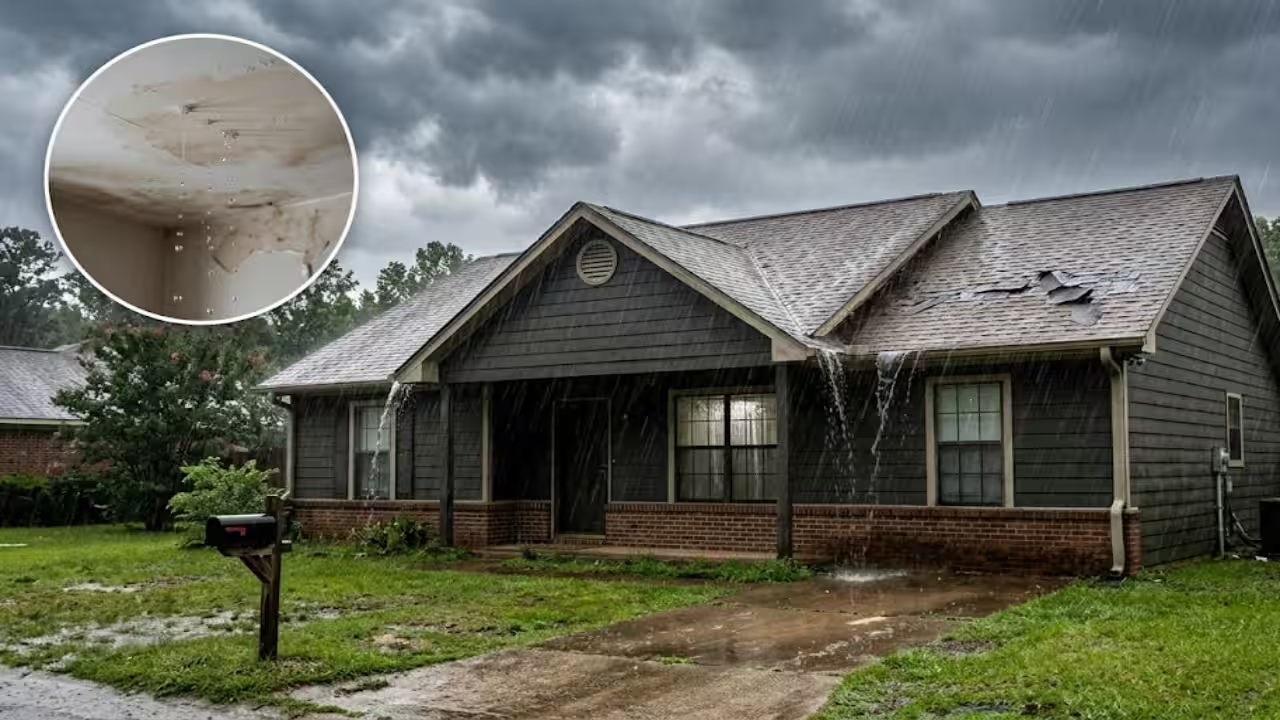
Few insurance disputes are as familiar as the one that follows a heavy downpour. When rain gets into a house, the roof is blamed, but the homeowner and the insurer often cannot agree on the cause. Who pays depends on whether the roof was already in poor condition or was damaged by the storm. Behind that sits a bigger question: who must prove what.That question ended up in federal court after a storm passed through Greenwood, Mississippi, in June 2021. Rain streamed into their house, and Mark and Margie Barger asked State Farm to pay for a brand new roof. The insurer disputed about $16,000 of the claim, and a lower court agreed. But in March 2025, the Fifth Circuit, the US federal appeals court covering Mississippi, Louisiana and Texas, overturned the ruling on the burden of proof, vacated the dismissal and sent the case back to the lower court.The storm and the roofIt was a bad storm. Almost 8 inches of rain fell on June 10 alone, and the storm total came to about 9.25 inches, or roughly 23.5 cm, according to the Fifth Circuit’s opinion. Water poured through the roof and ceilings of the Bargers’ single-storey house in at least seven places, and all three bedrooms, the dining and living rooms, a hallway and the foyer were affected.The couple said their eleven-year-old roof had never leaked before that night and kept leaking afterwards. The insurer paid for the interior damage and the couple’s belongings but would not pay for a new roof. Its position was that the only covered roof damage came from nine wind-damaged shingles and a small patch of roofing membrane. In plain terms, the insurer accepted that the storm had done some harm, just not enough to justify a new roof. The Bargers paid for a replacement themselves in March 2022 and sued for breach of contract two months later. The amount still in dispute was $16,023.79, plus an extra $3,120 to $5,000 in higher material costs.Who must prove whatThe district court granted summary judgment to State Farm, resolving the dispute without trial. The rationale was that the policy covered wind and hail, but not wear, decay or latent faults, and that the Bargers had not shown evidence indicating a covered event caused the additional damage. It also found that the only expert testimony as to cause pointed to faults in the construction.The problem, the appeals judges found, was that the district court had applied the wrong burden of proof. It had relied on the policy wording for personal property, which lists specific risks such as windstorm or hail, instead of the wording for the dwelling itself. Dwelling coverage is different. Insurers call this all-risk protection, which covers accidental direct physical loss unless an exception applies.That disparity changes the burden of proof under Mississippi law, the state Supreme Court said in a 2009 case, Corban v. USAA. Simply put, the question is who has the burden of proof to establish why the water got in. With all-risk coverage, the homeowner only has to prove that a physical loss occurred. After that, it is up to the insurer to prove that an exclusion such as wear and tear accounts for it. With a named-perils policy, the burden shifts and it is the policyholder who must prove that the harm was caused by a covered hazard. The trial court misstated the test, and thereby imposed an additional and more onerous duty on the Bargers.State Farm contended that the mistake was a clerical error that didn’t matter. The appeals court wasn’t persuaded and wrote that water had spilt into seven separate portions of the property, enough to create a genuine issue of material fact as to whether the roof system sustained accidental physical loss in the storm.What happens nextThe appeals court did not order any payment to the Bargers. In particular, it declined to opine on whether either side had met its burden on the policy exclusions, such as wear and tear or structural faults, leaving that to the district court when the case returns to it. The insurer may still argue the damage was caused by the way the roof was built or by wear. The difference now is that the insurer must prove an exclusion applies.Policyholders who think a claim has been mishandled can contact their state regulator. The Mississippi Insurance Department accepts complaints online and sends a copy to the insurer. It asks for supporting paperwork such as a denial letter and a copy of the policy within two working days and says it cannot aid anyone already represented by a lawyer or who needs legal guidance.Keeping dated photos of leaks, storm data, and proof of the roof’s prior condition gives a claim something concrete to rest on, regardless of who bears the burden. The insurer’s argument that only a tiny portion of the roof was storm damaged has yet to be tested at trial. The ruling was not published, so it is not binding on other courts.You use AI every day. Now get your AI Quotient. Take the AIQ test.
Topics in this story
Gathered from external sources. Rights to this text belong to whoever originally published it.