San Diego crews removed more than 60 tons of dried brush and invasive plants from 750+ acres of Mission Trails; the work targets wildfire fuel in a park where the 2003 Cedar Fire burned about 2,800 acres
A large-scale cleanup is underway at one of San Diego’s biggest open spaces, where crews have been removing dried vegetation and invasive plants before
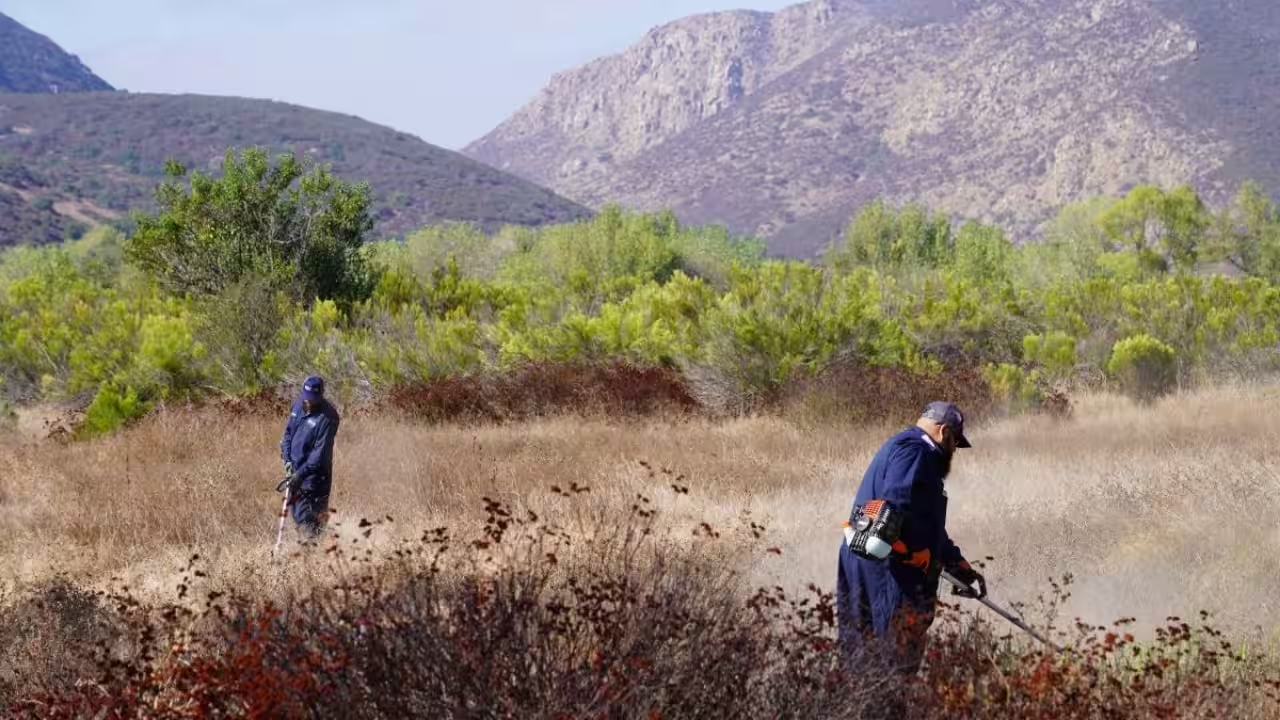
A large-scale cleanup is underway at one of San Diego’s biggest open spaces, where crews have been removing dried vegetation and invasive plants before they can add to the fuel available to a wildfire. Since the work began in September 2024, more than 60 tons of material have been cleared from more than 750 acres of Mission Trails Regional Park. The effort is intended not only to reduce wildfire risk but also to give native plants more room to return. A report by KPBS detailed the latest progress, as crews continued working across the park as part of a project expected to run through fall 2027.More than 60 tons of vegetation removedThe scale of the work is significant. According to the Mission Trails Regional Park Foundation, crews have removed 29, 40-yard containers of green waste weighing a combined 62.02 tons, roughly equivalent to the weight of 31 average passenger cars. The treatment has covered about 756 acres, or roughly a tenth of the park. The project is being led by the nonprofit Mission Trails Regional Park Foundation in partnership with the City of San Diego. The foundation hired RECON Environmental to carry out invasive vegetation management and habitat restoration, with funding from the San Diego River Conservancy.The work expands on brush-management activities already carried out by the city. Instead of being limited to a one-time clearing operation, the multi-year project allows crews to return to areas where invasive vegetation grows back and continue treating them. That repeated work is important because simply cutting vegetation once does not prevent it from returning. Crews are working to reduce invasive plants before they produce more seeds, while biologists are collecting native seeds that can later be spread across restoration areas.Why dried vegetation matters during wildfire seasonMission Trails changes visibly throughout the year. As the weather becomes hotter and drier, vegetation that was green earlier in the year can dry out and become combustible. One focus of the project is removing non-native thatch, a layer of dead or decaying plant material that accumulates on the soil. Margaret Thompson, a restoration analyst with RECON Environmental, told KPBS that this material can act as kindling during a fire. Removing it also creates more space for native vegetation and habitat.Crews have also been line-trimming invasive grasses. The aim is to weaken those plants by reducing their ability to maintain seed reserves, while giving native species a better opportunity to establish themselves. The project therefore serves two purposes at the same time. Removing highly flammable invasive vegetation can lower the amount of fuel available to a wildfire, while controlling those plants can help restore parts of the park's native ecosystem.A park with a history of wildfireThe concern is particularly relevant at Mission Trails because the park has already experienced a major wildfire. The 2003 Cedar Fire burned about 2,800 acres within Mission Trails Regional Park, according to KPBS. The fire remains part of the context for current efforts to manage vegetation and prepare the park and surrounding communities for future wildfire threats.Mission Trails covers more than 8,000 acres and contains a range of habitats, including coastal sage scrub, chaparral, grasslands, oak woodland and riparian areas. The park also sits within the San Diego River watershed, making vegetation management relevant beyond fire prevention alone. Invasive plants can crowd out native species and alter habitats. The foundation says the restoration work is intended to help native plants recover while supporting wildlife and watershed health. Some treatment areas include the Father Junipero Serra Trail, Climbers Loop Trail, Kumeyaay Lake Campground, Oak Canyon trails, the Grasslands, the base of Cowles Mountain and areas along the San Diego River corridor.Work will continue through fall 2027The current effort is not close to being a one-off cleanup. The grant supporting the project runs through fall 2027, allowing crews to continue removing invasive vegetation, monitoring treated areas and carrying out follow-up restoration. The project was made possible by a $1.8 million award from the San Diego River Conservancy. The foundation says the state funding gives the project additional capacity beyond the city's existing brush-management work.Native plant recovery is also expected to become an increasingly important part of the work. Biologists have been collecting seeds from native plants already growing in the park, with plans to spread those seeds in restoration areas towards the end of the project. That means the crews are not simply clearing vegetation and leaving the landscape behind. The longer-term goal is to reduce the amount of flammable invasive growth while helping native plant communities become established again.For Mission Trails, the 60-plus tons already removed represent one measurable step in a much larger effort. The project combines wildfire-fuel reduction with habitat restoration, with crews expected to continue that work across the park for another year.You use AI every day. Now get your AI Quotient. Take the AIQ test.
Topics in this story
Gathered from external sources. Rights to this text belong to whoever originally published it.