Aardman at 50: Gromit was nearly a cat, Shaun the Sheep almost spoke
Aardman turns 50 with stories of cat-like Gromit, silent Shaun and Chicken Run's Oscar legacy.
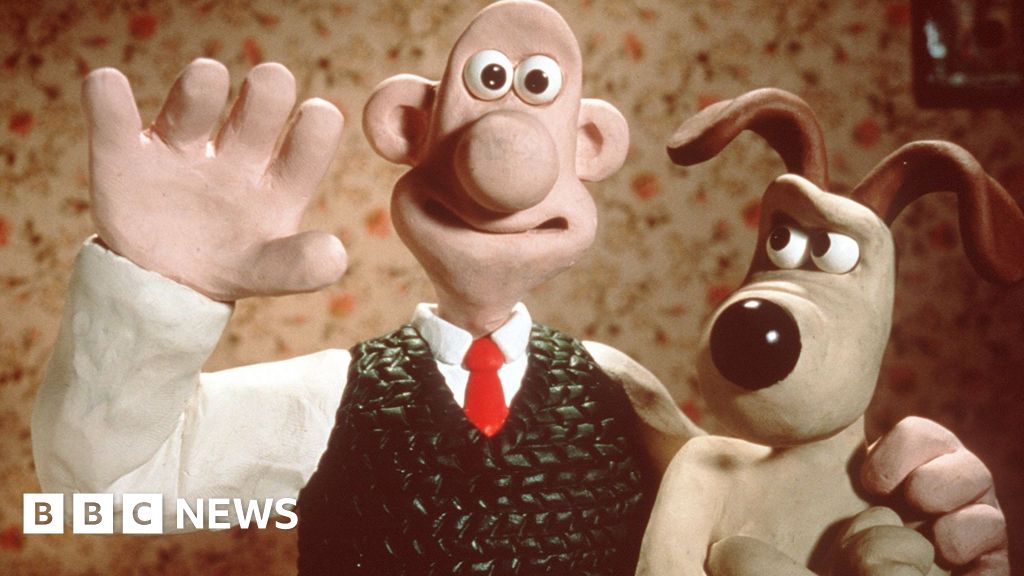
Gromit was almost a cat. Shaun the Sheep was nearly given a voice. And Chicken Run helped change the Oscars forever.
As Aardman Animations marks its 50th birthday, its creators have been sharing some of the surprising twists behind the rise of Bristol's best-known creative success story.
Founded by school friends Sir Peter Lord and Sir David Sproxton in 1976, Aardman has given us Morph, Wallace and Gromit, Shaun the Sheep and Chicken Run, the world's most successful stop-motion film.
But the journey from two teenagers "mucking about with plasticine" to an Oscar-winning animation powerhouse has often hinged on chance decisions, practical compromises and creative instinct.
Wallace and Gromit became Aardman's most famous characters after animator Nick Park joined the studio in 1985.
"I had this idea of an English guy who builds a rocket, in the basement of his house," recalled Park.
"I was thinking he may have a pet, probably a cat."
"I started modelling the cat, and it was just very difficult, so I thought I'd do a dog instead!"
Park was developing A Grand Day Out at the National Film and Television School in London when Lord and Sproxton came to speak to students.
"We met him and thought, 'Oh, he's good'. In fact, he's very good. Now I know him, he's actually a genius," said Lord.
The combination was electric. A Grand Day Out was nominated for an Oscar in 1990, losing only to another Aardman production, Creature Comforts, also directed by Park.
Pointing to a poster of Wallace and Gromit floating over Bristol in a hot-air balloon, Lord reflected on their appeal.
"When they appear on the screen, you laugh before they do anything."
Park later won three more Oscars. Perhaps it was just as well he never mastered Gromit the Cat.
By the mid-1990s, Wallace and Gromit had made Aardman one of the most talked-about names in animation.
That success led to an unlikely meeting with Steven Spielberg.
At dinner with Spielberg and DreamWorks chief executive Jeffrey Katzenberg, they pitched what became Chicken Run.
"We want to do The Great Escape," Lord told Spielberg.
"I had always been a fan of Aardman," Katzenberg said. "And I had this secret ambition that someday there would be a way to work together."
"Spielberg said, 'The Great Escape is one of my favourite films, and I have 300 chickens on my ranch!' So it went very well."
No-one had ever made a 90-minute stop-motion feature from modelling clay. The budget was more than £20m, and Aardman insisted every frame would be shot in Bristol.
The gamble paid off. Chicken Run took more than $220m (£165m) worldwide and remains the highest-grossing stop-motion film ever made.
At the time there was no Academy Award for animated features.
"And so because they couldn't give Chicken Run a little golden man, they invented the category," said Radio 1 film critic Ali Plumb.
The Academy introduced the Best Animated Feature Oscar the following year.
"And a couple of years later, Wallace and Gromit won that Oscar for 'The Curse of the Were-Rabbit', so they got their own reward," Plumb said.
If Chicken Run proved Aardman could conquer Hollywood, another character would go on to conquer the world.
Shaun first appeared in the Wallace and Gromit film A Close Shave in 1995 and has become one of the studio's biggest global stars.
Like all the other animals, he expresses himself through bleats, grunts and hugely dynamic facial expressions.
"The beauty of Shaun is it transcends borders and cultures because it doesn't rely on the spoken word," said Aardman's Managing Director Sean Clarke.
"You can literally see Shaun the Sheep here in Bristol and in Outer Mongolia."
Yet executives repeatedly urged Aardman to give him a voice.
"When we launched the Shaun the Sheep series, we were told to add voices," Clarke remembered.
The same argument resurfaced when Shaun got his own feature film in 2015.
"They said, 'You can't do 80 minutes without any dialogue'.
"But we stuck to our convictions, and I think it is now one of our most revered films."
Lord insists Shaun was not kept silent to boost international sales, it simply "seemed better that way".
However, the character's global appeal is undeniable. Clarke said Shaun has been sold into 170 countries and is especially popular in Asia.
"Shaun is actually our most valuable character now.
"Wallace and Gromit built the house, but Shaun keeps the lights on."
It is a remarkable journey for a company that started almost by accident.
Lord and Sproxton began while still at school, "playing with Dad's cine camera", as Sproxton remembered.
Their first character was a 'superhero dolt', with a cape and a habit of falling down holes.
"We just thought 'Aardvark' was a silly word, so we combined it with 'Superman', he explained.
To their surprise, their short cartoon was bought by the BBC Bristol TV programme, 'Vision On'.
"They asked us who to make the cheque out to," recalled Lord with a fond smile.
If that cheque gave them a company name, their next creation gave them a star.
Lord and Sproxton moved to Bristol to work on Take Hart, the successor to Vision On.
On this show they took what Lord called "a leap into the third dimension".
"The budgets were low, and you can work quickly with it."
Soon he had fashioned Morph, the simple little terracotta brown figure that can change shape into anything, hence his name.
"It was just so easy to squash him up and reform him as a dog, or a submarine, or a bird or anything," Lord said.
Morph became a hit with children and parents alike, and remains a fixture at Aardman's Bristol headquarters.
Back in 1989, Lord told a BBC West documentary The Animators he "hoped Morph will still be around in 30 years or so, and still be loved."
It has been 37 years since he said that, and an Aardman exhibition at Bristol's MShed Museum was recently packed with Morph superfans.
But Lord, now the studio's creative director, still comes into the office and playfully reshapes Morph while chatting.
I asked him what Wallace would make of it all.
"Oh, he'd probably just say 'Cracking careers lads!'" he smiled.
Follow BBC Bristol on Facebook , X and Instagram . Send your story ideas to us on email or via WhatsApp on 0800 313 4630 .
Gathered from external sources. Rights to this text belong to whoever originally published it.