In 1980, a Louisiana drilling accident pierced a salt mine; within hours, Lake Peigneur became a whirlpool that swallowed a $5 million rig, barges, boats and trees
US News: On November 20, 1980, Lake Peigneur transformed from a shallow freshwater lake into a saltwater whirlpool due to a Texaco drilling accident that pierced an underground salt mine, causing catastrophic land erosion and swallowing multiple barges and a drilling rig.
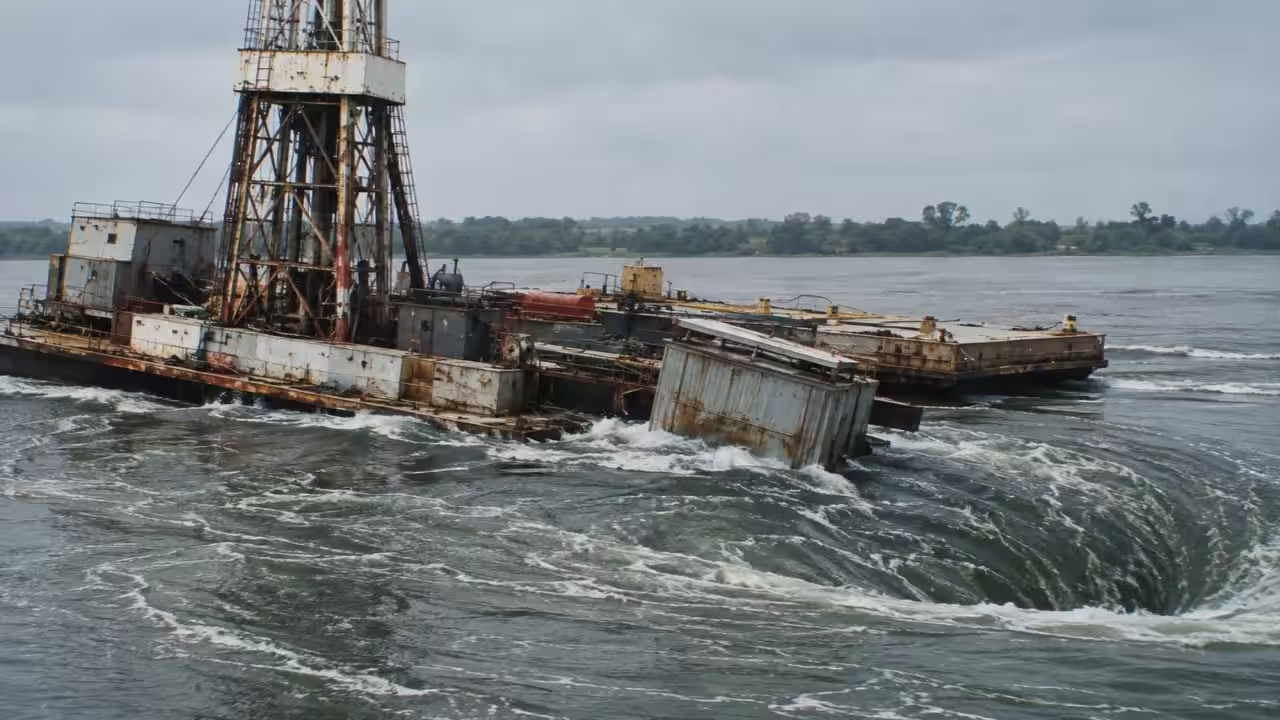
Lake Peigneur in southern Louisiana was a shallow freshwater lake on November 20, 1980, and by the time the disaster subsided, the lake had drained into an underground salt mine, a whirlpool had formed on its surface and the landscape around Jefferson Island had been altered. A Texaco drilling rig had accidentally penetrated the salt mine beneath the lake, and the resulting flow of water into the underground workings created a rapidly expanding crater that swallowed the rig, barges, a tugboat, trees and parts of the surrounding land. The Washington Post reported the following day that the $5 million drilling rig and other equipment had been pulled into the earth.The accident began when the drilling operation encountered the underground salt formation, when workers noticed problems with the rig and evacuated as the situation worsened. The Washington Post reported that seven men on the drilling rig and about 50 men in the salt mine escaped, and fortunately, no one was killed.The lake drained into the mineThe underground salt workings could no longer contain the flow as water rushed downward through the opening created by the drilling accident, and the water eroded the surrounding salt structure and enlarged the opening. The University of Louisiana at Lafayette’s Special Collections describes Lake Peigneur before the accident as a broad but extremely shallow lake of about 1,300 acres, with an average depth of only around 11 feet. The lake sat above the Diamond Crystal Salt mine, which made the underground workings an important part of what happened when the drilling operation breached the mine. The water formed a whirlpool that grew to roughly a quarter-mile across as the lake emptied, according to the university’s account. The current became powerful enough to reverse the flow of the nearby Delcambre Canal, which normally connected the lake with the Gulf of Mexico. Gulf water then rushed toward the newly created crater.Eleven barges, a tugboat, trees, sections of land and other structures were pulled toward the expanding hole. The Washington Post reported that the whirlpool also swallowed trees along the shoreline, and a federal mine-safety official warned that continued erosion could threaten the salt pillars supporting the island. Another danger was that the water entering the underground workings could weaken the salt columns supporting the mine. Workers escaped before the flooding became catastrophic, while those on the surface watched the lake disappear into the opening below.The lake did not return to its old stateLake Peigneur was no longer the same body of water once the flow slowed, and gulf water that was flowing backward through the canal refilled the depression. The University of Louisiana at Lafayette says that the lake eventually became roughly 200 feet deep and changed from freshwater to saltwater, and the nine barges that had been pulled under during the disaster later resurfaced. The university says that about 70 acres of land and trees were swallowed, along with parts of the botanical gardens on Jefferson Island. The lake had once been only about 11 feet deep, and now occupied a much deeper basin created by the collapse.A later Louisiana State University report on underground storage cites the 1980 accident as an example of the hazards associated with drilling into salt formations, and notes that the drilling rig accidentally punctured the top of the salt mine, after which water entered the mine and pulled 11 barges and surrounding land into the underground caverns. The report also records that the salt mine closed in 1986 and that the caverns were later used for natural-gas storage.Catch the latest World News and Live updates. Download the TOI app.
Topics in this story
Gathered from external sources. Rights to this text belong to whoever originally published it.